




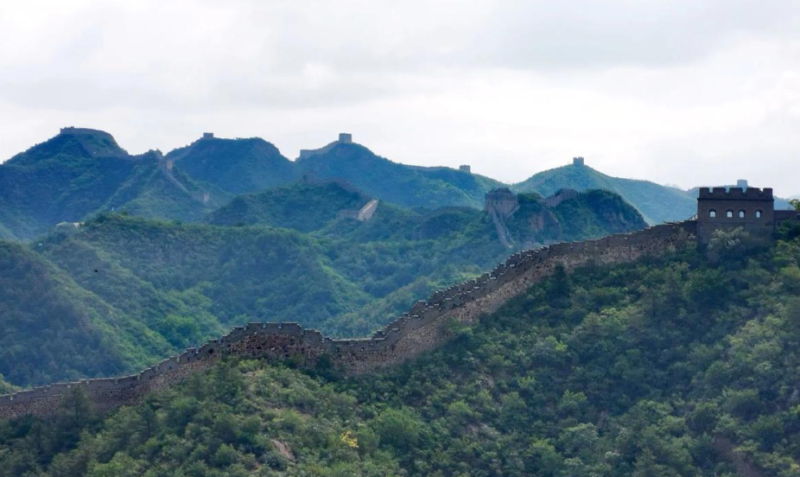
Nestled at the foot of Tianshou Mountain in Changping District, Beijing, the Thirteen Ming Tombs is a complex of mausoleums housing 13 emperors of China’s Ming Dynasty (1368-1644). As one of the largest and best-preserved imperial mausoleum complexes in the world, it spans an area of over 120 square kilometers. Construction began in 1409 during the Yongle Emperor’s reign and lasted for more than 230 years, ending with the burial of the Chongzhen Emperor, the last Ming emperor. In total, the complex houses 13 emperors, 23 empresses, and dozens of concubines and eunuchs. Listed as a UNESCO World Heritage Site in 1987, alongside the Forbidden City and The Great Wall, it serves as a three-dimensional Museum of Ming history and imperial etiquette.
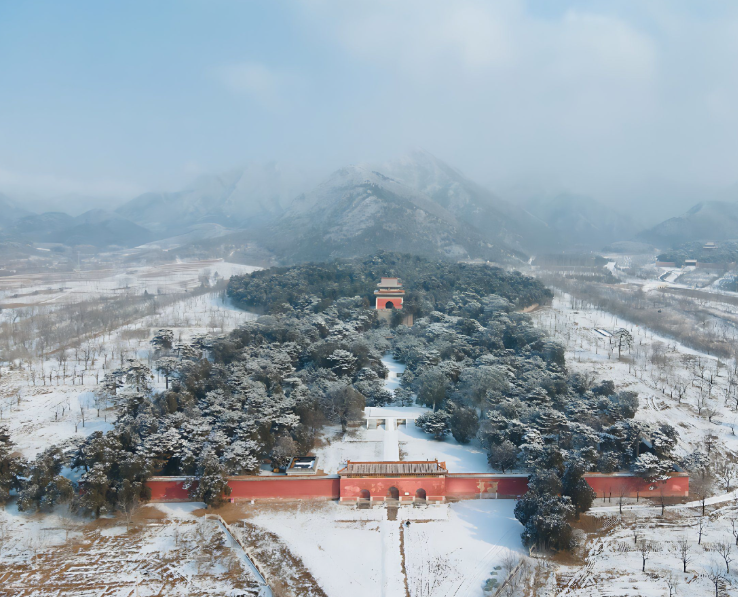
Following the concept of “harmony between man and nature”, the Thirteen Ming Tombs takes Changling Mausoleum as its core, with the other twelve mausoleums scattered among the peaks and surrounding hills of Tianshou Mountain, forming a pattern of “clear hierarchy and orderly dignity”. The complex is centered on a 7-kilometer-long main sacred way, which connects iconic structures such as the Stone Archway, the Great Red Gate, the Stone Statues Avenue, and the Dragon and Phoenix Gate, forming a complete ritual and ceremonial system. Surrounded by mountains with an open plain in the middle and a winding river in front of the mausoleums, the complex not only conforms to the ancient feng shui principle of “backing onto mountains and facing water” but also creates a solemn imperial demeanor, reflecting the Ming emperors’ ultimate pursuit of their posthumous residences.
As the “gateway” to the complex, the main sacred way is the starting point for visiting the Thirteen Ming Tombs and a vivid embodiment of the Ming imperial ceremonial system. The Stone Archway at the entrance, built in 1540 during the Jiajing Emperor’s reign, consists of five bays, six columns, and eleven floors, entirely carved from white marble. Its exquisite reliefs feature auspicious animals such as dragons, phoenixes, unicorns, and sea horses, remaining intact after nearly 500 years of wind and rain, making it the largest existing stone archway in China. Beyond the archway lies the Great Red Gate, the main entrance to the complex, with red walls and yellow glazed tiles, exuding grandeur. Inside the gate, there are stele pavilions on both sides, housing stone steles recording the history of the mausoleums. The Stone Statues Avenue further ahead is the highlight of the sacred way, consisting of 18 pairs of stone figures and animals, including civil officials, military generals, stone horses, and stone elephants. Carved from single blocks of huge stone, each statue is lifelike with distinct expressions, symbolizing imperial authority and guarding the mausoleums. Each stone statue weighs dozens of tons, demonstrating the superb stone carving craftsmanship of the Ming Dynasty.
Changling Mausoleum, the ancestral mausoleum of the Thirteen Ming Tombs, is the joint burial mausoleum of Emperor Yongle (Zhu Di) and Empress Xu. As the largest and best-preserved mausoleum in the complex, its ground buildings are distributed along the central axis, including the Ling’en Gate, Ling’en Hall, Ming Tower, and Treasure City. The Ling’en Hall is hailed as a “gem of Ming architecture”, modeled after the Hall of Supreme Harmony in the Forbidden City. With nine bays in width and five bays in depth, it is constructed of precious golden nanmu. The 60 columns inside the hall are all made of whole nanmu logs, the tallest reaching 14.3 meters, standing firmly without a single nail or rivet. After 600 years, it still emits a faint fragrance and remains intact. As a wood exclusively used by the imperial family in ancient times, golden nanmu is hard, corrosion-resistant, and extremely rare today. Thus, the Ling’en Hall has become the largest and best-preserved nanmu building complex in China, witnessing the luxury of the Ming imperial family and the pinnacle of architectural craftsmanship.
Dingling Mausoleum, the only one in the complex that has been archaeologically excavated, is the joint burial mausoleum of Emperor Wanli (Zhu Yijun) and his two empresses. Constructed from 1584 to 1590, it cost 8 million taels of silver and was modeled after the Yongling Mausoleum of Emperor Jiajing, ranking among the three largest mausoleums in the complex. The underground palace of Dingling is 27 meters underground, consisting of a front hall, middle hall, rear hall, and left and right side halls, with a brick and stone arch structure that can bear weight without any beams or columns. Inside the underground palace, the coffins of Emperor Wanli and his empresses, as well as burial objects such as golden crowns, phoenix crowns, jade artifacts, and porcelain, are displayed. Among them, Emperor Wanli’s golden wire winged crown, woven from a single piece of golden wire, is a national treasure with exquisite craftsmanship. In addition, the Ming Tower and Treasure City of Dingling are also distinctive. The Ming Tower is entirely carved from bricks and stones, resembling a wooden building without any wood. The sacred stele inside is inscribed with “Tomb of Emperor Shenzong of Ming”, and the Treasure City is a circular city wall surrounding the underground palace and burial mound, with a diameter of 230 meters, showcasing the grandeur of imperial mausoleums.
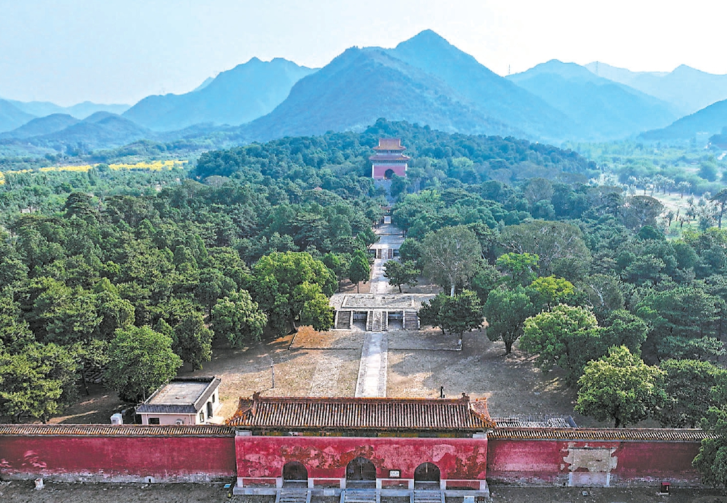
Besides Changling and Dingling, Zhaoling and Siling Mausoleums also have their own characteristics. Zhaoling Mausoleum, the mausoleum of Emperor Muzong (Zhu Zaihou), has been fully restored to its original Ming appearance after renovation. Its unique “mute courtyard” design not only meets feng shui requirements but also reflects etiquette norms, serving as an important example for studying Ming mausoleum architecture. Siling Mausoleum, the last one in the complex, is the mausoleum of Emperor Chongzhen (Zhu Youjian). Relatively small in scale, it was converted from a concubine’s tomb, witnessing the fall of the Ming Dynasty. The stone stele and dilapidated buildings in front of the mausoleum tell the vicissitudes of the dynasty’s rise and fall, evoking deep reflection.
For travel tips, the Thirteen Ming Tombs offers separate tickets for individual sites and combined tickets. International visitors can book tickets in advance through the official website or mini-program with their passports, and it is recommended to purchase a combined ticket to visit more sites. The scenic area is open from 8:30 to 17:00 (closing at 16:30 in winter). During peak seasons (April-October), there are many tourists, so it is advisable to arrive early in the morning to avoid crowds. Recommended route: Start from the main sacred way, visit the Stone Archway and Stone Statues Avenue in sequence, then go to Changling to admire the nanmu building, explore the underground palace of Dingling to discover imperial burial objects, and finally visit Zhaoling or Siling if time permits. For transportation, take the Changping Line Subway to Changping Station, then transfer to a bus or taxi. As the sites are scattered, it is recommended to take a sightseeing bus. Meanwhile, please protect the cultural relics and ancient buildings—touching relics and climbing structures are strictly prohibited. Visit this precious historical heritage respectfully.
From the stone figures and animals on the sacred way to the rare treasures in the underground palace, from the grand halls of Changling to the dilapidated walls of Siling, the Thirteen Ming Tombs is more than a complex of mausoleums—it is a condensed history of the Ming Dynasty. Here, every brick and stone engraves the rise and fall of the dynasty, and every cultural relic tells the story of emperors, waiting for tourists from around the world to explore this 600-year-old imperial legend and profound history.





暂无评论内容