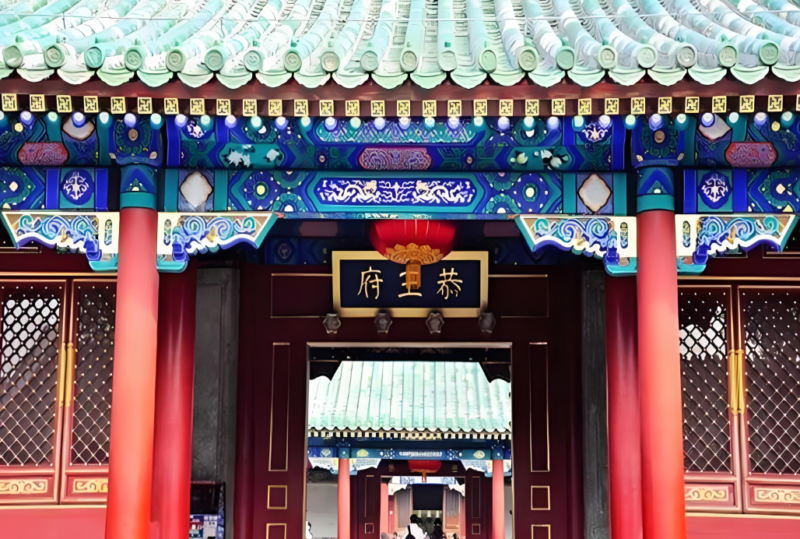





As the largest and best-preserved Qing Dynasty mansion, Prince Gong’s Mansion witnesses centuries of history. This guide covers its scenic spots, historical stories and travel tips for international visitors.
Located at No. 17 Qianhai West Street on the south bank of Shichahai Lake in Xicheng District, Beijing, Prince Gong’s Mansion Museum is a national 5A-level scenic spot, a national first-class museum, and the largest and best-preserved complex of Qing Dynasty princely mansions in China. Covering an area of approximately 61,000 square meters, this mansion experienced the entire course of the Qing Dynasty from prosperity to decline, successively witnessing the rise and fall of three core owners: He Shen, Prince Qing Yonglin, and Prince Gong Yixin. Known as “One Prince Gong’s Mansion, Half of Qing Dynasty History”, it is not only a model of Chinese official ancient architectural craftsmanship but also an important part of the intangible cultural heritage of humanity – “traditional Chinese Wooden Structure Construction Techniques”. Listed as a national key cultural relic protection unit in 1982, it has become a must-visit destination for international tourists exploring Qing Dynasty mansion Culture and Chinese garden art.
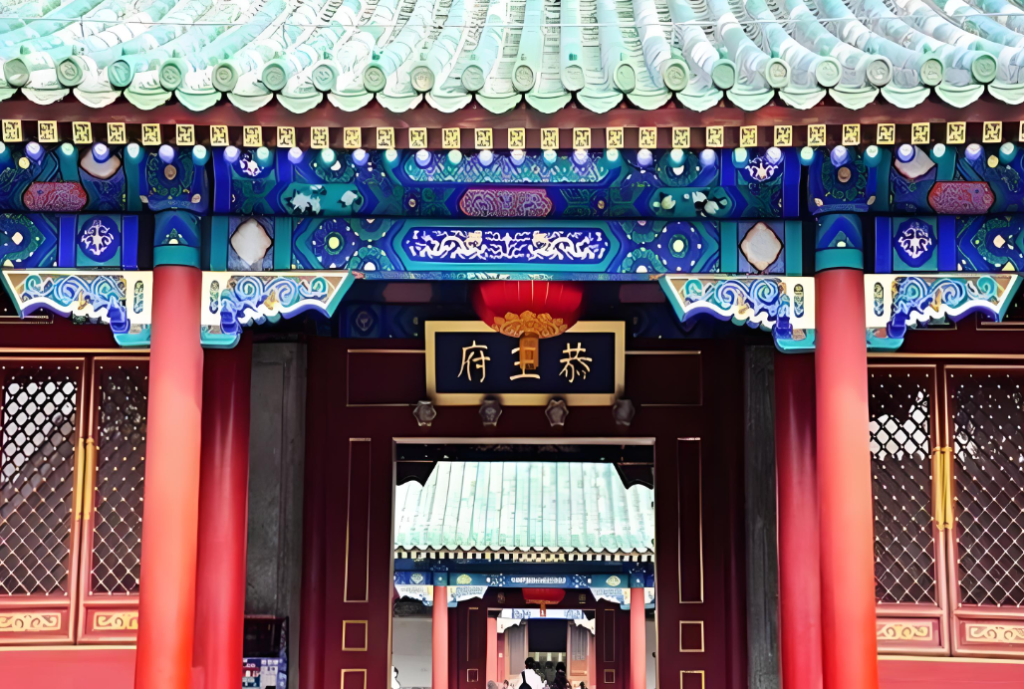
The historical context of Prince Gong’s Mansion is clear and legendary. First built in 1780 during the 45th year of Emperor Qianlong’s reign, it was initially the private residence of He Shen, a powerful minister of the Qianlong court. With the emperor’s favor and his own power, He Shen constructed the mansion with extreme luxury, and many of its specifications even exceeded those of a prince’s residence, taking more than four years to take shape. In 1789, Fengshen Yinde, He Shen’s son, married Emperor Qianlong’s favorite Tenth Princess, and the mansion also became part of the princess’s dowry, serving as both a private residence and a princess’s mansion. In 1799, He Shen was ordered to commit suicide, his property was confiscated, and the mansion was granted by Emperor Jiaqing to his younger brother, Prince Qing Yonglin, and renamed Prince Qing’s Mansion. In 1852, Emperor Xianfeng bestowed the mansion on Prince Gong Yixin, and the name Prince Gong’s Mansion has been fixed ever since. Yixin carried out large-scale renovations on the back garden of the mansion, naming it “Cuijin Garden” (Garden of Gathered Brocade), forming the current pattern of the mansion and garden adjacent to each other.
Prince Gong’s Mansion follows the architectural pattern of “three routes and five vertical axes”, with the central axis as the core, divided into east, middle, and west three routes of the mansion. The rear is surrounded by a two-story Houzhao Building over 160 meters long, naturally separating the mansion from the garden. The Houzhao Building is famous for having “ninety-nine and a half” rooms, taking the meaning of “less than a hundred rooms” to avoid exceeding imperial specifications. The upper floor of the rear eaves wall has various exquisite brick-carved decorative windows, while the lower floor is all square windows, which are both practical and decorative, making it a unique symbol of Qing Dynasty princely mansion architecture. The middle route of the mansion is the core area for rituals, sequentially distributing the main gate, second gate, Silver Peace Hall, and Jiale Hall. The roofs are covered with green glazed cylindrical tiles with mythical beasts, highlighting the prince’s rank. The Silver Peace Hall was once the venue for major ceremonies in the mansion; although now reconstructed, it still restores the solemnity of a Qing Dynasty prince’s palace. The Jiale Hall is the place for sacrifices in the mansion, and the furnishings retain traces of traditional rituals.
The east route of the mansion was the residence and office of Prince Gong Yixin, with core buildings including Duofu Study and Ledao Hall. Duofu Study, as Yixin’s reception room, has a plaque inscribed with “Duofu Xuan” hanging indoors. The Su-style colorful paintings on the beams are bright in color and exquisite in patterns, depicting flowers, birds, fish, insects and auspicious meanings. It was once the library reading room of the women’s college of Furen University, and the atmosphere of the year can still be seen today. Ledao Hall is Yixin’s study and bedroom, with a ceiling made of white lattice pasting craftsmanship, and the furnishings are simple and elegant, showing the style of a literati. The west route of the mansion is famous for its luxury and exquisiteness, with core buildings including Baoguang Chamber and Xijin Studio. Baoguang Chamber is a private place for the prince to receive distinguished guests, with a plaque inscribed by Emperor Xianfeng himself, and the interior decoration is low-key and luxurious. Xijin Studio is even a treasure in the mansion, adopting inner eave nanmu to imitate the upper and lower fairy building interior decoration of Ningshou Palace in the Forbidden City. The beams and columns are all made of precious nanmu, and the mortise and tenon structure is exquisite and firm. Although it exceeds the specifications, it can be called the pinnacle of Qing Dynasty Woodworking craftsmanship.
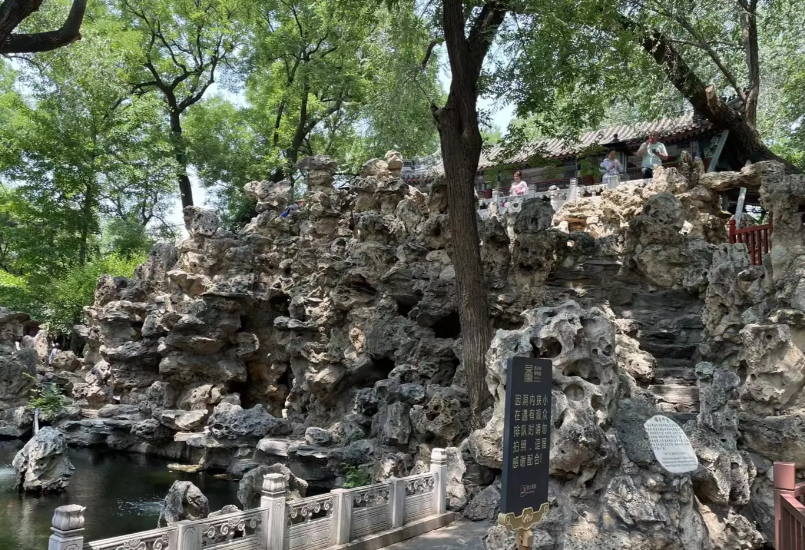
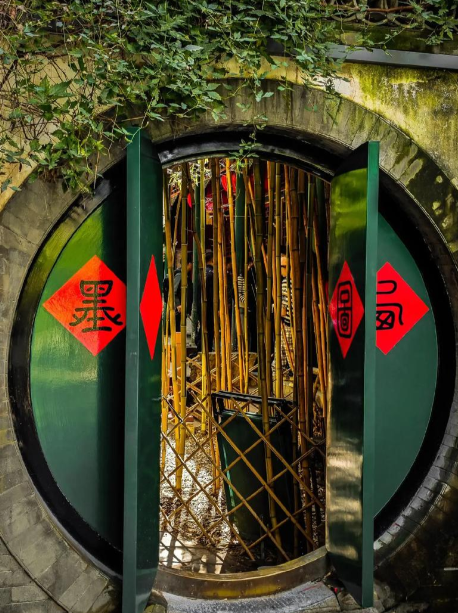
Cuijin Garden behind the mansion, covering an area of 28,000 square meters, integrates the gracefulness of Jiangnan gardens with the grandeur of northern architecture, and incorporates Western architectural elements. It is divided into east, middle, and west three routes, with 31 ancient buildings scattered among them, surrounded by towering ancient trees and winding paths. The middle route is the core of the garden. The Western-style Gate at the entrance is a typical Western architectural style, with exquisite arches and gable carvings, becoming a landmark of the garden. Inside the gate stands the five-meter-high Dule Peak, carved from Taihu stone. Behind it is a bat-shaped small pool (Bat Pool). “Bat” is homophonic with “blessing” in Chinese, implying accumulating wealth and attracting blessings. The pool water is introduced from Yuquan Lake, only entering but not exiting, in line with feng shui theory. In the rock cave behind the Bat Pool, there is a stele inscribed with the character “Fu” (blessing) in the calligraphy of Emperor Kangxi, with strong and powerful fonts, known as “the first blessing under heaven”. It is a must-visit spot for tourists, and it is said that touching this stele can bring blessings.
The east route of the garden is mainly for entertainment, with the Grand Theater as the core. Covering an area of 685 square meters, it adopts a three-arch connected fully enclosed structure. The interior of the hall is decorated with winding wisteria purple flowers, making people feel as if they are watching a play under a wisteria trellis. The stage is about one meter high, the ground is paved with square bricks, and the audience can clearly hear the performance without audio equipment. It is an outstanding representative of Qing Dynasty mansion theaters, not only used for acting but also for holding weddings, funerals and flower-appreciating activities. The Yishen Suo south of the Grand Theater was a place for flower appreciation, banquets, poetry recitals and drinking games in the mansion, and still retains an elegant atmosphere today. The west route of the garden is characterized by water scenery. A pavilion in the middle of the lake (Poetry and Painting Boat) is built in the center of the square pool. The pool water is clear, surrounded by rockery. The Yuguan Gate with a city gate arch and the crenellated city wall complement each other, creating the artistic conception of a northern border pass, forming a clever contrast with the gracefulness of Jiangnan gardens.
For travel tips, Prince Gong’s Mansion requires real-name reservation tickets. International visitors can book 1-3 days in advance through the official website or mini-program with their passports. There are many tourists during peak seasons (April-October), so it is advisable to arrive early in the morning to avoid crowds. The scenic area is open from 8:30 to 17:00 (closing at 16:30 in winter). Recommended route: Enter from the main gate, visit the middle, east and west routes of the mansion in sequence to experience the architectural hierarchy and living atmosphere, then enter Cuijin Garden, visit the core scenic spots along the middle, east and west routes, focusing on checking in the “Fu” Stele, Grand Theater and Western-style Gate. The whole tour takes about 3-4 hours. For transportation, take Metro Line 6 to Beihai North Station and walk for ten minutes. It is adjacent to Shichahai Lake. After the tour, you can stroll along the lake to feel the fireworks of old Beijing. Touching cultural relics and climbing ancient buildings are prohibited in the scenic area. Do not use flash when taking photos. Visit this precious historical heritage respectfully.
From He Shen’s luxurious residence to Prince Gong’s elegant mansion, from the exquisitely carved mansion buildings to the scenery-changing Cuijin Garden, every detail of Prince Gong’s Mansion is engraved with the historical marks and cultural heritage of the Qing Dynasty. Here, there is not only the solemnity of imperial specifications but also the elegance of garden art, as well as legendary stories spanning centuries, waiting for tourists from all over the world to explore this Qing Dynasty charm hidden in the hinterland of Beijing.




暂无评论内容