




As a masterpiece of the Ming Great Wall and a UNESCO site, Badaling Great Wall is a symbol of China. This guide covers its history, core attractions and travel tips for international visitors.
Standing at the north entrance of the Guandao Gorge in Jundu Mountain, Yanqing District, Beijing, the Badaling Great Wall is one of the best-preserved and most representative sections of China’s Ming Great Wall, as well as the essence of the entire Great Wall. As a strategic military pass connecting North China and Northwest China, this wall complex built along the mountains first originated in the Spring and Autumn Period and Warring States Period, with the existing main body renovated and expanded in 1505 during the Hongzhi reign of the Ming Dynasty. After more than 500 years of wind and rain, it still maintains its majestic posture. In 1987, the Badaling Great Wall was listed as a UNESCO World Heritage Site along with the entire Great Wall of China. It is not only a spiritual symbol of the Chinese nation but also a world-class landmark that global tourists must visit when traveling to China, receiving over 10 million Chinese and foreign tourists every year and witnessing the integration and resonance of Eastern and Western Cultures.
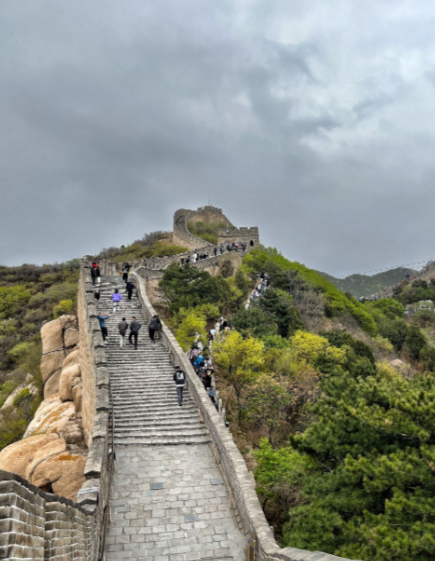
The name “Badaling” has a profound meaning, with “Bada” meaning “extending in all directions”. Due to its dangerous terrain and crisscrossing roads, it was a vital thoroughfare for exchanges between ancient northern nomadic peoples and the Central Plains, holding an extremely important strategic position. Its overall layout follows the military concept of “adapting to the terrain and using dangers to build passes”. The city wall winds along the Jundu Mountain range, with a total length of about 7.6 kilometers. The highest point above sea level reaches 1015 meters, and the lowest point is 685 meters, with a height difference of 330 meters, forming a dangerous situation where “one man guards the pass, and ten thousand men cannot pass”. The average height of the city wall is 7.8 meters, and the top width is 5.8 meters, which can accommodate five horses walking side by side or ten people lining up. The wall base is built with huge stone slabs, the wall body is paved with city bricks, and the interior is filled with rammed earth, making it extremely solid. It has stood firm despite centuries of wars and natural erosion, fully demonstrating the exquisite craftsmanship and military wisdom of ancient craftsmen.
As a core military node of the Ming Great Wall, the Badaling Great Wall has a complete defense system, including city walls, watchtowers, beacon towers, pass cities and other facilities, forming a three-dimensional defense network. The Pass City is the core hub of the Badaling Great Wall, with an irregular quadrilateral shape and a circumference of about 300 meters. It has two city gates in the east and west. The east gate is inscribed with “Juyong Outer Town”, and the west gate is inscribed with “North Lock Key”. The vigorous and powerful inscriptions highlight its important position in guarding the northern border. Inside and outside the Pass City, there are horse paths, crenellations, embrasures and other facilities, facilitating soldiers to garrison, observe and fight. The crenellations are about 1.7 meters high, and each crenellation is equipped with an observation hole and an embrasure, allowing both attack and defense, with a very scientific design.

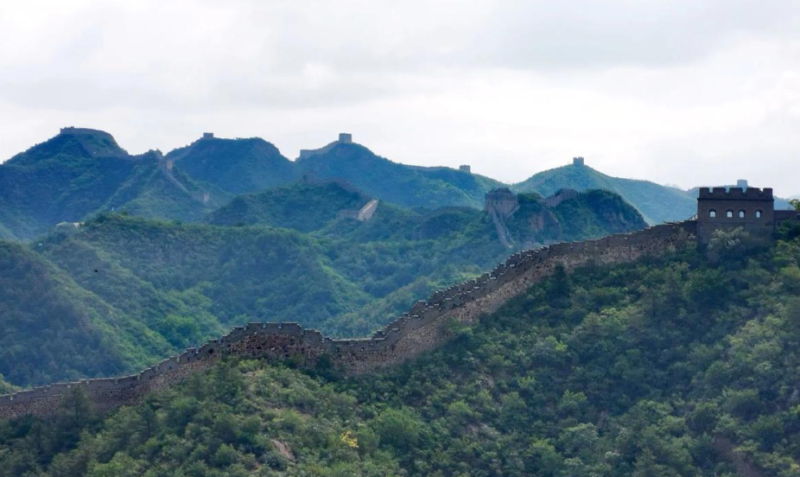
Watchtowers are the iconic buildings of the Badaling Great Wall. There are 43 watchtowers along the city wall every 300-500 meters, divided into hollow watchtowers and solid watchtowers. Most hollow watchtowers have a two-story structure: the ground floor is used for soldiers’ residence, grain and weapon storage, and the upper floor is equipped with observation holes and embrasures for all-round monitoring of enemy situation; solid watchtowers are mainly used for observation and defense, and the top platform can accommodate multiple soldiers. Among them, the most representative is the 8th North Watchtower. Known as “the First Tower of the Ten-Thousand-Li Great Wall” due to its highest altitude and widest view, climbing to the 8th North Watchtower allows visitors to have a panoramic view of The Great Wall surrounded by mountains. The city wall winds through the mountains like a giant dragon, imposing and breathtaking. In addition, the 4th South Watchtower, 5th North Watchtower and other watchtowers have their own characteristics. The military relics from the Ming and Qing dynasties preserved in the towers restore the living scenes of ancient border garrison soldiers for visitors.
Beacon towers, as important facilities for ancient military communication, are scattered along the Badaling Great Wall, forming a linkage with watchtowers and city walls. Most beacon towers are built on the commanding heights of mountain tops, constructed with bricks and stones, about 10 meters high, with observation platforms and ignition ports on the top. In ancient times, soldiers transmitted military information by lighting beacon fires. According to the severity of the enemy situation, different numbers of beacon fires were lit, which could transmit messages hundreds of miles away in a short time. This efficient communication method was an important part of the ancient military defense system. Today, when visitors climb the beacon towers, they can still imagine the tense situation of “beacon fires burning for three months” and feel the wisdom of ancient military communication.
The Badaling Great Wall presents different charms in four seasons. In spring, flowers bloom in full bloom, and the city wall is surrounded by green vegetation, full of vitality; in summer, the cool breeze blows, making it an excellent place to escape the heat. After rain, The Great Wall is surrounded by clouds and mist, like a fairyland; in autumn, the red leaves all over the mountains set off against the Ancient City wall, with layers of forests dyed, extremely beautiful; in winter, covered with white snow, the Great Wall is dressed in silver, adding a sense of grandeur. Visitors can appreciate the different beauty of the Badaling Great Wall in any season. Among them, spring and autumn have pleasant climates, making them the best times to visit.
For travel tips, the Badaling Great Wall requires real-name reservation tickets. International visitors can purchase tickets through the official website, mini-program or scenic spot ticket windows with their passports. It is recommended to book 1-3 days in advance during peak seasons (April-October) to avoid on-site queuing. The scenic spot is open from 7:30 to 17:00 (closing at 16:30 in winter). Recommended route: Enter from the Pass City entrance, first visit the South Great Wall (with gentle slopes and fewer tourists, suitable for casual walking), then go to the North Great Wall and climb to the 8th North Watchtower to overlook the panoramic view. The whole tour takes about 3-4 hours. For transportation, take Metro Line 2 to Jishuitan Station, transfer to Suburban Railway Line S2 to reach the scenic spot directly, or take a tourist special line bus or taxi. The scenic spot is equipped with sightseeing cable cars and cable cars to assist visitors in traveling between the foot of the mountain and the watchtowers, suitable for visitors with limited physical strength.

In addition, there is a Great Wall Museum in the scenic spot, which systematically introduces the historical origin, architectural craftsmanship and military value of The Great Wall through cultural relics, historical materials and multimedia displays, helping visitors deeply understand the Great Wall Culture. It should be noted that some sections of the Great Wall have steep slopes. Please wear comfortable sports shoes and carry sufficient drinking water and sun protection products when visiting; climbing unopened sections and carving on the city wall are prohibited. Visit this precious world heritage respectfully. From an ancient military fortress to a cultural landmark today, the Badaling Great Wall carries the millennium history and spiritual pursuit of the Chinese nation, waiting for tourists from all over the world to explore this timeless Eastern miracle.







暂无评论内容