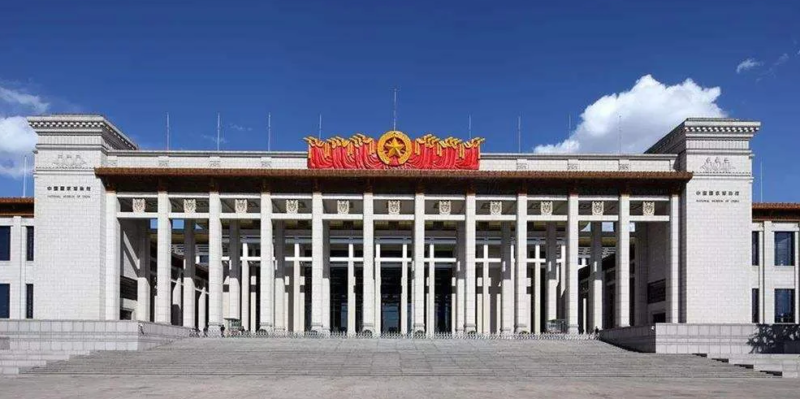





As the world’s largest single-building Museum, the NMC houses over 1.4 million artifacts spanning 5,000 years of Chinese civilization. This guide covers must-see relics, booking tips and routes for international visitors.
Located at No. 16 East Chang’an Street, east of Tiananmen Square in Beijing, the National Museum of China (NMC) is China’s supreme palace of history, Culture and art, and the world’s largest Museum with a single building. Covering a total floor area of nearly 200,000 square meters, this cultural landmark carries a century of museum history and 5,000 years of Chinese civilization memories. It houses over 1.4 million cultural relics, including nearly 6,000 first-grade national cultural heritage items, systematically presenting the development context of China’s excellent traditional Culture, revolutionary culture and advanced socialist culture. As one of the “Ten Great Constructions” to celebrate the 10th anniversary of the founding of the People’s Republic of China, it stands opposite the Great Hall of the People across the square. After the expansion of the new museum in 2011, it attracts nearly 10 million Chinese and foreign tourists every year, becoming a core destination for international visitors to understand Chinese history and feel cultural charm.
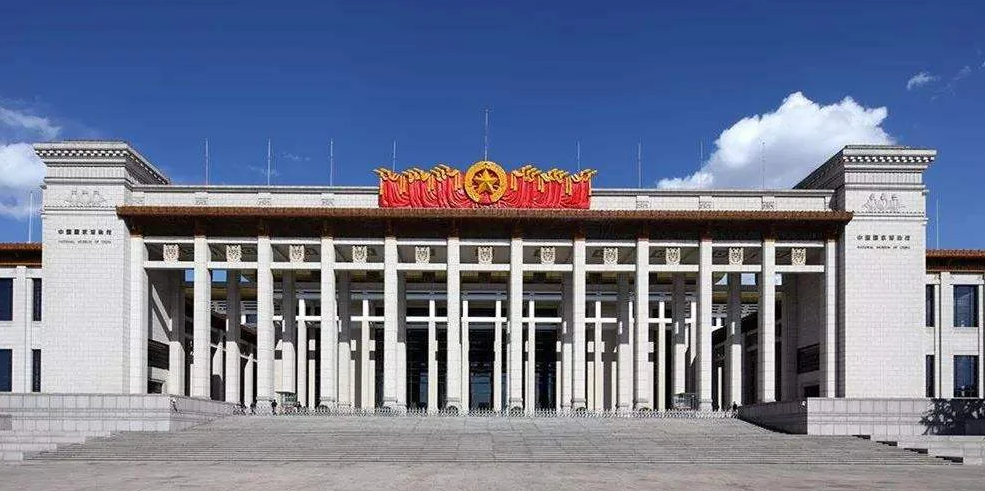
The history of the NMC can be traced back to the Preparatory Office of the National Museum of History founded in 1912 under the initiative of Mr. Cai Yuanpei, marking the beginning of China’s modern museum cause. In 2003, the former National Museum of Chinese History and the National Museum of Chinese Revolution merged to form the National Museum of China, realizing the integration of history and art. Adopting the design concept of “retaining three sides and expanding two sides”, the new museum preserves the original architectural style of the west, north and south sides and expands eastward and underground. It not only continues the traditional solemn architectural style but also integrates modern design elements, with an exhibition area of 70,000 square meters and 48 galleries, forming a complete exhibition system of “three permanent exhibitions + thematic exhibitions + temporary special exhibitions”, comprehensively presenting the continuity and inclusiveness of Chinese civilization.
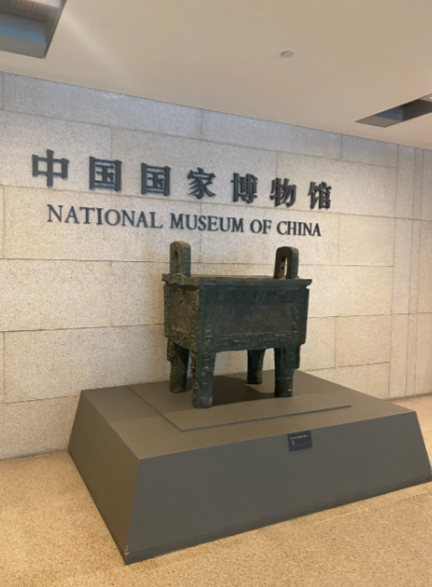
The three permanent exhibitions are the core of the NMC. Among them, the “Ancient China” Gallery (B1 Floor) is a condensed history of Chinese civilization, taking time as the axis from ancient times to the Ming and Qing dynasties, connecting 5,000 years of cultural context through nearly a thousand cultural relics. It gathers many “treasures of the museum”. The Shang Dynasty Houmuwu Cauldron, weighing 832.84 kilograms, is the heaviest known ancient Chinese bronze ware, with exquisite decorations and craftsmanship, witnessing the peak of Shang Dynasty bronze civilization. The Four Sheep Square Zun has a unique shape, perfectly combining flat decorations with three-dimensional sculpture, making it a masterpiece in the history of bronze casting. The Han Dynasty Jade Burial Suit Sewn with Gold Thread is composed of thousands of jade pieces connected by gold threads, with complicated craftsmanship, showing the funeral rituals and jade Culture of Han Dynasty nobles. In addition, cultural relics such as the Phoenix Crown of Empress Xiaoduan, the Painted pottery Basin with Human-Face and Fish-Patterns, and the Bronze Stand for Jiangu of Marquis Yi of Zeng are all unmissable national treasures, each carrying the cultural code of a specific historical period.
The “Road of Rejuvenation” and “Road of Rejuvenation: New Era” galleries focus on China’s development since modern times, showing the magnificent course of the Chinese nation from decline to awakening, from resistance to rejuvenation through cultural relics, historical materials and scene restoration. In the galleries, precious exhibits such as the first Five-Star Red Flag used at the founding ceremony in 1949, Mr. Sun Yat-sen’s manuscripts, and revolutionary cultural relics from the Long March period vividly restore key nodes in China’s modern history, allowing visitors to deeply feel the spirit of struggle of revolutionary ancestors and the brilliant achievements of national development. These two galleries are not only important positions for patriotic education but also key windows for international visitors to understand China’s modern and contemporary history.
In addition to permanent exhibitions, the thematic exhibitions and temporary special exhibitions of the NMC are also highly attractive. Thematic exhibitions cover bronzes, porcelain, Buddhist statues, coins, calligraphy and painting, etc. Among them, the Gui Ji Zi Bai Pan in the Bronze Gallery, the Yongle Blue and White Plate with Folding Peony Patterns in the Porcelain Gallery, and the Northern Qi Sakyamuni Statue in the Buddhist Statue Gallery are all masterpieces in their respective fields. Temporary special exhibitions are updated all year round, including fine cultural relic exhibitions co-organized with domestic and foreign museums, such as the Silk Road Cultural Relics Exhibition and international art master exhibitions, as well as exhibitions focusing on specific historical themes, bringing visitors a continuous fresh experience. It is recommended to check the latest exhibition information on the official website in advance.
For travel tips, the NMC implements a free real-name reservation system. International visitors can book tickets through the official website, WeChat mini-program or official account with their passports 7 days in advance. New tickets are released at 17:00 every day, divided into three time slots: 9:00—11:00, 11:00—13:30, and 13:30—16:00 (extended to 16:30 from June 1 to October 31 in summer), and visitors must enter the museum strictly according to the reserved time slot. Each account can make a reservation at most once a week, with a maximum of 5 people per reservation. Those who fail to fulfill the reservation 3 times cumulatively will be restricted from making reservations for 30 days, and tickets must be refunded before 15:00 on the day of the visit. For transportation, it is recommended to take Metro Line 1 to Tiananmen East Station, Exit D, directly to the North Gate; or take Bus No. 1, 2, 52, etc., to Tiananmen East Station. Due to frequent traffic controls around Tiananmen Square, self-driving is not recommended.
Visitors must bring the original reserved document. Elderly people over 60 years old, disabled people, active military personnel, etc., can take the green channel with relevant preferential certificates. Selfie sticks, power banks over 20,000 mAh and lighters are prohibited in the museum. Small-capacity power banks and water cups (water dispensers are available in the museum) are allowed. It is recommended to bring a coat as the temperature in the galleries is relatively low. In terms of service facilities, there is a luggage storage at the North Gate, and catering areas on the 4th floor and B1 floor with an average consumption of 40—50 yuan per person. It is recommended to participate in the free volunteer guided tours at 10:00 or 14:00 every day, or use the AR guide APP to deeply understand the stories behind the cultural relics. Plan the route reasonably: 4—6 hours are required for in-depth visit, and the essential visit can focus on the Ancient China and Road of Rejuvenation galleries to fully experience the profound heritage of Chinese civilization.



暂无评论内容