




This guide combs Beijing’s 3,000-year urban development for foreign tourists, connecting sites like Zhoukoudian, Yuan Dadu Ruins from Jiyan Ancient City to Liao-Jin and Ming-Qing capitals, with travel tips to understand the continuity of this five-dynasty ancient capital’s civilization.
For foreign tourists eager to explore the depth of Oriental civilization, Beijing is far more than a symbolic city of the Forbidden City and The Great Wall. This Ancient City with a history spanning 3,000 years has evolved from the feudal capital of the Yan State in the pre-Qin period, to the auxiliary capital and central capital of the Liao and Jin dynasties, and finally to the imperial heart of the Yuan, Ming, and Qing dynasties. Every inch of its land is inscribed with traces of history. Follow this guide to unlock the urban codes hidden in the ruins and streets of Beijing along the track of time.
To trace the source of Beijing’s civilization, we must start with the firelight of the prehistoric period. The Zhoukoudian Peking Man Site in the southwest suburbs of Beijing is the key to unlocking the history of ancient humans in East Asia and the earliest cultural mark of Beijing. Here, fossils and fire-use relics of “Peking Man” dating back 700,000 to 200,000 years ago were discovered, proving that early humans once thrived here and pushing Beijing’s human activity history to the distant ancient times. For foreign tourists, visiting the Zhoukoudian Site Museum not only allows them to see ancient human fossils and stone tools up close, but also feel the starting point of the continuity of Chinese civilization. When standing on Longgu Mountain, you can almost overlap with the footprints of ancient ancestors and understand the foundation of the city’s cultural inheritance. It is recommended to use professional guide services to gain a deeper understanding of the lifestyle of ancient humans. The visit takes about 2-3 hours and can be arranged in conjunction with other attractions in the Fangshan area.
Entering the mature period of civilization, the embryonic form of Beijing gradually took shape in the pre-Qin period. In the early Western Zhou Dynasty, the State of Yan established its capital here, and “Ji” was the earliest name of Beijing. Its core area was roughly located in the area around Guang’anmen in the southwest of modern Beijing. Today, the Jicheng Memorial Column stands quietly on Guang’anmen Outer Street, marking this historical node. Although there are no complete Ancient City ruins left, standing in front of the memorial column and combining historical records, you can still imagine the style of the ancient Jiyan City as the capital of a northern vassal state. It laid the initial urban gene for Beijing and kicked off a 3,000-year urban history. The nearby Niujie food Street can be a supply point after the tour. After feeling the historical heritage, taste authentic Beijing snacks and experience the fireworks of the integration of ancient and modern times.
Beijing’s status as an imperial capital was laid and established during the Liao and Jin dynasties. The Liao Dynasty designated Beijing as an auxiliary capital, known as “Nanjing Xijin Prefecture”, making it an important gateway for exchanges between the Liao Dynasty and the Central Plains. The city scale gradually expanded, and the pattern of commercial and residential areas initially appeared. In the first year of Zhenyuan in the Jin Dynasty (1153), Emperor Wanyan Liang of Jin officially moved the capital to Yanjing and renamed it “Zhongdu”. This was the first time in Beijing’s history that it became the capital of a unified dynasty, and urban construction ushered in a leap forward. Following the regulations of Bianjing in the Northern Song Dynasty, the imperial city, imperial palace and outer city were built, laying the urban framework for Beijing as an imperial capital. Today, the Jinzhongdu Ruins Park is the core attraction to explore this period of history. Although the city wall ruins and palace foundations in the park have experienced vicissitudes, they can still outline the magnificent momentum of Zhongdu in those years. The Museum in the Park houses Jin Dynasty cultural relics, vividly showing the social life and architectural skills of the time, which is suitable for foreign tourists to deeply understand the transformation of Beijing from an auxiliary capital to an imperial capital.
The planning of Yuan Dadu laid a key foreshadowing for the urban pattern of modern Beijing. In the 13th century, Kublai Khan established his capital in Beijing and renamed it “Dadu”. He ordered Liu Bingzhong to preside over the planning and construction, establishing a symmetrical urban layout with the central axis as the core. This layout has continued to this day and become the soul of Beijing’s urban planning. The Yuan Dadu City Wall Ruins Park is an important surviving relic. The 9-kilometer-long city wall ruins wind through the northern part of the city. The Xiaoyue River, ancient cypresses and modern landscapes in the park blend harmoniously. Wandering in it, you can not only feel the scale and momentum of the Yuan Dynasty capital, but also experience the coexistence of history and modernity. For foreign tourists, it is recommended to visit the section from Jiande Gate to Anzhen Gate, where the most complete city wall remains are preserved. With the historical explanation signs in the park, you can clearly understand the street layout and architectural concepts of Yuan Dadu. At the same time, the water system planning of Yuan Dadu has a profound impact on Beijing. Today’s Shichahai, Jishuitan and other water areas are important relics of the water transport and domestic water use in Yuan Dadu, which can be included in the tour route.
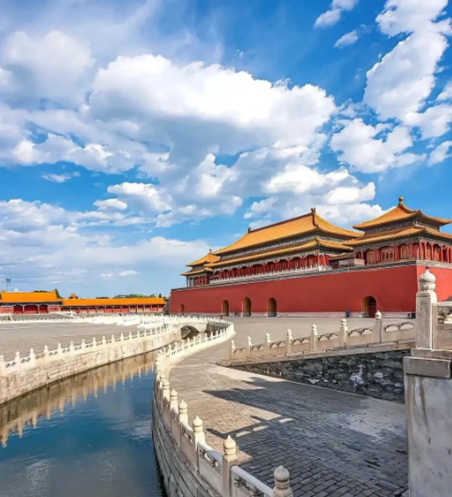
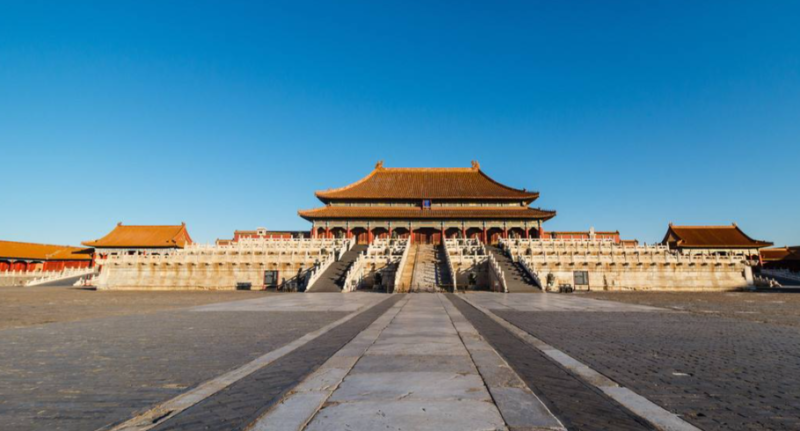
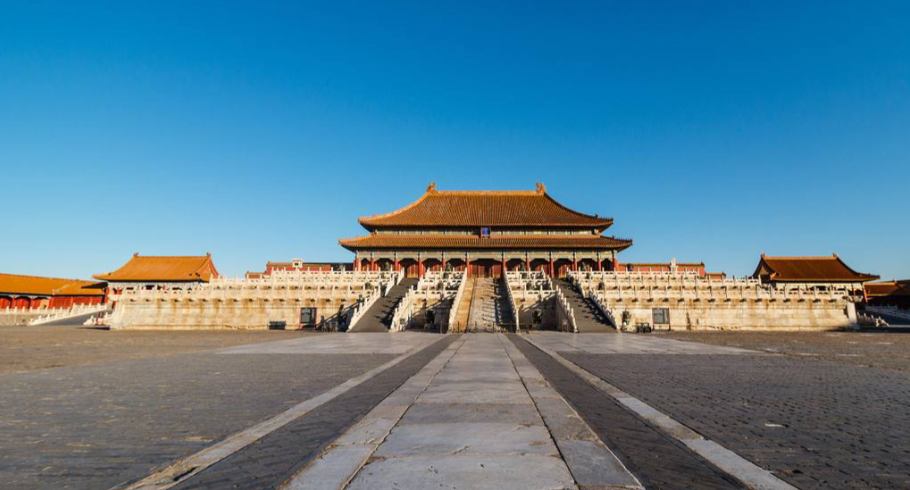
During the Ming and Qing dynasties, the pattern of Beijing as an imperial capital was finally finalized, making it a model of an Oriental imperial capital. In the 19th year of Yongle in the Ming Dynasty (1421), Emperor Chengzu Zhu Di of the Ming Dynasty officially moved the capital to Beijing, reconstructed and expanded Yuan Dadu, built landmark buildings such as the Forbidden City, Temple of Heaven and Temple of Earth, and established the pattern of “the outer city enclosing the inner city, the inner city enclosing the imperial city, and the imperial city enclosing the palace city”. The Qing Dynasty basically followed the scale of the Ming Dynasty capital, only renovating and expanding some buildings to further improve urban functions. Today, attractions such as the Forbidden City, Tiananmen Square and Jingshan Park are the core carriers of the imperial capital style of the Ming and Qing dynasties. For foreign tourists, when visiting these attractions, they should not only admire the grandeur and exquisiteness of the buildings, but also understand the ritual system and imperial power symbolism behind them – the central axis layout of the Forbidden City and the heaven-worshipping Culture of the Temple of Heaven are the concentrated embodiment of the imperial capital culture of the Ming and Qing dynasties. It is recommended to avoid peak hours and choose to visit in the early morning or evening, which can not only better feel the quiet beauty of ancient buildings, but also deeply understand the glorious history of Beijing as the imperial capital of the Ming and Qing dynasties.
From “Beiping” in the Republic of China to becoming the capital of New China in 1949, Beijing has been constantly reborn with the passage of time, but its 3,000-year urban history has always been its deepest background. For foreign tourists, exploring the urban context of Beijing is not only visiting ruins and buildings, but also understanding the cultural inheritance and spiritual core of a city. Walking along the time track of prehistoric, pre-Qin, Liao-Jin, Yuan-Ming-Qing dynasties, you will find that every scenery in Beijing hides a 3,000-year story.





暂无评论内容