




This guide deciphers the evolution of Beijing’s historical place names for foreign tourists, from Ji, Youzhou, Yanjing to Beiping and Beijing. It combines the origins of landmarks like Shuntian Prefecture and Tongzhou with tour routes to reveal the ancient capital’s rise and fall.
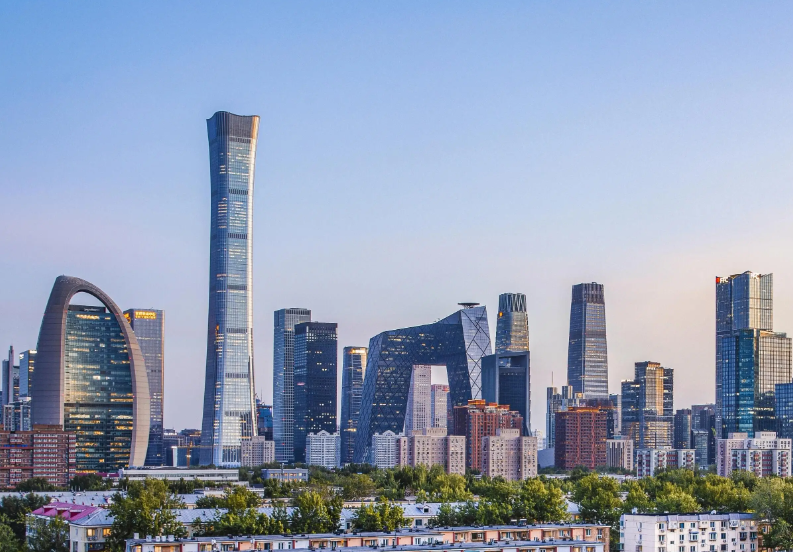
For foreign tourists, every place name in Beijing is more than just a label—it is a code inscribed with thousands of years of history. From “Ji” in the pre-Qin period to “Beijing” today, the city’s name has undergone more than a dozen changes, each corresponding to a magnificent period of history. Wandering along the track of these place names, you can touch the complete context of Beijing, from the capital of a northern vassal state to the heart of a unified empire, from a modern famous city to an international metropolis, adding cultural depth to your journey.
The earliest recorded name of Beijing dates back to the Western Zhou Dynasty, when it was called “Ji”—the starting point of Beijing’s urban history. In 1045 BC, King Wu of Zhou enfeoffed Shao Gong Shi in the State of Yan, and established the capital at “Ji”, whose core area was roughly around Guang’anmen in the southwest suburbs of modern Beijing. Today, the Jicheng Memorial Column standing on Guang’anmen Outer Street marks this historical node. Carved from white marble and inscribed with “the origin of Beijing’s founding”, the column has no complete Ancient City ruins left, but standing here, combined with historical records, you can still imagine the style of the ancient Jiyan City as a political and military stronghold in the north. During your visit, you can pair it with the nearby Tianning Temple Pagoda, a ancient pagoda first built in the Liao Dynasty, which witnessed the transformation of “Ji” from the capital of a vassal state to the auxiliary capital of the Liao Dynasty. Afterward, head to Niujie to taste authentic Halal food and experience the blend of ancient and modern in the daily hustle and bustle.
“Youzhou” was the core name of Beijing from the Qin and Han dynasties to the Sui and Tang dynasties. Frequently appearing in ancient books and poems, this name carries the memory of the Central Plains dynasties governing the northern borderlands. At that time, Youzhou was a transportation hub connecting the Central Plains and northern nomadic peoples, as well as a crucial military strategic location. The city scale gradually expanded during this period, forming a preliminary street pattern. Today, there are no landmarks directly named after “Youzhou” in Beijing, but Youzhou Village in Fangshan District still retains the mark of the ancient place name. Located by the Yongding River with beautiful mountains and rivers, it is a niche choice for hiking enthusiasts. To gain a deeper understanding of the history of the “Youzhou” period, visit the National Museum of China, where cultural relics from the Qin and Han dynasties can help restore the social style and strategic status of Youzhou at that time.
The name “Yanjing” marked the beginning of Beijing as an auxiliary capital and imperial capital, starting from the Liao Dynasty, prevailing in the Jin and Yuan dynasties, and is still often used as an elegant name for Beijing today. The Liao Dynasty designated Beijing as an auxiliary capital, renaming it “Nanjing Xijin Prefecture”, but it was still commonly known as “Yanjing” among the people. At this time, Beijing became a gateway for cultural and economic exchanges between the Liao Dynasty and the Central Plains. In the first year of Zhenyuan in the Jin Dynasty (1153), Emperor Wanyan Liang of Jin officially moved the capital to Yanjing and renamed it “Zhongdu”—the first time Beijing became the capital of a unified dynasty, ushering in a leap in urban construction. Today, the Jinzhongdu Ruins Park is the core landmark to explore the history of “Yanjing” and “Zhongdu”. The city wall ruins, palace foundations and Museum collections in the Park can intuitively show the urban scale and architectural skills of the time. During your visit, focus on the Yuzaochi Ruins in the park, which was once a royal garden of Jinzhongdu and witnessed the rise of “Yanjing” as an imperial capital.
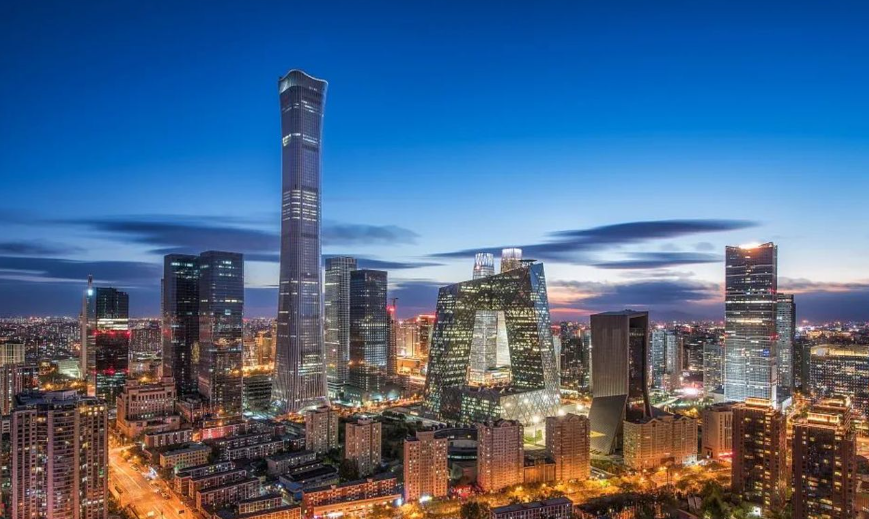
“Dadu” was the official name of Beijing in the Yuan Dynasty and laid the foundation for Beijing’s urban pattern. In the 13th century, Kublai Khan established his capital in Beijing and ordered Liu Bingzhong to preside over the planning and construction, establishing a symmetrical layout with the central axis as the core—a pattern that has continued to this day. Today, the Yuan Dadu City Wall Ruins Park preserves the city wall relics of that year. The 9-kilometer-long ruin belt winds through the northern part of the city, with Xiaoyue River and ancient cypresses complementing each other. Wandering in it, you can not only feel the grandeur of the Yuan Dynasty capital, but also understand the origin of Beijing’s “central axis” Culture. The “Prosperity of Dadu” sculpture group in the park vividly reproduces the prosperity of Dadu in the Yuan Dynasty, making it a perfect photo spot for foreign tourists. After the tour, go to the nearby Jishuitan, which was once a canal transportation wharf of Yuan Dadu. Today, it still ripples with clear waves, and the hutongs and teahouses around can let you experience the leisurely life of old Beijing.
The name “Beiping” carries the memory of Beijing’s modern changes. It began in the first year of Hongwu in the Ming Dynasty (1368). After overthrowing the Yuan Dynasty, Zhu Yuanzhang renamed “Dadu” as “Beiping Prefecture”, meaning “pacified north”. In the 19th year of Yongle in the Ming Dynasty (1421), Zhu Di moved the capital to Beiping and renamed it “Beijing”, but the name “Beiping” was reused during the Republic of China, until the founding of the People’s Republic of China in 1949, when it was officially named “Beijing” and has been used ever since. This change of name corresponds to Beijing’s transformation from an imperial capital to a modern city. Today, traces of the Beiping period can be found all over the city. For example, the former site of the Beiping Library (now the Ancient Books Library of the National Library) in Dongcheng District, with its integrated Chinese and Western architecture, witnessed the cultural development of modern Beijing. During your visit, you can pair it with landmarks such as the Forbidden City and Tiananmen Square, which were core cultural venues during the Beiping period, helping you clearly sort out the historical logic behind the name change.
In addition to the official names of past dynasties, many popular place names in Beijing also hide interesting historical stories. “Shuntian Prefecture” was the administrative name of the Beijing area during the Ming and Qing dynasties, covering a much larger area than modern Beijing. Today, the former site of Shuntian Prefectural School (located in Fuxue Hutong, Dongcheng District) still retains the architectural style of the Ming and Qing dynasties, making it a good place to understand the ancient local administrative system. “Tongzhou”, as the northern starting point of the Beijing-Hangzhou Grand Canal, got its name from “smooth canal transportation”. Today, Tongzhou Grand Canal Forest Park allows you to enjoy the canal scenery and experience the prosperity of past canal transportation through ruins and Museums. “Zhongguancun”, once a cemetery for eunuchs in the Ming and Qing dynasties, has transformed into the “Silicon Valley of China”, witnessing Beijing’s transformation from a traditional ancient capital to a high-tech hub. Zhongguancun Science City and Haidian Park here let you experience the integration of modern technology and natural landscapes.
Wandering around Beijing along these place names is like reading a three-dimensional history book of the ancient capital. Every change of name is a microcosm of a period of history; every landmark corresponding to a place name hides unknown stories. For foreign tourists, understanding these place name codes allows you to go beyond conventional scenic spot tours, truly step into the historical depths of Beijing, and feel the unbroken 3,000-year cultural context of this city.





暂无评论内容