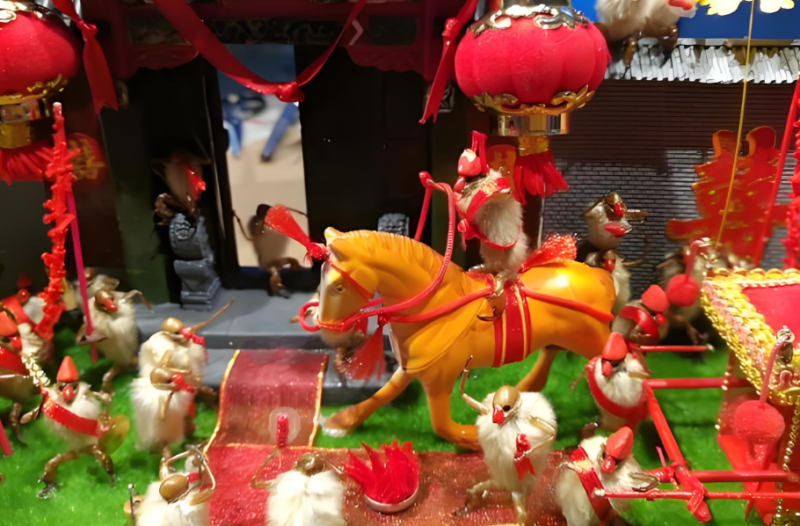





Among the intangible heritage crafts of old Beijing, Monkey Figurines (Maohou) have become a vivid symbol of old Beijing’s folk customs, with the unique charm of “hiding market life in a small space and embodying craftsmanship in each scene”. This handcraft, made of traditional Chinese medicinal materials and themed on old Beijing’s life scenes, was born from a casual idea in a Qing Dynasty pharmacy. Passed down for a century, it condenses the charm of hutongs and market life in the fingertips, carrying both the natural texture of Chinese medicinal materials and the life philosophy of old Beijing. For foreign travelers, exploring Monkey Figurines is the most vivid way to understand Beijing’s folk aesthetics and market Culture.
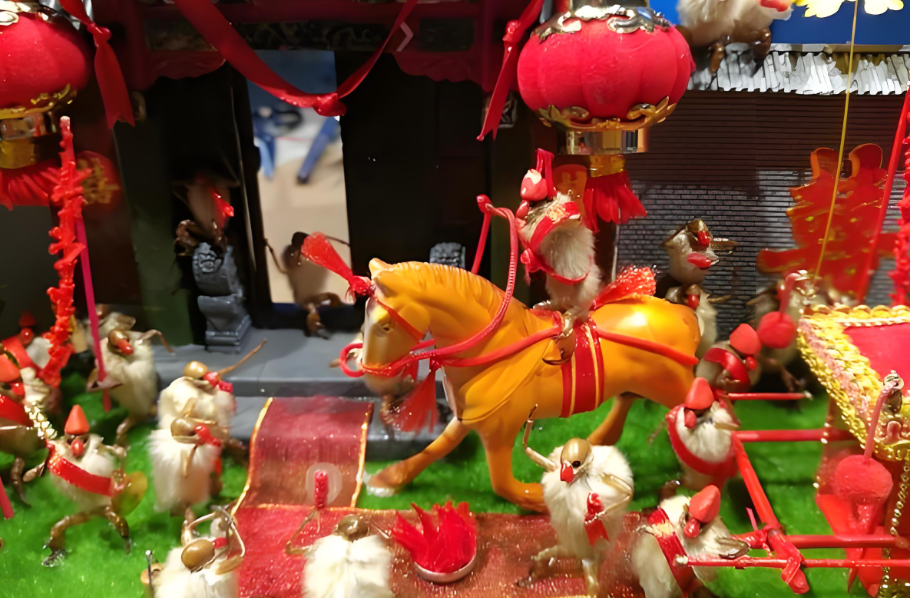
The origin of Monkey Figurines hides a life-like legend, dating back to a Beijing pharmacy during the Tongzhi period of the Qing Dynasty. At that time, to kill time, a pharmacy clerk accidentally found that Chinese medicinal materials such as cicada slough, magnolia buds, and bletilla striata had distinctive shapes——the chest part of cicada slough resembled a monkey’s body, magnolia buds could be used as monkey heads, and bletilla striata mucus could be used as an adhesive. He casually spliced these materials into small ornaments shaped like monkeys. Due to the vivid appearance and the homophony of “monkey” and “marquis” (implying promotion and good fortune), it quickly spread among pharmacies, gradually developing from a self-amusing toy to a handicraft with both ornamental value and auspicious meaning. It also derived a series of works themed on old Beijing hutong life, becoming a unique folk symbol of Beijing.
During the Republic of China, the craft of Monkey Figurines gradually matured, and many well-known craftsmen emerged. Represented by Cao Yijian, craftsmen expanded Monkey Figurines from a single monkey image to complete folk scenes, such as listening to storytelling in a teahouse, walking birds in hutongs, and acrobatics at temple fairs. Each set of works accurately restores old Beijing’s life scenes with rich details and strong daily charm. At this time, Monkey Figurines not only spread among the people but also became collectibles for literati and even went abroad as a characteristic Beijing souvenir. In 2009, the production technique of Beijing Monkey Figurines was included in the Beijing Intangible Heritage List, receiving systematic protection. Today, under the persistence and innovation of inheritors, it has regained new vitality.
The exquisiteness of Monkey Figurine making lies in the ultimate use of Chinese medicinal materials and the delicate control of scene shaping. Although the whole process seems simple, it needs to balance the characteristics of raw materials and the beauty of the shape, with each step relying on the craftsman’s experience. Raw material selection is extremely strict, requiring high-quality Chinese medicinal materials without damage and suitable shape: monkey heads are made of unbloomed magnolia buds, which need to be uniform in size and round in shape, with natural textures exposed after trimming; monkey bodies and limbs are taken from the chest and wings of cicada slough, which need to be manually split and trimmed to ensure coordinated proportions; the adhesive is made by grinding bletilla striata into powder and mixing with water, which is naturally sticky and not easy to deteriorate. It not only conforms to the natural properties of Chinese medicinal materials but also keeps the shape stable for a long time.
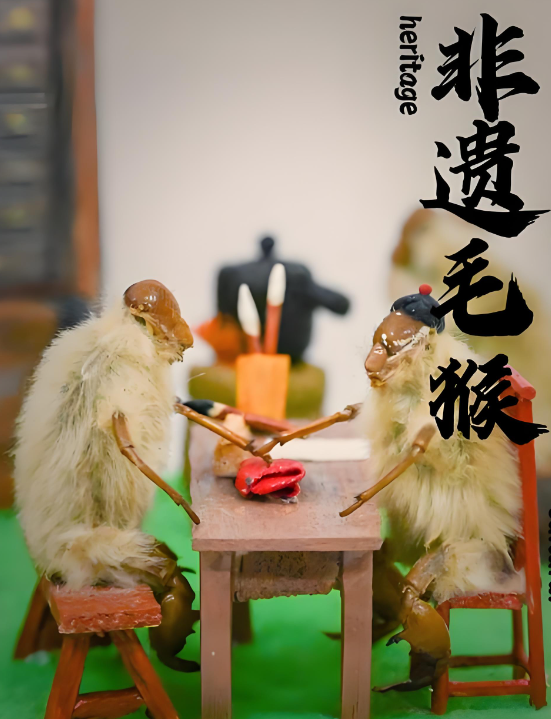
Scene shaping is the soul of Monkey Figurine works and the most challenging part for craftsmen. Craftsmen first conceive the scene theme, then match auxiliary materials according to the theme, such as using thin bamboo silk as fishing rods, rags as clothes, miniature bricks and tiles to build hutong courtyards, and even black sesame as chess pieces and fine cotton thread as beards. Every detail strives to restore the true life of old Beijing. Taking the “listening to storytelling in a teahouse” scene as an example, craftsmen need to match the Monkey Figurines with tables and chairs of different heights, a storyteller holding a folding fan, a clerk serving tea, and even shape different expressions for each Monkey Figurine——the listener is focused, the storyteller is passionate, and the clerk is busy. Through subtle posture adjustments, the scene in a small space is full of storytelling. Some complex scenes require dozens of Monkey Figurines to match, taking days or even months to complete, and each work is a vivid reproduction of old Beijing’s life.
Today, the inheritance of the Monkey Figurine craft is inseparable from the persistence and innovation of generations of craftsmen. Yu Guangjun, a national-level representative inheritor, has been influenced by his family since childhood and has been deeply engaged in Monkey Figurine making for more than 40 years. He not only fully masters traditional techniques but also integrates modern aesthetics, developing series works such as “panoramic view of old Beijing hutongs” and “intangible heritage skill connection”, combining Monkey Figurines with other Beijing intangible heritage techniques to enrich the cultural connotation of the works. He opened a studio in Nanluoguxiang, teaching apprentices and carrying out experience activities, allowing tourists to try making Monkey Figurines by themselves, trimming cicada slough and splicing shapes under the guidance of craftsmen to make exclusive Monkey Figurine ornaments. Young inheritors promote the craft through short videos and cultural and creative development, launching mini Monkey Figurine pendants, scene ornaments and other products, making this ancient craft close to contemporary life.
To experience the charm of Monkey Figurines immersively, several characteristic venues are worth visiting. Yu Guangjun’s Monkey Figurine Studio in Nanluoguxiang is the core experience site, displaying various Monkey Figurine treasures from traditional folk scenes to modern innovative works. You can make an appointment to experience Monkey Figurine making, trim cicada slough and splice shapes under the guidance of craftsmen to make your own Monkey Figurine ornaments. Folk cultural and creative stores in Qianmen Street and Yandai Xiejie also sell various Monkey Figurine products, from simple pendants to complex scene works, meeting different collection and commemoration needs. In some intangible heritage exhibitions, you can also watch craftsmen demonstrate the whole process of Monkey Figurine shaping and scene building, intuitively feeling the magic of “using medicinal materials as raw materials and hands as brushes”.
From a casual work of a pharmacy clerk to an intangible heritage treasure, from a single shape to a market scene, Monkey Figurines carry not only a handcraft but also the folk memories of old Beijing and Eastern ingenuity. Every trim of Chinese medicinal materials contains precise control of shape, every scene construction reflects love for life, and every work continues the daily charm of old Beijing. When you gaze at a Monkey Figurine scene, you can understand Beijingers’ enthusiasm for life and feel the craftsmanship and warmth hidden in the small space.



暂无评论内容