




Amidst the antique buildings on West Street of Liulichang, Rongbaozhai has precipitated two national intangible cultural heritages over 300 years. Among them, the mounting and restoration craft, as the epitome of “Beijing-style mounting”, guards the life of countless calligraphy and painting treasures with the craftsmanship of “restoring old works to their original state”. This manual art integrating skills and cultural context evolved from imperial court techniques. Experiencing the changes of times, it not only adheres to the strictness of ancient processes but also undertakes the mission of cultural heritage inheritance, becoming a brilliant treasure in the history of Eastern cultural relic protection. For foreign travelers, exploring Rongbaozhai’s mounting and restoration craft is the core way to understand the integrity and inheritance wisdom of Chinese Calligraphy and painting art.
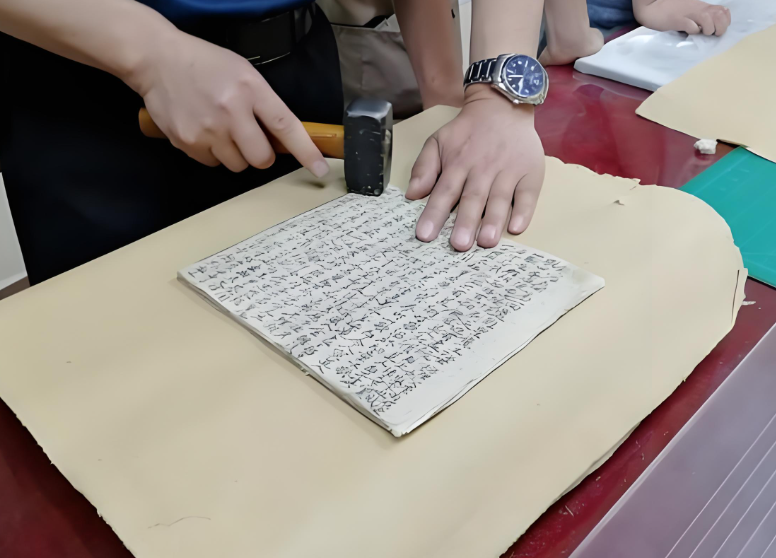
The mounting and restoration craft of Rongbaozhai has a profound origin, dating back more than 300 years, and its predecessor was closely linked to imperial court mounting techniques. Historically, mounting was divided into “Southern-style mounting” and “Northern-style mounting”. The “Beijing-style mounting” represented by Rongbaozhai is suitable for the northern climate, famous for exquisite craftsmanship and dignified shape, and used to provide mounting services exclusively for imperial court calligraphy and painting. After the public-private partnership in 1956, Rongbaozhai gathered top mounting masters from Liulichang to establish a mounting workshop. Led by famous teachers such as Zhang Guitong and Wang Jiarui, it became an industry benchmark. It not only trained a large number of restoration backbones for the national cultural and Museum system but also undertook the restoration of many national treasure-level cultural relics, establishing its authority in the mounting and restoration field. In 2008, Rongbaozhai’s mounting and restoration craft was officially included in the second batch of national intangible cultural heritage list, receiving systematic protection and inheritance.
The legend of this craft has long been engraved in numerous classic restoration cases. In 1978, Rongbaozhai received the task of restoring the Liao Dynasty scriptures unearthed from the Yingxian Wooden Pagoda. These scriptures, which had a history of thousands of years, were severely stuck and damaged. The restoration team spent four years exploring techniques repeatedly and finally restored the cultural relics to their original appearance, successfully protecting the national first-class cultural relics. In addition, Rongbaozhai also participated in the mounting and restoration of the huge traditional Chinese painting “Jiangshan Ruciduojiao” in the Great Hall of the People twice. This 11-meter-long and 9-meter-wide work became a classic challenge in the mounting industry due to its large size and complex craftsmanship. From the calligraphy and painting of Dong Qichang and Wen Zhengming in the Ming Dynasty to the treasures of Bada Shanren and Zheng Banqiao in the Qing Dynasty, the craftsmen of Rongbaozhai have brought broken cultural relics back to life with their skilled hands, continuing the cultural context of calligraphy and painting art.
The exquisiteness of Rongbaozhai’s mounting and restoration craft lies in the ultimate control of 17 core processes, all completed by hand using ancient methods, summarized into four links: mounting the core, cutting, inlaying, and framing. Each step embodies craftsmanship. Mounting the core, as a key process, requires selecting specially supplied rice paper and hand-mounting with ancient paste. It is necessary to avoid ink bleeding and paper wrinkling, while ensuring the picture is flat, smooth, soft and coordinated, which has extremely high requirements for the control of strength and humidity. The production of paste is even more exquisite. It is necessary to remove the gluten from the flour and ferment it to balance viscosity and air permeability, leaving room for future remounting. The workbench used for mounting also follows traditional craftsmanship, treated with hemp paving, ash hanging, pig blood and tung oil, which is hard and moisture-proof, accompanying craftsmen to complete the mounting of numerous treasures.
The restoration process follows the core principle of “restoring old works to their original state”, just like “diagnosing and prescribing for cultural relics”. From decontamination, removing the old core, patching paper, to piecing together, matching paper, and touching up colors, each step requires a customized plan. When encountering difficult-to-remove mold spots, craftsmen will accurately control the wetting range to avoid damage to intact areas by detergents; when restoring broken calligraphy and painting, the piecing process may take several days, and the core removal process may even take a month, requiring extreme patience and carefulness. More importantly, restoration is not only a technical job but also requires craftsmen to have profound calligraphy and painting skills and historical knowledge, which can accurately match the brush style and color depth of the original work, making the repaired part integrate with the original work without leaving traces of restoration.
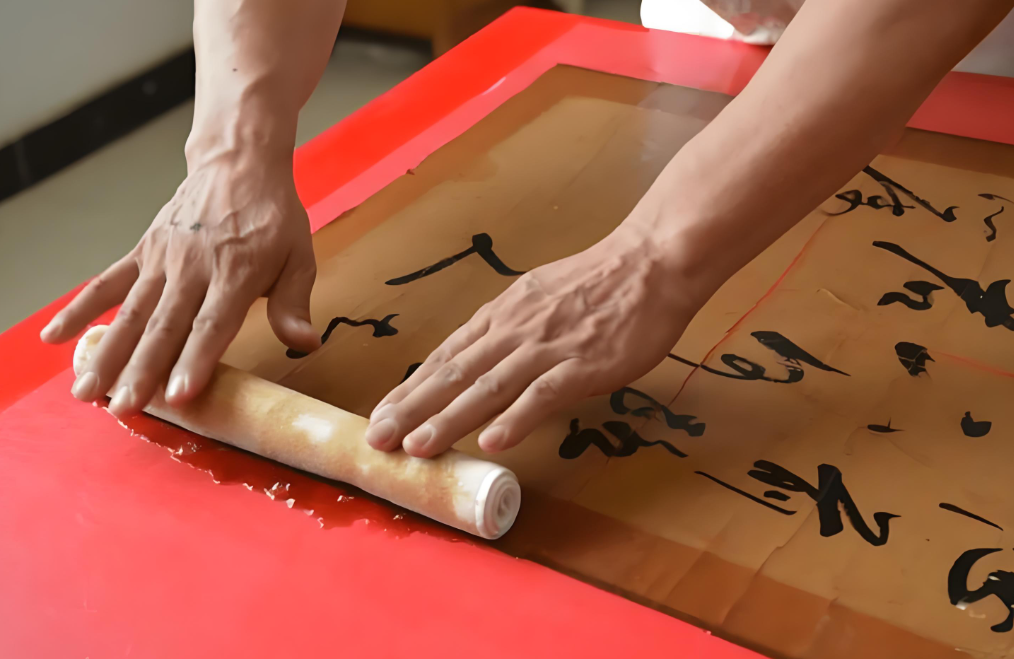
The inheritance of the craft is inseparable from the persistence of generations of craftsmen. Wang Xinjing, a national-level inheritor, is the son of Wang Jiarui, a veteran of Rongbaozhai’s mounting and restoration. Influenced by his family since childhood, he has been in the industry since 1978 and has been deeply engaged in it for more than 40 years. Starting from basic work such as “washing flour”, he developed exquisite skills through strict training. He has not only restored many treasures by famous artists but also trained the younger generation through the “master-apprentice” model, passing on ancient techniques and work experience unreservedly. He emphasizes that “integrity comes first in mounting”, treating both famous works and unknown ones equally and with dedication. Today, young inheritors of Rongbaozhai are exploring the contemporary dissemination of this craft while adhering to ancient methods, making this ancient art walk out of the workshop and become known to more people.
To experience Rongbaozhai’s craftsmanship immersively, the flagship store on West Street of Liulichang is a must-visit. This old store with a 300-year history is open free of charge all year round, with business hours from 9:00 to 17:30, and the art Museum is open until 16:30 (closed every Monday). The store not only displays various mounting styles and restoration tools but also offers free Chinese explanations through group reservations (tel: 63035279), allowing visitors to understand the details of mounting and restoration up close. If you happen to encounter a skill demonstration, you can also witness craftsmen hand-mounting and inlaying on site, and feel the magic of “reviving plain paper and silk”. In addition, the woodblock watermark works and cultural and creative products in the store allow travelers to take this Eastern craftsmanship home.
From imperial court techniques to intangible heritage benchmarks, from broken cultural relics to handed-down treasures, Rongbaozhai’s mounting and restoration craft carries not only a manual art but also China’s reverence and protection for cultural heritage. The persistence in each process is the continuation of the cultural context; the completion of each restoration is a tribute to history. When you gaze at the calligraphy and painting restored by Rongbaozhai, you can understand the original intention of Eastern craftsmen to “protect Culture with skills” and feel this 300-year-old craftsmanship and warmth.



暂无评论内容