




In the map of intangible cultural heritage crafts of old Beijing, Chang’s Glass Grapes (Putao Chang Liaoqi) create lifelike glass treasures from ordinary grapes through the unique craftsmanship of “taking glass as the base and craftsmanship as the soul”. As a unique traditional art form in Beijing, this craft was invented and passed down by the Chang family for a century. With exquisite hollow blowing techniques and vivid expressive force, it has been recognized by the imperial court and praised internationally, becoming a treasure carrying folk wisdom and Eastern aesthetics. For foreign travelers, exploring Chang’s Glass Grapes is the most vivid way to experience the peak level of Beijing’s folk glass craftsmanship.
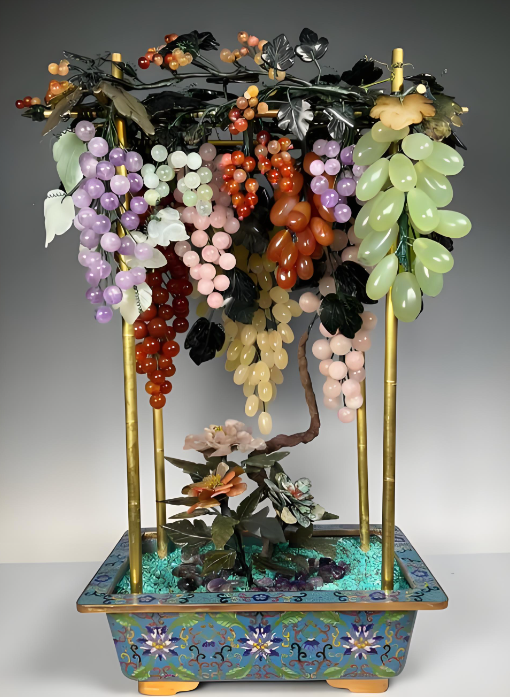
The origin of Chang’s Glass Grapes can be traced back to 1894 (the 20th year of Guangxu in the Qing Dynasty), born in the Chongwai Flower Market area of Beijing. Its founder, Chang Zai, a descendant of the Mongolian nationality, was influenced by his mother’s clay grape making skills since childhood. Through continuous exploration, he broke through traditions, replaced clay with low-temperature glass, and invented the hollow glass grape making technique. Due to the realistic shape and transparent texture of the finished products, Chang’s grapes quickly became famous in Beijing, and the name “Putao Chang” (Grape Chang) spread accordingly. This craft was soon appreciated by Empress Dowager Cixi, who awarded the plaque “Tianyi Chang” (Heavenly Justice Chang), making it a royal court craft. In 1915, Chang’s Glass Grapes appeared at the Panama-Pacific International Exposition in San Francisco, USA and won an award, bringing Chinese folk glass craftsmanship to the world stage for the first time.
The Chang family established a strict family rule of “passing on to daughters but not sons, and to family members but not outsiders”, allowing this craft to be passed down among the family’s women. Thanks to this, the essence of ancient techniques has been completely preserved, but it also faces inheritance limitations. After a century of changes, Chang’s Glass Grapes were once lost for more than ten years due to the changes of the times, and the inheritance of the craft was almost interrupted. It was not until the early 21st century that Chang Hong and her sister Chang Yan, the fifth-generation inheritors, grew up under the influence of their great-aunt Chang Yuling, took the initiative to take on the responsibility of inheritance, and successfully restored the lost craft in 2003, reviving this century-old artistic treasure. In 2014, the production technique of Chang’s Glass Grapes was included in the fourth batch of national intangible cultural heritage list, receiving systematic protection and promotion.
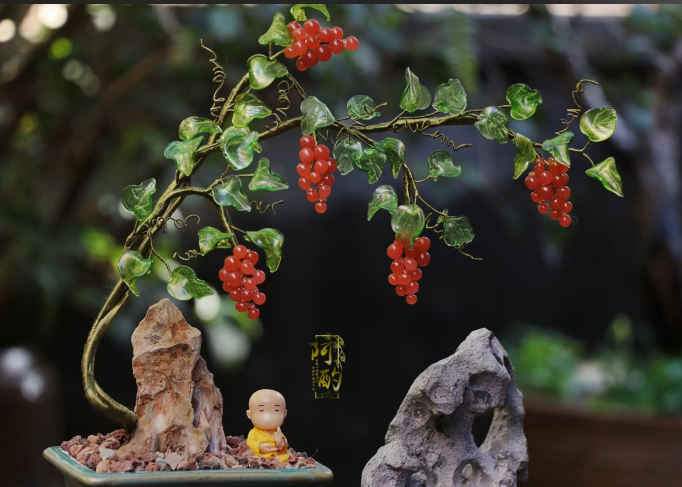
The exquisiteness of Chang’s Glass Grapes lies in the ultimate control of 11 core processes, all completed by hand from raw materials to finished products, with family secrets hidden in each step. The raw material is special low-temperature glass. Different from the solid thickness of ordinary glassware, Chang’s Glass Grapes adopt hollow blowing technique—craftsmen dip molten glass heated to the right temperature with a metal tube, and blow it into round grape beads by precisely controlling breath. The hollow texture endows the finished products with both lightness and real texture, which can be confused with real grapes. Subsequently, processes such as making stems, leaves and tendrils are carried out in turn. The veins of the leaves and the curl of the tendrils need to be carefully carved by hand to restore the natural shape.
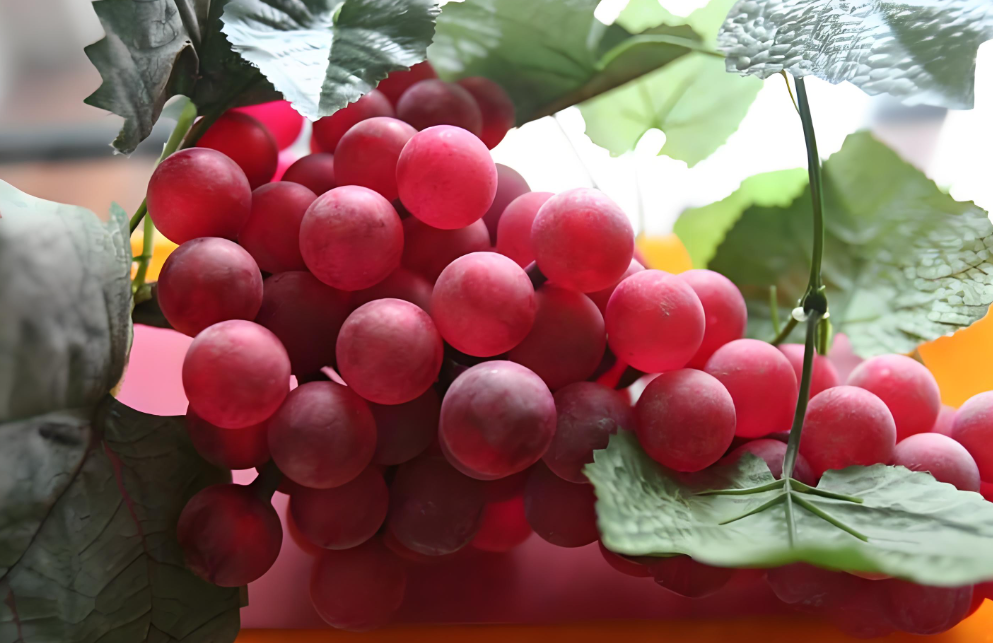
Coloring and frosting are the core secrets of Chang’s Glass Grapes, passed down from generation to generation in the Chang family. Coloring adopts techniques of “filling color” and “dipping green”. The prepared colorant is accurately injected into the hollow grape beads or evenly dipped on the surface. The color gradient from light purple to deep purple is natural, matching the color level of real grapes, and will not fade for a long time. The frosting process is more exquisite. A specially prepared powder is manually kneaded and applied to the surface of the grapes to form a thin layer of white frost, which feels exactly like fresh grapes. This step has extremely high requirements on strength and powder ratio, completely controlled by the craftsman’s experience. Finally, through the “assembling” process, single grapes, branches and leaves are combined into bunches, and a bunch of vivid glass grapes is born. Some finished products are also matched with vines and fruits to enrich the overall artistic conception.
Today, sisters Chang Hong and Chang Yan not only adhere to ancient techniques but also actively explore innovative paths to make Chang’s Glass Grapes close to contemporary life. On the basis of retaining traditional grape shapes, they have developed cultural and creative products such as glass fruit baskets, ornaments and pendants, integrating century-old craftsmanship into modern home aesthetics. At the same time, they enter campuses and participate in intangible cultural heritage exhibitions, allowing more people to understand the charm of this craft through on-site demonstrations and experience activities. At present, the inheritance of Chang’s Glass Grapes still faces challenges—only sisters Chang Hong and Chang Yan fully master the complete set of techniques in the country. They are also committed to cultivating a new generation of inheritors to continue the century-old craftsmanship.
To experience the charm of Chang’s Glass Grapes immersively, you can visit several characteristic venues. As the birthplace of the craft, Chongwai Flower Market has undergone changes, but intangible cultural heritage stores around it still sell finished Chang’s Glass Grapes, allowing you to appreciate their transparent texture and exquisite craftsmanship up close. The Beijing Arts and Crafts Museum displays rare Chang’s Glass Grapes from past dynasties, including replicas of the award-winning works at the Panama Exposition, enabling you to systematically understand the development context of the craft. In addition, some intangible cultural heritage experience activities invite the Chang sisters to give on-site lectures. Travelers can experience simple shaping and coloring processes under guidance, make mini glass grape pendants by hand, and take this glass elegance home.
From royal court use to international awards, from the verge of extinction to revival, Chang’s Glass Grapes carry not only a glass making craft but also the persistence and wisdom of old Beijing folk craftsmen. Every hollow grape contains precise breath control, every gradient color reflects craftsmanship polishing, and every thin layer of white frost continues a century of inheritance. When you hold a bunch of Chang’s Glass Grapes, you can understand Beijingers’ interpretation of natural beauty and feel this three-century-old craftsmanship and cultural warmth.






暂无评论内容