




Among the intangible heritage crafts of old Beijing, Zongren (bristle dolls) stand out as a vivid symbol combining shadow puppetry art and Peking Opera charm, with the unique allure of “dancing to Peking Opera melodies with a tap on the copper plate, and embodying craftsmanship in tiny dolls”. Born in temple fairs of the late Qing Dynasty, this handcraft condenses the vivid postures of Peking Opera warriors into small figures. Supported by pig bristles, they spin and fight on copper plates, staging “a wonderful show on the plate”. Passed down for a century, Zongren carries both the daily joy of old Beijing and the profound heritage of Peking Opera. For foreign travelers, exploring Zongren is an excellent way to understand the integration of Beijing’s folk art and Peking Opera Culture.
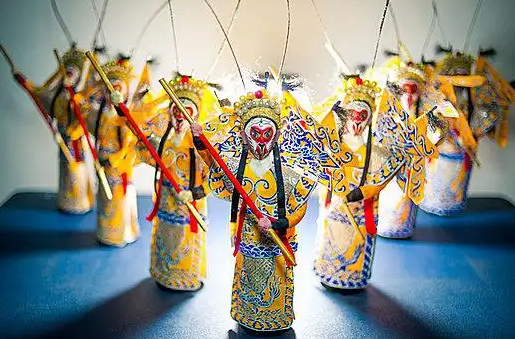
The origin of Zongren is closely linked to temple fair Culture, initiated by the old craftsman Wang Chunpei in the Guangxu period of the late Qing Dynasty. Inspired by the shapes of shadow puppets and obsessed with the stage costumes of Peking Opera, Wang tried to integrate the two, creating interactive and ornamental Zongren. Initially, he only sold them at temple fairs such as Baita Temple, Longfu Temple and Huguo Temple. As the finished dolls could spin and fight on copper plates, resembling a miniature Peking Opera stage, they were affectionately called “copper plate opera” by old Beijingers and soon became popular in the capital. In 1915, Zongren appeared at the Panama-Pacific International Exposition in San Francisco, USA, winning a silver medal for its exquisite craftsmanship and bringing this Eastern folk art to the world stage for the first time.
Wang Chunpei’s persistence adds more cultural depth to this history. In the 1930s, an American businessman offered him a high salary to teach the craft in the US, but he politely declined, saying “one cannot bear to leave one’s poor home and familiar land”. He chose to stay in his hometown to guard the craft. In the late Republic of China, affected by the changes of the times, the Zongren craft was once on the verge of extinction, luckily preserved sporadically by Wang Chunpei’s son Wang Hanqing. In 1959, Bai Dacheng, who was obsessed with Zongren, searched for Wang Hanqing and became his apprentice. On the basis of inheriting ancient techniques, he improved the craft, enhancing the artistry and fun of Zongren, and the name “Zongren Bai” (Bai’s Bristle Dolls) gradually spread. Today, Bai Guangcheng, younger brother of Bai Dacheng, as the third-generation inheritor, devotes himself to the craft with his brother, reviving this ancient art. In 2007, the production technique of Beijing Zongren was included in the Beijing Municipal Intangible Heritage List.
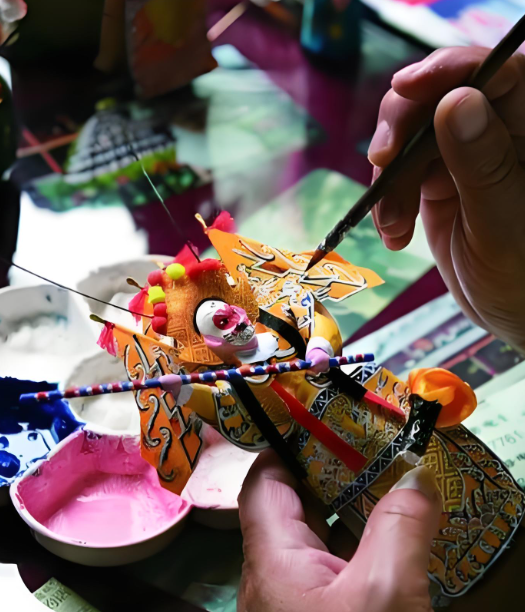
The exquisiteness of Zongren lies in its “vivid in form and spirit” production process and “dynamic and static balance” design ingenuity. The whole process is completed by hand, with craftsmanship hidden in every step from raw material selection to detail carving. Raw material selection is extremely rigorous: delicate clay is used to make the head and base to ensure stable center of gravity; sorghum stalks are used as the body frame, filled with cotton to add fullness; colored paper or silk is wrapped around to make costumes, restoring patterns and colors according to Peking Opera costumes; a circle of 2-3 cm long pig bristles is pasted on the base, which is the core secret of Zongren’s rotation. Driven by the elasticity of pig bristles and the vibration of the copper plate, they can spin freely. In addition, tinfoil is used to make weapons and props, and Peking Opera facial masks are painted. Even the curvature of the feathers and the lines of the armor strive to be consistent with the stage shapes.
Making Zongren “come alive” is the core pursuit of the craft and the most challenging part for craftsmen. Bai Guangcheng has been deeply engaged in the craft for more than 20 years, making thousands of Sun Wukong dolls alone. According to different plots such as “Havoc in Heaven” and “Journey to the West”, he adjusts the costume design and facial expressions——the Monkey King wears pheasant feathers and long armor, showing the boldness of a mountain king; on the journey to the west, he wears costumes given by Guanyin Bodhisattva, with a tight hoop on his head, and his expression becomes more calm. During production, it is necessary to accurately control the density and length of the pig bristles on the base, and match the weight distribution of the costumes to ensure that the posture is stretched and the fight is natural when rotating. Every detail embodies the craftsman’s profound understanding of Peking Opera stories.
Today, inheritors actively innovate while adhering to ancient techniques, making Zongren close to contemporary life. The Bai brothers not only restore traditional Peking Opera themes such as “Three Ladies Teaching the Son” and “Losing Jieting” but also develop characteristic shapes such as lion dancing, expanding the theme boundary of Zongren. They popularize the craft through intangible heritage exhibitions and school lectures, allowing more people to understand this art. Their studio is filled with various Zongren treasures, from majestic warriors to lively Monkey Kings, each telling Peking Opera stories and folk wisdom. Young inheritors show Zongren spinning and fighting on copper plates through short video platforms, making this “wonderful show on the plate” known to more people.
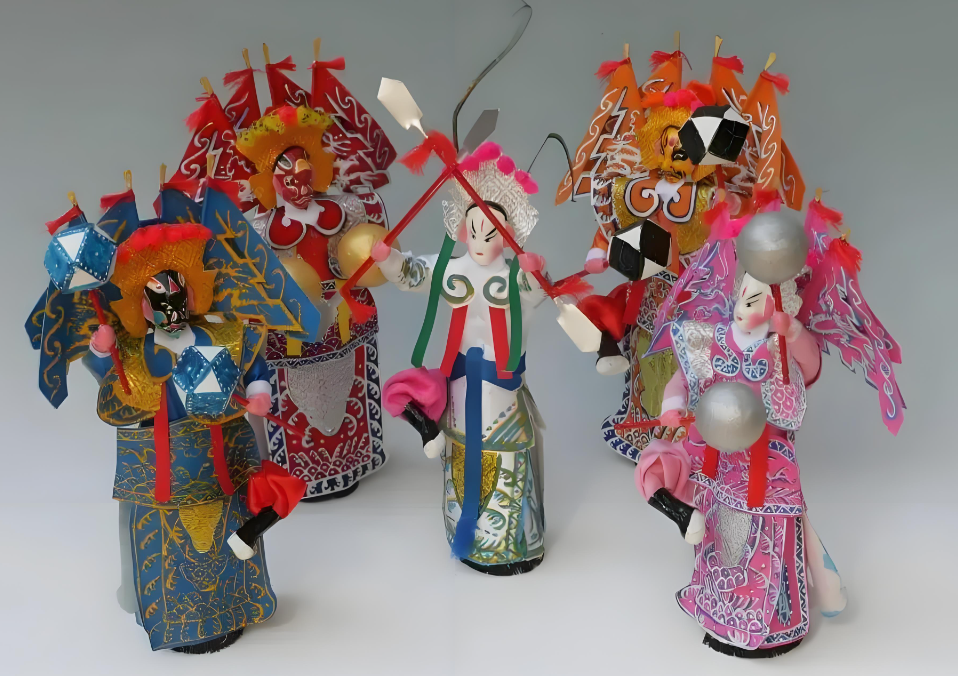
To experience the charm of Zongren immersively, you can visit these characteristic venues. Although Huguo Temple and Longfu Temple fairs have undergone changes, there are still intangible heritage stalls selling Zongren. You can tap the copper plate with your own hands and watch the interesting scene of Zongren spinning and fighting. Bai Guangcheng’s studio can be visited by appointment in advance, where you can watch craftsmen paint facial masks and paste pig bristles up close, and even experience the simple costume pasting process of Zongren under guidance. In addition, folk cultural and creative stores in Qianmen Street and Liulichang also sell Zongren ornaments, from mini pendants to complete drama scenes, meeting collection and commemoration needs, allowing you to take this Peking Opera charm home.
From temple fair stalls to international podiums, from the verge of extinction to revival, Zongren carries not only a handcraft but also the folk memories of old Beijing and the folk expression of Peking Opera art. Every stick of pig bristle pasted contains the ingenuity of balance, every stroke of facial mask reflects the charm of Peking Opera, and every spin on the copper plate continues a century of joy. When you tap the copper plate and watch Zongren wielding swords and spears, you can understand Beijingers’ love for life and feel the craftsmanship and Peking Opera charm hidden in the small figures.





暂无评论内容