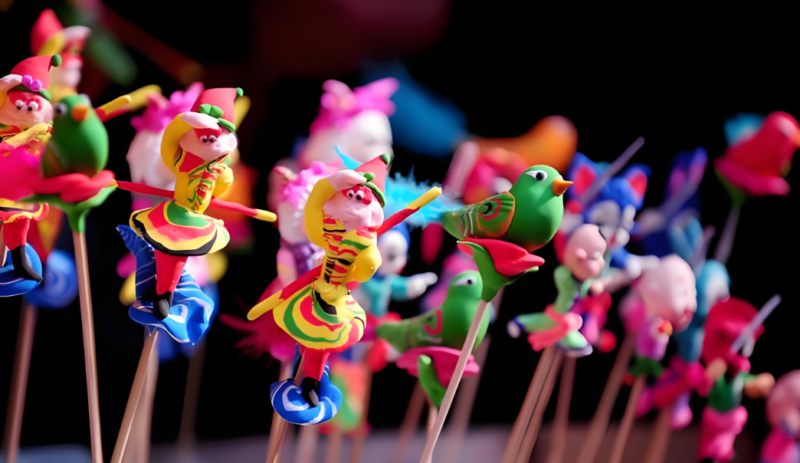





Among the folk handicrafts of old Beijing, dough figurines (Mian Su) stand out as a unique symbol of daily warmth and folk customs, with the vitality of “shaping charm through kneading and pinching, and creating all kinds of figures with flying fingers”. This traditional craft using glutinous rice flour as raw material has a history of more than 2,000 years. Evolving from sacrificial offerings to a handicraft for temple fair entertainment and festival gifts, it carries both the warm texture of natural materials and the enthusiasm for life of old Beijingers. For foreign travelers, exploring dough figurines is the most vivid way to understand Beijing’s folk aesthetics and festival Culture.
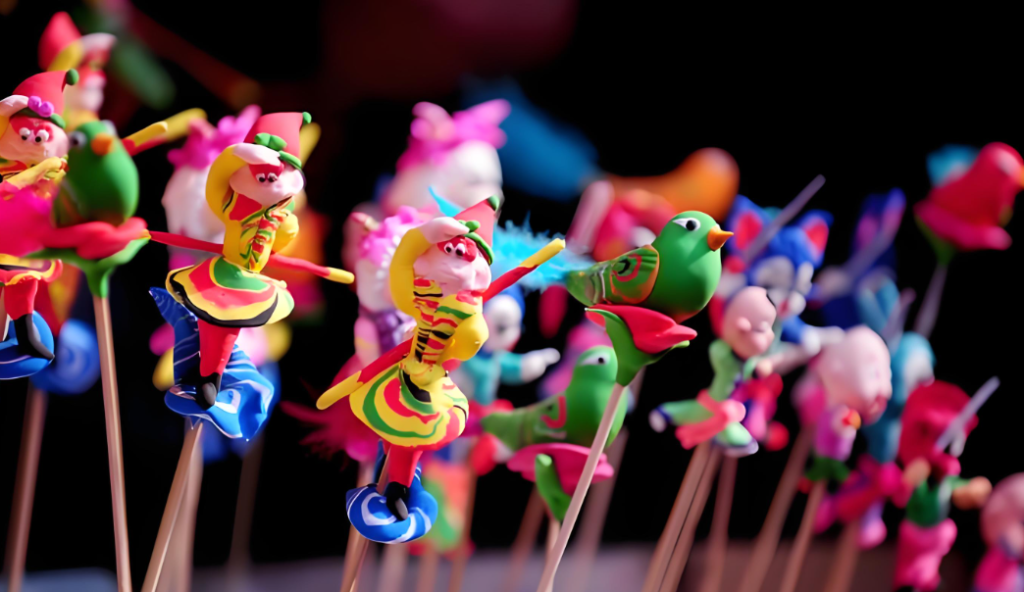
The origin of Beijing dough figurines can be traced back to the Han Dynasty, with prototypes found in unearthed Han Dynasty cultural relics. At that time, they were mostly used as sacrificial offerings with simple and primitive shapes. After development during the Wei, Jin, Southern and Northern Dynasties, dough figurines gradually moved from sacrificial scenes to the people, becoming special food and decorations during festivals. In the Ming and Qing Dynasties, Beijing dough figurines ushered in their heyday. With the rise of temple fair Culture, dough figurine artists set up stalls in temple fairs such as Baita Temple, Longfu Temple and Qianmen, integrating themes such as historical allusions, opera characters and auspicious beasts into their creations. This made dough figurines a folk handicraft with both ornamental and interesting value, and even entered the imperial court as a pastime ornament for royal nobles.
In modern times, many representative craftsmen have emerged in Beijing dough figurines, among whom Lang Shao’an, known as “Lang’s Dough Figurines”, had the most exquisite skills and laid the artistic status of Beijing dough figurines. Lang Shao’an learned the craft from a master in his childhood and devoted himself to dough figurines for more than 60 years. He was good at combining Peking Opera characters, folk scenes with realistic techniques. His works were accurate in shape and vivid in expression—from the delicate facial lines and costume folds of characters to the layout of scenes, every detail was meticulous. He also innovated the raw material ratio, adding honey and glycerin to glutinous rice flour to make dough figurines moisture-proof, crack-resistant and durable, breaking the limitation that traditional dough figurines were easy to damage. The name “Lang’s Dough Figurines” spread throughout Beijing, and his works are not only folk treasures but also collected by Museums at home and abroad, becoming a benchmark of Beijing dough figurines.
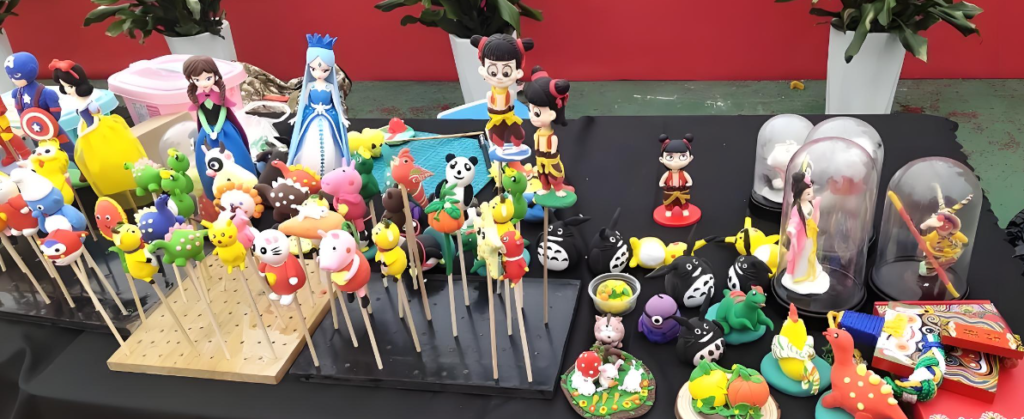
The exquisiteness of dough figurine making lies in the ultimate control of raw materials and techniques. The whole process is completed by hand, which seems simple but requires profound skills. High-quality glutinous rice flour is selected as the raw material, which is repeatedly kneaded and mixed with food coloring for coloring. The colors are mainly bright tones such as bright red, bright yellow and emerald green, which are in line with folk aesthetics, non-toxic and safe with a warm texture. When kneading the dough, the amount of water and water temperature must be accurately controlled, and auxiliary materials such as honey and glycerin are added to ensure that the dough is flexible and easy to shape, and the finished product is not easy to crack or fade. Only simple tools such as bamboo sticks, small scissors and tweezers are needed. With the strength and ingenuity of their ten fingers, craftsmen can shape the dough into various forms through basic techniques such as kneading, rolling, pinching, cutting and pasting.
The shaping process best reflects the craftsman’s skills and creativity, following the principle of “starting with the head, then the body; first the whole, then the details”. When making characters, the head outline is first pinched, then the eyebrows, eyes, nose and mouth are outlined with fingertips, with accurate expression— the heroism of warriors, the gentleness of ladies and the agility of children can all be shown through subtle techniques. Then the torso and costumes are shaped, using the ductility of the dough to create the elegant sense of fluttering sleeves, then using small scissors to trim the costume folds, and tweezers to decorate details such as headdresses and weapons. When making auspicious beasts, attention is paid to proportional coordination. The scales and claws of dragons, the wings of phoenixes and the stripes of tigers strive to combine realism with exaggeration, restoring the shape and being interesting. An exquisite dough figurine can be made in more than ten minutes, while complex scene works may take hours or even days, with every step embodying the craftsman’s patience and ingenuity.
Today, Beijing dough figurines are revitalized under the persistence and innovation of inheritors. As the third-generation inheritor of “Lang’s Dough Figurines”, Zhang Junxian not only fully inherits ancient techniques but also expands creative themes, integrating elements such as old Beijing hutong life and intangible heritage skill connection into his works, making dough figurines close to contemporary aesthetics. He also enters campuses and participates in intangible heritage exhibitions, allowing more people to feel the charm of dough figurines through on-site demonstrations and experience activities. Young inheritors try to combine dough figurines with cultural and creative products, developing mini dough figurine pendants, refrigerator magnets, scene ornaments and other products, bringing this ancient craft into daily life. In 2008, dough figurines (Beijing dough figurines) were included in the second batch of national intangible cultural heritage list, receiving systematic protection and promotion.
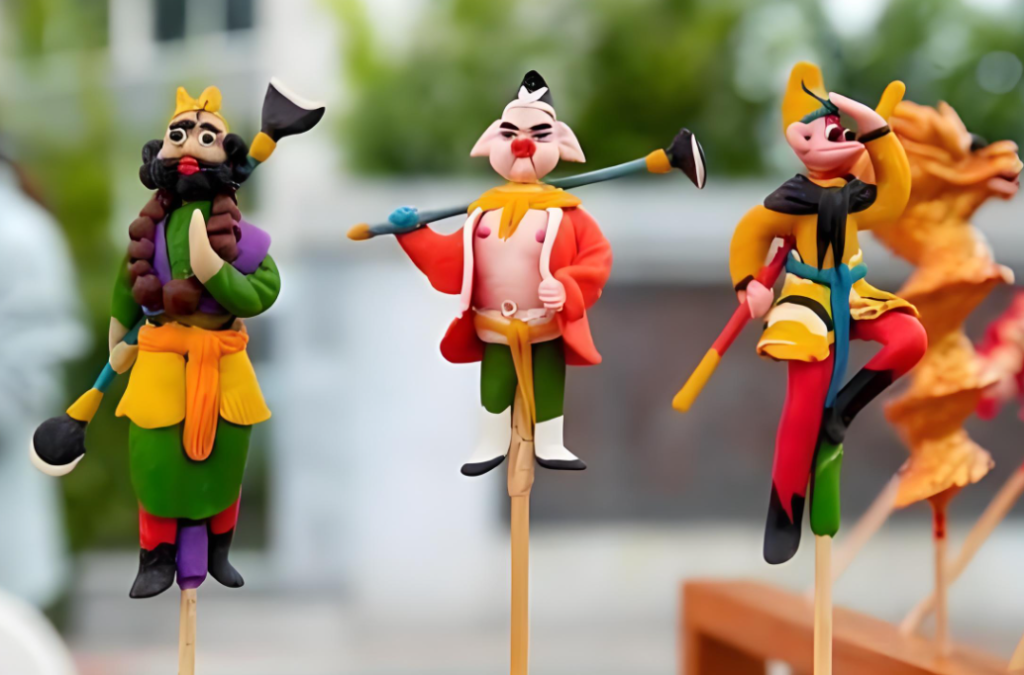
To experience the charm of dough figurines immersively, several characteristic venues are worth visiting. Folk cultural and creative stores and intangible heritage stalls in Qianmen Street and Nanluoguxiang have dough figurine artists creating on site all year round. You can watch the craftsmen’s skilled techniques up close, and also customize exclusive dough figurines to freeze your own image or favorite characters into treasures. Some intangible heritage workshops and cultural venues regularly carry out dough figurine experience courses. Under the guidance of inheritors, travelers can knead dough, mix colors and shape by themselves, experience the fun of making simple dough figurines, and feel the folk customs on their fingertips. In addition, the Beijing Folk Custom Museum displays rare dough figurines from past dynasties, allowing you to systematically understand the historical evolution and artistic characteristics of dough figurines.
From Han Dynasty sacrificial offerings to contemporary intangible heritage treasures, from temple fair stalls to art palaces, Beijing dough figurines carry not only a handcraft but also the folk memories of old Beijing and Eastern folk aesthetics. Every knead contains control of shape, every color reflects the warmth of folk customs, and every work continues the love for life. When you hold a small dough figurine, you can understand Beijingers’ cherishment of daily life and feel this 2,000-year-old craftsmanship and warmth on your fingertips.




暂无评论内容