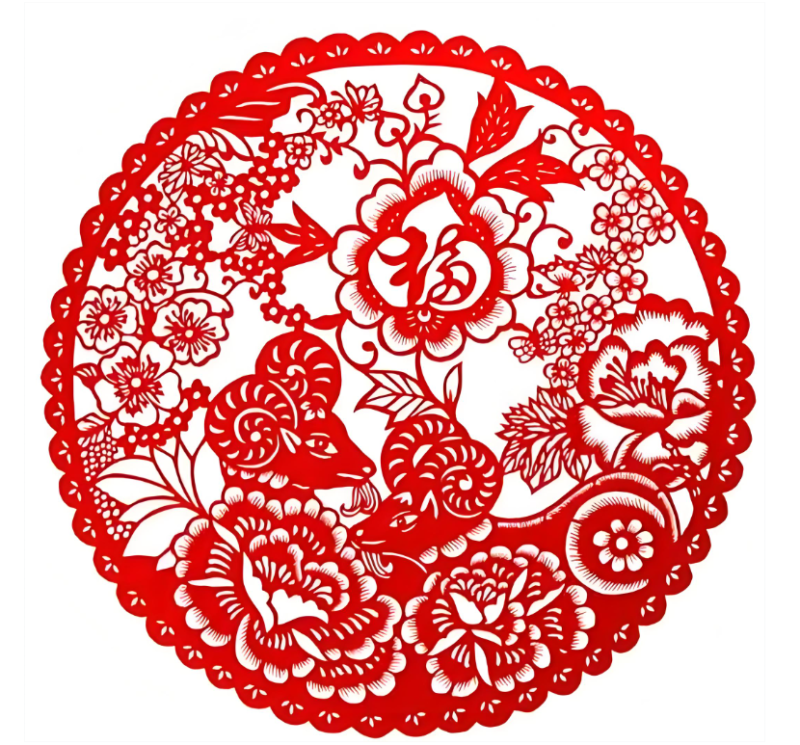





Among the intangible heritage of old Beijing, Paper Cutting stands out as a vivid symbol carrying thousands of years of cultural memories, with the charm of “embodying craftsmanship through one paper and one cut, and reflecting folk customs through various shapes”. This traditional art, using red paper as the medium and cutting as the technique, has evolved from sacrificial symbols to festival decorations and daily ornaments over more than 2,000 years. It not only embodies the pursuit of lines and artistic conception in Chinese aesthetics but also reflects the daily feelings and auspicious expectations of old Beijingers. For foreign travelers, exploring Beijing paper cutting is the most intuitive way to understand Chinese folk art and folk Culture.
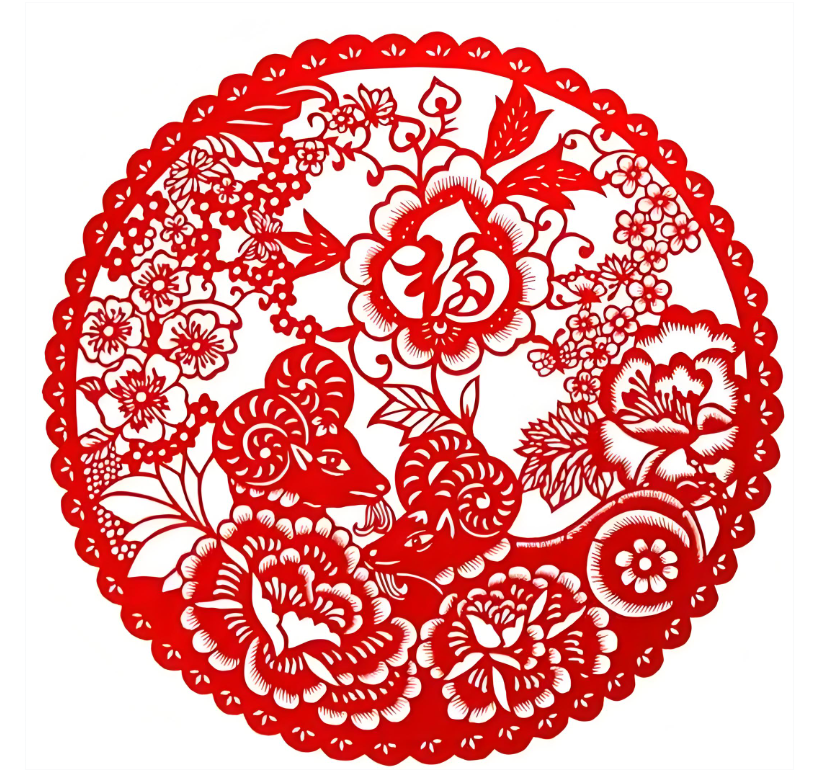
The origin of Beijing Paper Cutting can be traced back to the Han Dynasty. Hollowed-out patterns similar to paper cutting have been found in unearthed Han silk books and cultural relics. At that time, they were mostly used as decorations for funeral objects in sacrificial rituals, with simple and primitive shapes. After development during the Wei, Jin, Southern and Northern Dynasties, paper cutting gradually moved from sacrificial scenes to the people, becoming a characteristic decoration for adorning doors, windows and utensils during festivals. In the Ming and Qing Dynasties, Beijing paper cutting ushered in its heyday. With the prosperity of the capital Culture, the craftsmanship became increasingly exquisite, forming two major schools: court paper cutting and folk paper cutting. Court paper cutting emphasized regularity and grandeur, mostly used for palace decorations and ritual supplies, with patterns such as dragons, phoenixes and auspicious clouds. Folk paper cutting was casual and vivid, mainly in the forms of window decorations, wedding decorations and lantern decorations, covering themes of flowers, birds, fish, insects, Peking Opera characters and hutong life, becoming a carrier for people to express emotions and place expectations.
In modern times, many representative craftsmen have emerged in Beijing Paper Cutting. Among them, Shen Peinong’s craftsmanship and creative concepts have injected profound cultural connotations into this art. Obsessed with paper cutting since childhood, Shen Peinong devoted himself to the craft for decades, breaking the thematic limitations of traditional paper cutting by integrating old Beijing hutong styles, folk activities and historical allusions into his creations. His works feature smooth lines and rich compositions, retaining the essence of traditional techniques while possessing a contemporary touch. His series “Old Beijing Hutong Customs” freezes the daily scenes of old Beijing in paper cutting. Every detail, from the brick carvings of gate towers and window lattice patterns to the overall layout of hutongs, is depicted vividly. His works are collected by Museums at home and abroad, becoming an artistic benchmark of Beijing paper cutting. Today, contemporary inheritors represented by Liu Ren innovate on the basis of inheriting ancient methods, revitalizing this ancient art.
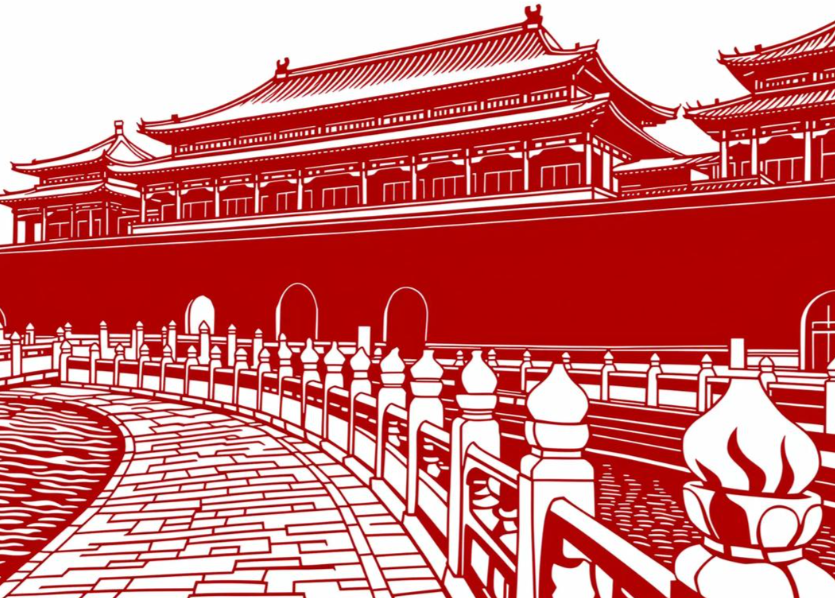
The exquisiteness of Beijing paper cutting lies in the ultimate control of techniques and artistic conception. The whole process seems simple but requires patience, skill and creativity. The raw material is mostly flexible and bright red paper, which fits Chinese folk aesthetics. Rice paper and colored paper can also be used to expand styles. The thickness of the paper needs to be adjusted according to the theme to ensure it is not easy to break during cutting. The main tools are carving knives and scissors. Scissors are used for free and casual shape cutting, while carving knives are suitable for carving fine patterns. Craftsmen need to prepare carving knives of different sizes to cope with different lines and hollowing needs. The core techniques are divided into three types: negative carving, positive carving and the combination of both. Negative carving involves cutting off the pattern part to retain the background color of the paper, with sharp and striking lines. Positive carving retains the pattern part and cuts off the excess background, with thin and flexible lines. The combination of negative and positive carving combines the advantages of both, making the works layered, virtual and real.
The creation process best reflects the craftsman’s skill and creativity, following the principle of “conceiving first, drawing patterns second, and cutting last”. Craftsmen first conceive the composition according to the theme, integrating auspicious meanings into the patterns—window decorations for the Spring Festival mostly use themes such as bats (symbolizing blessing), magpies (symbolizing joy) and fish (symbolizing surplus year after year); wedding decorations take mandarin ducks and peonies (symbolizing prosperity) as the core; daily ornaments can incorporate elements such as Peking Opera characters and hutong scenes. When drawing patterns, it is necessary to accurately outline the lines, focusing on proportional coordination and symmetrical beauty, which is fully reflected in paper cutting as a typical feature of Chinese aesthetics. During cutting, it is necessary to pay attention to strength and order: first cut the outer contour, then carve the internal fine patterns, expanding from the center to the surrounding to avoid paper damage. Especially for delicate lines and hollowing, craftsmen need to hold their breath, exert force accurately, and complete with one cut without any mistakes. An exquisite paper cutting work can be finished in tens of minutes, while a complex large-scale work may take hours or even days, with every line embodying the craftsman’s ingenuity and persistence.
Today, Beijing paper cutting is revitalized under the persistence and innovation of inheritors. Contemporary inheritors such as Liu Ren not only fully inherit ancient techniques such as negative and positive carving but also expand the forms of creation, combining paper cutting with cultural and creative products, decorations and clothing. They have developed paper cutting pendants, refrigerator magnets, desk lamp shades, clothing patterns and other products, bringing ancient techniques into contemporary life. At the same time, inheritors enter campuses, communities and intangible heritage exhibitions, allowing more people to feel the charm of paper cutting through on-site demonstrations and experience activities. In particular, they provide foreign travelers with the opportunity to operate by themselves, letting them experience the charm of Eastern art in each cut.
To experience the charm of Beijing paper cutting immersively, several characteristic venues are worth visiting. Folk cultural and creative stores and intangible heritage stalls in Nanluoguxiang and Yandai Xiejie have paper cutting artists creating on site all year round. You can watch the exquisite skills of craftsmen up close, and also customize exclusive paper cutting works, freezing your favorite patterns and names into red paper treasures. Some intangible heritage workshops and cultural venues regularly carry out paper cutting experience courses. Under the guidance of inheritors, travelers can try drawing patterns and cutting by themselves, make simple window decorations and pendants, and feel the fun of traditional techniques. In addition, the Beijing Folk Custom Museum and China National Arts and Crafts Museum display rare paper cutting works from past dynasties, from court masterpieces to folk handicrafts, allowing you to systematically understand the historical evolution and artistic characteristics of Beijing paper cutting.
From Han Dynasty funeral decorations to contemporary human intangible heritage, from festival window decorations to art treasures, Beijing paper cutting carries not only a handcraft but also the inheritance of Chinese folk Culture and Eastern aesthetics. Every line hides love for life, every hollow reflects auspicious expectations, and every work continues the cultural context spanning thousands of years. When you hold an exquisite piece of Beijing paper cutting, you can understand the Chinese yearning for a better life and feel the craftsmanship and warmth hidden in the red paper.




暂无评论内容