




Among the lineage of traditional Chinese curio crafts, Beijing Gourd Carving & Molding stands out as an intangible heritage treasure, embodying imperial aesthetics and folk wishes with its unique charm of “using gourd as paper, fire as brush, and mold as frame”. This craft perfectly integrates natural creation with manual ingenuity, transforming ordinary gourds into practical and artistic “gourd vessels” through molding, shaping and pyrography. It not only precipitates the elegant taste of the Ming-Qing royal family but also embodies the craftsmen’s ultimate pursuit of “following nature and meticulous carving”. For foreign travelers, exploring this craft is an excellent way to understand Chinese “blessing and prosperity” Culture and traditional craftsmanship spirit.
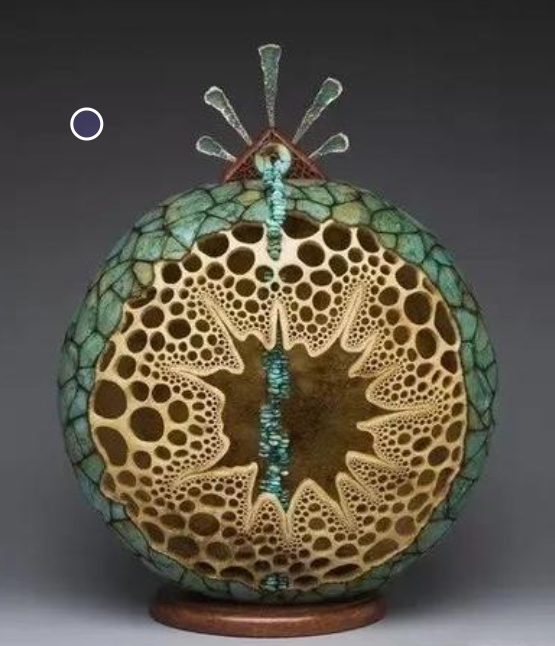
The heritage of Beijing Gourd Carving & Molding has a history of over 300 years, deeply marked by royal traces. Its prosperity began in the Kangxi, Yongzheng and Qianlong dynasties of the Qing Dynasty. All three emperors were fond of gourd vessels, not only opening exclusive gourd plantations in Fengze Garden and Yuanmingyuan but also recruiting skilled craftsmen from across the country into the Imperial Workshops to systematically develop diverse techniques such as binding, molding, pyrography and carving. Among them, molding craft was the most prominent: craftsmen put pre-made molds on young gourds to guide their growth into preset shapes, and then refined them through polishing and waxing, making them exclusive display and collection items for the royal family. From the late Qing Dynasty to the Republic of China, the craft gradually spread from the court to the people, with many famous artists emerging, including folk craftsmen, royal descendants, and even the renowned guqin master Guan Pinghu, who was also an expert in pyrography gourd. Wang Shixiang recorded the craft’s prosperity in this period in his book “Talking About Gourds”.
During the Republic of China, most gourd craft workshops in Beijing were concentrated in cultural and curio gathering places such as Liulichang and Longfusi, inheriting the craft through family-run workshops with the tradition of “passing from father to son, master to apprentice”. During the War of Resistance Against Japanese Aggression, the craft declined, most artists lost their jobs and changed careers, and only a few persisted. After the founding of New China, scattered artists regrouped and restored ancient techniques. In 2020, Pyrography Gourd Craft was included in the fifth batch of Beijing municipal intangible heritage list, and in 2011, it was included in the Shunyi district-level intangible heritage list, gaining official recognition and systematic protection for this century-old craft.
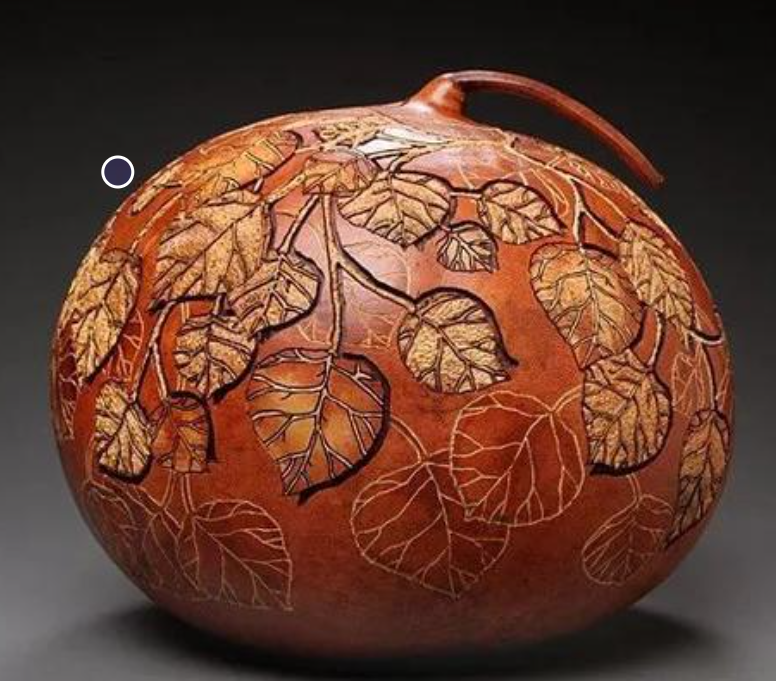
The value of the craft lies first in the ultimate pursuit of raw materials and reverence for nature. Craftsmen must participate in the entire process of gourd planting, management, harvesting and air-drying, and have a deep understanding of gourd growth habits. Only “waist gourds” and “long-handled gourds” with thick skin, delicate texture and regular shape are selected. After harvesting, the gourds need to be naturally air-dried for several months to remove moisture and impurities, ensuring the skin is hard and stable, not easy to crack or deform. Excellent craftsmen can judge the maturity and plasticity of gourds only by looking and touching, and conceive creations according to the natural shape of each gourd, achieving an artistic effect of “harmony between man and nature”. Compared with other carving crafts, gourd craft emphasizes “following nature”, not forcing changes to the gourd’s original form, allowing natural beauty and manual ingenuity to complement each other.
Molding and pyrography are the two cores of Beijing gourd craft. The whole process is completed by hand, testing the craftsman’s precise control of nature and fire. Molding craft is known as “carving grown from the soil”, with the core lying in mold making and timing of mold covering. Molds are mostly made of clay or gypsum, carved with auspicious patterns and dried to set. When the gourd grows to the size of a fist, the mold is put on. During this period, the growth state must be observed regularly, and the mold tightness adjusted to avoid damaging the gourd. After maturation and demolding, regular patterns are naturally printed on the gourd surface, which is then polished and waxed to show simplicity and elegance. Pyrography craft follows the principle of “conceiving before painting, forming with one stroke”. Craftsmen use special fire pens to iron different shades of color on the gourd surface by controlling fire temperature and strength, combining the outlining, dotting and dyeing techniques of traditional Chinese painting with the realistic effect of Western painting, with a strong sense of three-dimensionality, resembling brown sketch and lithograph.
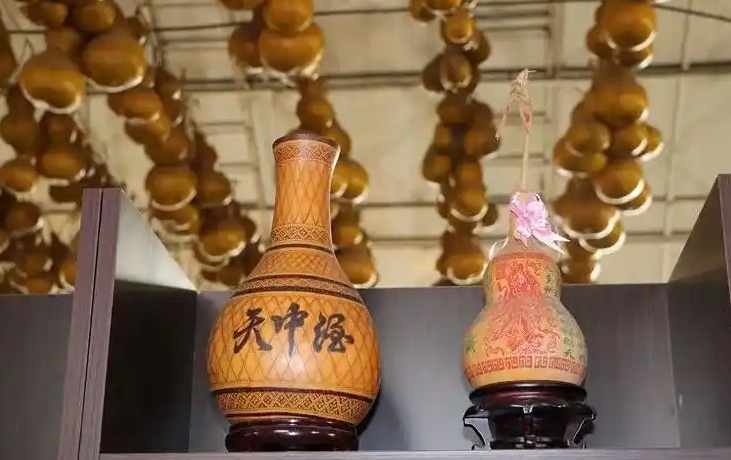
Today, this ancient craft is revitalized under the persistence and innovation of inheritors. Niu Family Pyrography Gourd Craft, as a representative heritage lineage, has been passed down for six generations, dating back to Bai Er, a disciple of the Bai family in the Xianfeng period of the Qing Dynasty. Niu Chengguo, the fifth-generation inheritor, has persisted in creation for more than 40 years. On the basis of inheriting ancient methods, he innovated techniques. During the 2022 Beijing Winter Olympics, his team spent two months making nearly 1,000 pyrography gourds with “plum, orchid, bamboo and chrysanthemum” patterns, which were displayed in the Olympic Village athletes’ apartments and exhibition areas, bringing the craft to the international stage. Niu Chengguo also established a professional cooperative, training his daughter Liu Jianwei as the sixth-generation inheritor. He popularizes the craft through skill exhibitions and workshop experiences, and develops cultural and creative ornaments and small playthings, bringing gourd vessels into daily life.
To experience the charm of gourd carving and molding immersively, core venues are not to be missed. As a curio gathering place, Liulichang Cultural Street has many intangible heritage cultural and creative stores displaying contemporary gourd masterpieces. Occasionally, craftsmen demonstrate pyrography on site, allowing visitors to closely experience the magic of “fire pen creating flowers”. Beijing Arts and Crafts Museum collects imperial gourd treasures from the Ming and Qing dynasties and works by modern and contemporary famous artists, enabling a systematic understanding of the craft’s evolution. Niu Family Gourd Cooperative offers experience programs, where visitors can try simple pyrography procedures under the guidance of craftsmen, make exclusive small gourd works by hand, and deeply feel the fun of craftsmanship.
From imperial exclusive curios in the Ming and Qing dynasties to contemporary intangible heritage cultural and creative products, from natural gourds to exquisitely carved gourd vessels, Beijing Gourd Carving & Molding carries not only a craft but also the crystallization of Chinese “blessing and prosperity” Culture and craftsmanship spirit. Each gourd hides the gift of nature, each pyrograph reflects the craftsman’s persistence, and each work condenses the Oriental wisdom of “following nature and striving for excellence”. When you touch the warm skin and exquisite patterns of the gourd, you can understand the Chinese people’s ultimate awe of nature and craftsmanship, and feel the cultural heritage hidden in the small gourd vessel.





暂无评论内容