




Among the lineage of traditional Chinese Woodworking crafts, Beijing wood carving Small Artifacts stands out as a national intangible heritage treasure, embodying imperial aesthetics and folk ingenuity with its unique charm of “revealing a world in a tiny space and showing craftsmanship in details”. This exquisite craft, separated from large-scale Woodworking, specializes in small wood carvings, using hardwood as material, mortise-tenon joints as the framework, and elaborate carving as the soul. Tempered over thousands of years, it not only precipitates the grace of the Ming-Qing imperial court but also embodies the craftsmen’s ultimate pursuit of “seamless integration without nails”. For foreign travelers, exploring Wood Carving Small Artifacts is an excellent way to understand the spirit of “great ingenuity in simplicity and meticulous craftsmanship” in traditional Chinese Woodworking.
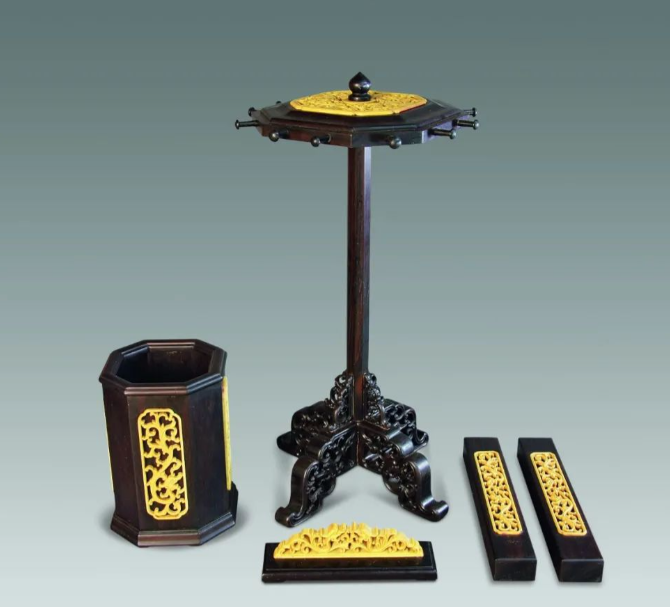
The heritage of Beijing wood carving Small Artifacts spans thousands of years, deeply marked by the times. Originating in the Liao and Jin dynasties and established in the Yuan Dynasty, Beijing, as the capital, had a booming demand for woodworking, laying the foundation for the emergence of small artifacts craft. In the Ming Dynasty, with the maturity of furniture modeling technology, wood carving techniques became increasingly sophisticated, and small artifacts craft gradually separated from large-scale woodworking and Furniture Making, forming a specialized industry. Its products were mostly literati’s elegant utensils and imperial accessories. It reached its peak during the Qianlong period of the Qing Dynasty. Emperor Qianlong loved antiques and collected skilled craftsmen from Suzhou and Guangzhou into the Imperial Workshops, integrating the delicacy of Suzhou-style, the grandeur of Guangzhou-style and the elegance of Beijing-style, forming a Beijing-style small artifacts style characterized by “auspicious patterns, elegant shapes and exquisite carving”, which became an important part of imperial court crafts.
During the Republic of China, most workshops of Beijing Wood Carving Small Artifacts were concentrated in Longfusi Street, Liulichang, Qianmen Langfang No.2 Street and other places, forming dozens of family workshops that passed down the craft from father to son and grandson to grandson. Among them, Fuxinghou in Liulichang and Guangxingshun in Yangmeizhu Xiejie were quite large-scale. During the War of Resistance Against Japanese Aggression, the craft declined, most carvers lost their jobs and changed careers, and only a few persisted. After the founding of New China, Miao Guangchun, a prestigious figure in the industry, gathered scattered carvers to set up cooperatives and craft factories. Through quality improvement and restoring ancient methods, the craft was revitalized. In 2021, Beijing Wood Carving Small Artifacts was officially included in the fifth batch of national intangible heritage list, gaining official recognition and protection for the millennium-old craft.
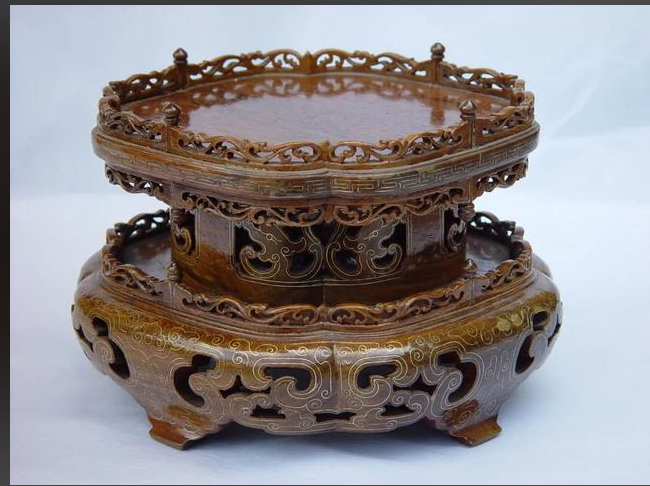
The value of Wood Carving Small Artifacts first lies in the ultimate pursuit and precise selection of raw materials. The craft uses two categories of wood: hardwood and softwood. Hardwood mainly includes red sandalwood, mahogany, padauk, boxwood, which are dense in texture and warm in grain, suitable for fine carving without deformation; softwood includes nanmu, walnut wood, birch, etc., adapting to the functional needs of different artifacts. Each piece of wood undergoes multiple treatments such as natural air drying and artificial drying to remove moisture and impurities, ensuring stability and durability after carving. Compared with the narrative patterns of southern “mahogany small pieces”, Beijing Wood Carving Small Artifacts focuses more on auspicious and wealthy themes, such as dragon patterns, tangled lotus, bats, ruyi, highlighting the grandeur and dignity of Beijing-style imperial court style.
The ancient process of “one part chiseling, two parts scraping, three parts polishing” is the soul of Wood Carving Small Artifacts. The whole process is completed by hand without any nails, fully showing the craftsmen’s ingenuity. The core processes include more than ten steps: design, woodworking, pattern drawing, turning, scrolling, chiseling, scraping, filing, polishing, coloring, waxing, etc., each testing eyesight and touch. Craftsmen use special small tools, such as steel wire scroll saws that can carve around corners, to accurately handle fine lines; fish skin glue is used for mortise-tenon joints, boiled slowly over low heat, which has strong adhesion and no traces, more delicate than the pork skin glue used in large-scale woodworking. Chiseling is rough processing to outline the basic shape; scraping is fine trimming and polishing to make the patterns smooth and flat; polishing requires multiple rounds of sanding with sandpaper and file grass until the surface of the artifact is as warm as a mirror with no roughness.
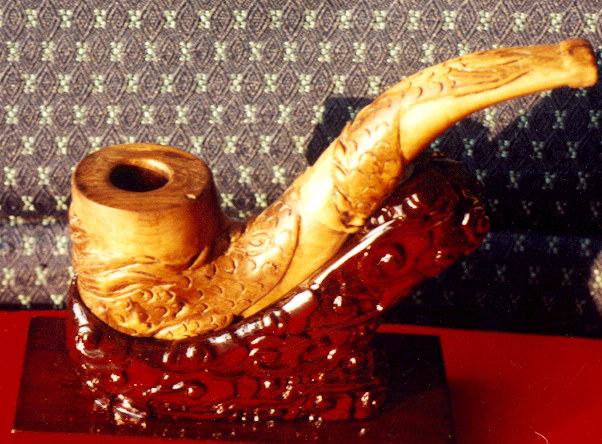
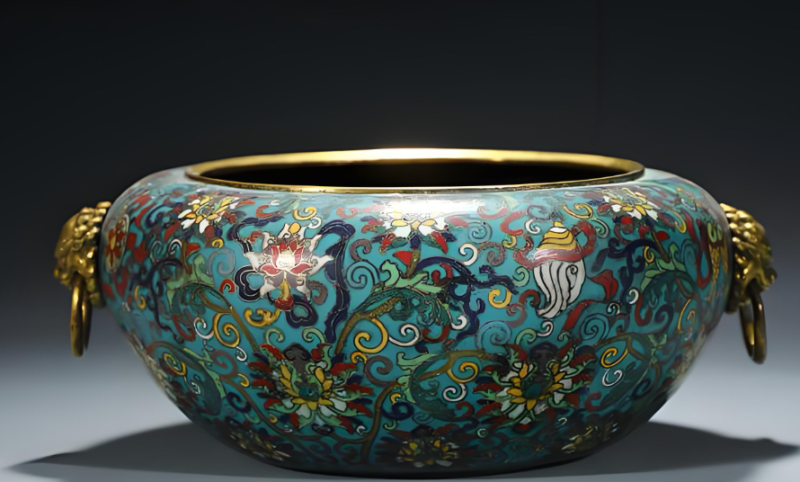
Today, this ancient craft is revitalized in persistence and innovation. Beijing Arts and Crafts Wood Carving Factory undertakes the core mission of craft inheritance. Craftsmen not only reproduce Ming-Qing imperial court treasures to restore the essence of ancient methods but also develop cultural and creative ornaments, tea trays, jewelry boxes and other products combining modern aesthetic needs, bringing small wood carvings into daily life. Inheritors adhere to the tradition of “oral teaching and heart-to-heart transmission, educating people through practice”, showing core processes such as scrolling and chiseling through craft exhibitions and workshop experiences, allowing the public to intuitively feel the charm of “a world in a small wooden piece”. At the same time, craftsmen focus on quality improvement, restoring the tradition of “matching utensils”, and the wooden bases made for cloisonné, jade and other crafts have returned to the level of “shape matching the utensils”.
To experience the charm of Wood Carving Small Artifacts immersively, core venues are not to be missed. Liulichang Cultural Street carries the century-old memory of the craft. Although most of the old workshops have changed, contemporary masterpieces can still be found in some intangible heritage cultural and creative stores, and craftsmen may be encountered demonstrating carving techniques on site. As the core of inheritance, Beijing Arts and Crafts Wood Carving Factory allows visits to intangible heritage workshops to understand the complete process from material selection, mortise-tenon joints to carving and waxing. Some experience programs let visitors try simple polishing processes by hand. In addition, the Beijing Arts and Crafts Museum displays rare small artifacts from past dynasties, from imperial court accessories to folk elegant utensils, systematically showing the historical evolution and artistic value of the craft.
From its germination in the Liao-Jin dynasties to its prosperity in the Ming-Qing imperial court, from its persistence during the Republic of China to its rebirth as an intangible heritage in the contemporary era, Beijing Wood Carving Small Artifacts carries not only a carving craft but also the craftsmanship spirit and aesthetic pursuit of traditional Chinese woodworking. Each piece of hardwood hides the texture of time, each carving reflects the craftsman’s persistence, and each work condenses the Oriental wisdom of “revealing truth in details”. When you touch the warm surface and exquisite mortise-tenon joints of the artifact, you can understand the Chinese people’s ultimate awe of craftsmanship and nature, and feel the cultural heritage hidden in the tiny wooden pieces.








暂无评论内容