




Wandering along the bluestone streets of Dashilan in downtown Beijing, you may occasionally spot people wearing changpao (long robe) and magua (mandarin jacket). As they walk, the fabric flutters like a whisper from Beijing’s centuries-old past. This attire, blending Manchu equestrian Culture with Han etiquette aesthetics, was not only the dominant men’s clothing from the Qing Dynasty to the Republic of China but also a vivid symbol of cultural integration in Beijing. For foreign travelers, wearing a set of changpao and magua while visiting attractions like the Forbidden City and Summer Palace is a profound dialogue with traditional Chinese Culture.
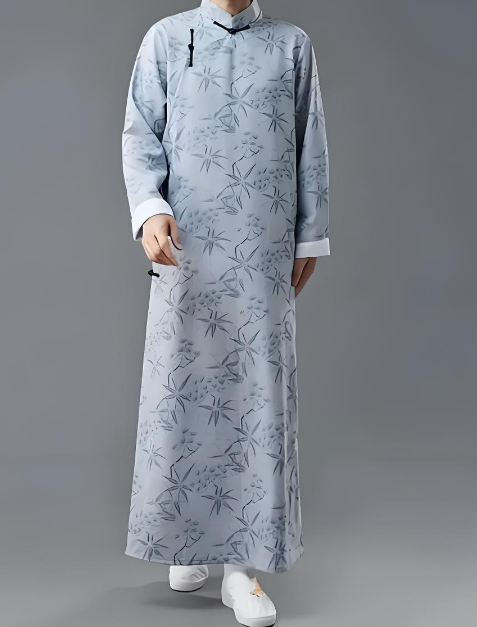
Changpao and magua are not a single garment but a matching set. The changpao is a straight-sleeved, cross-collar robe with the right side overlapping the left, reaching the ankles. Its fabric varies by season: silk for formal occasions, cotton for daily wear, and fur for winter warmth, while light gauze is used to beat the summer heat. The magua, worn as an outer layer, hits the waist with sleeves ending at the elbows. It comes in three styles: front-opening (the most common for daily etiquette), side-opening, and lute-shaped opening. During the Qing Dynasty, the color of the magua indicated social status: bright yellow magua was exclusive to the royal family or awarded to meritorious officials, dark blue was for nobles and ministers, and ordinary people mostly wore plain colors like navy and dark gray.
Tracing its history, the magua originated from the outer armor of the Ming Dynasty. It was improved by the Manchu people in the Qing Dynasty and became popular nationwide as a “travel costume” suitable for horseback riding and hunting. Later, it gradually integrated Han Embroidery and tailoring techniques, forming a unique Beijing-style attire that combines Manchu and Han elements. In the Republic of China, changpao and magua were designated as men’s formal wear, suitable for business banquets and festival celebrations. Though no longer daily wear, they are now iconic for traditional cultural performances, weddings, and travel experiences, often seen in Xiangsheng (crosstalk) shows.
To experience authentic changpao and magua in Beijing, time-honored brands are the best choice, as they inherit centuries-old craftsmanship. Rui Fuxiang, founded in 1862 and known as “China’s Top Silk Brand,” uses custom-woven and dyed fabrics to make changpao and magua through traditional handcrafts such as edging, patching, and button-making. Each frog button and hem is a testament to meticulous craftsmanship, and its traditional Chinese clothing making technique is listed as a Beijing intangible cultural heritage. Its Qianmen Store (No. 5 Dashilan Street, Xicheng District, Tel: 010-63035313) offers customization and rental services—custom-made garments take 15-30 days, and daily rental ranges from 200 to 500 RMB.
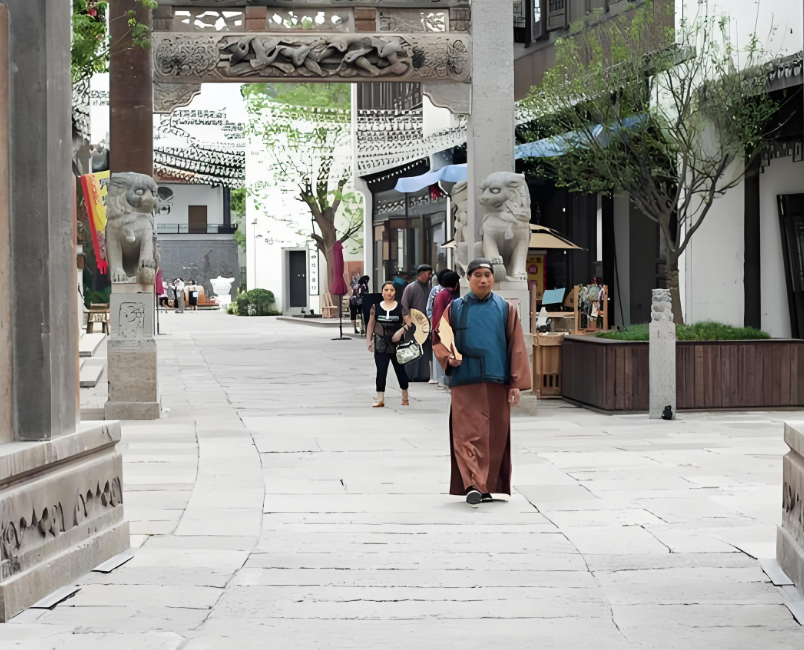
Longqingxiang, with a 400-year history, is another excellent option. Its ancestors made official robes for nobles in the Ming and Qing Dynasties. Each garment undergoes multiple processes including fabric selection, measurement, and tailoring, integrating elements like Embroidery and Blue and White porcelain patterns. Its Qianmen Store (No. 93 Qianmen Street, Dongcheng District, Tel: 010-63135472) provides one-stop customization services for travelers pursuing high-end quality. Additionally, Qianxiangyi (No. 5 Zhubaoshi Street, Xicheng District) offers a wide range of silk fabrics, and Majuyuan (No. 8 Dashilan Street, Xicheng District) excels in crafting matching formal hats to complete the outfit.
Wearing changpao and magua requires following basic etiquette to show respect for the Culture. First, ensure the robe overlaps right over left—this is a core etiquette of Han clothing, and reversing it is considered disrespectful. The sash should be tied with hanging ends of equal length. Men can pair the outfit with cloth shoes or riding boots, while women can wear embroidered shoes; sports shoes and other modern footwear are not recommended. For occasions, historical attractions like the Forbidden City, Temple of Heaven, and Prince Gong’s Mansion are perfect for wearing the attire, offering stunning photo opportunities. Dark satin styles suit formal traditional events, while cotton and linen fabrics are ideal for daily experiences due to their comfort.
Note that yellow magua, bearing royal connotations, should not be worn casually in ordinary occasions to avoid impropriety. Beyond wearing the attire, you can deepen your understanding of its culture at Shengxifu Hat Museum (No. 368 Dongsi North Street, Dongcheng District), which displays various traditional hats matching changpao and magua, showcasing the completeness of traditional attire matching. Some time-honored brands also offer handicraft experience courses, allowing travelers to make simple frog buttons and experience intangible cultural heritage up close.
For photography, old Beijing-style streets like Qianmen Street, Nanluoguxiang, and Yandai Xiejie are ideal backdrops, capturing photos with a perfect blend of historical charm and atmosphere—souvenirs that will make your Beijing trip unforgettable. Changpao and magua are more than just clothing; they are a microcosm of Beijing’s culture, witnessing the integration of Manchu and Han cultures and carrying centuries of craftsmanship and etiquette traditions.
When you walk through the ancient streets in changpao and magua, you not only feel the elegance of traditional attire but also become part of Beijing’s cultural landscape, adding depth and unique memories to your journey in the ancient capital.



暂无评论内容