




The 5th day of the 5th lunar month marks the Dragon Boat Festival, one of China’s four major traditional festivals, also known as “Duanwu Festival, Wuri Festival, or Dragon Boat Race Festival.” Falling in the midsummer season when all things thrive but mosquitoes breed and diseases are prone to spread, the ancients held sacrificial rituals and evil-dispelling prayers on this day, gradually forming a festival tradition with profound cultural connotations and vibrant folk customs. Today, the Dragon Boat Festival is not only a cultural symbol of patriotism and family feelings but also an excellent opportunity for foreign tourists to experience the charm of Chinese folk customs through exciting dragon boat races, delicious zongzi, and other unique elements, understanding the Chinese people’s adherence to tradition and love for life in joy and excitement.
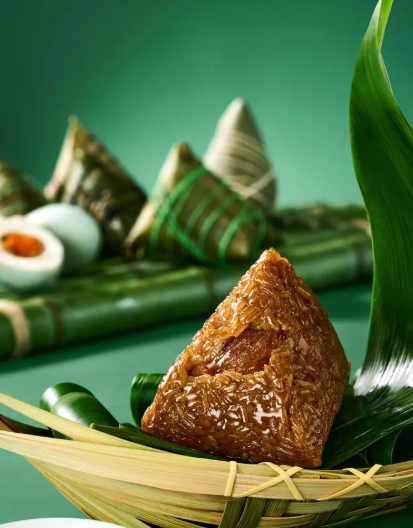
The most widely spread origin of the Dragon Boat Festival is to commemorate Qu Yuan, a patriotic poet of the Warring States Period. Qu Yuan was full of aspirations to serve his country but was exiled to the south of the Yangtze River by King Huai of Chu due to framing by traitors. In 278 BC, the Qin army captured Yingdu, the capital of the State of Chu. Grieving deeply, Qu Yuan threw himself into the Miluo River with a huge stone on the 5th day of the 5th lunar month, sacrificing his life for his country. To prevent fish and shrimp from eating his body, local villagers rowed boats to search for him and threw glutinous rice wrapped in bamboo leaves into the river to feed the fish and shrimp. Since then, on the 5th day of the 5th lunar month, the customs of rowing boats to rescue and throwing zongzi into the river have been passed down, gradually evolving into today’s dragon boat races and zongzi-eating customs. In addition, the festival is also closely related to commemorating Wu Zixu, a doctor of the State of Wu, and the ancient concept of disease prevention, making it more culturally rich with diverse origins.
Dragon boat racing is the most representative core custom of the Dragon Boat Festival and the activity that best ignites the festival atmosphere. Dragon boats are mostly narrow wooden boats with a majestic dragon head carved at the bow, a dragon tail at the stern, and gorgeous dragon patterns painted on the hull. Each boat can hold a dozen to dozens of rowers, with drummers and helmsmen performing their respective duties. During the race, multiple dragon boats compete on rivers and lakes. The drummer beats a rhythmic drumbeat, and the rowers paddle in unison with the drumbeat. The bow cuts through the waves, the stern splashes water, and the audience on the shore cheers loudly with gongs and drums, creating a spectacular scene. Today, dragon boat racing is not only a traditional folk custom but also a national and even international event, becoming a cultural link connecting Chinese people at home and abroad. Foreign tourists can personally experience this spirit of unity, cooperation, and striving for excellence.
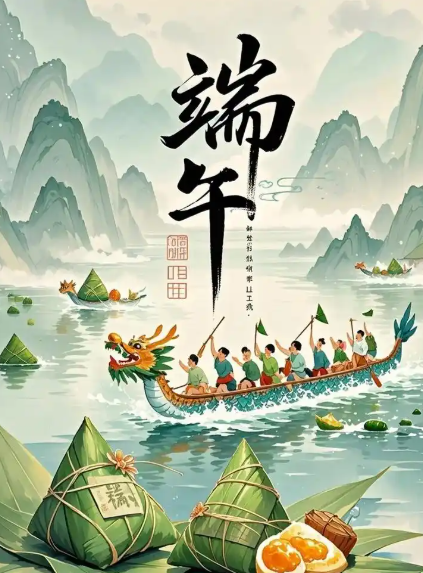
Eating zongzi is an indispensable dietary custom for every family during the Dragon Boat Festival, carrying unique taste memories. Zongzi is mainly made of glutinous rice, paired with different fillings, showing rich flavor schools due to regional differences. The northern region prefers sweet zongzi, filled with red dates, red bean paste, candied dates, which are soft, glutinous, sweet but not greasy; the southern region is popular with savory zongzi, adding fresh meat, salted eggs, shiitake mushrooms, bacon, and other ingredients, which are fragrant and flavorful with distinct layers. The bamboo leaves used to wrap zongzi are also particular, mostly reed leaves or indocalamus leaves. The fragrance of the leaves can penetrate into the glutinous rice, making the zongzi more flavorful. Today, zongzi has become a symbolic food of the Dragon Boat Festival, and foreign tourists can experience the diversity of Chinese regional food Culture by tasting different flavors of zongzi.
In addition to dragon boat racing and eating zongzi, the Dragon Boat Festival has many other ritualistic folk activities. Hanging mugwort and calamus is a tradition in every family. The ancients believed that mugwort and calamus have a fragrant smell that can drive away mosquitoes, purify the air, and dispel evil spirits. On the early morning of the Dragon Boat Festival, people tie mugwort and calamus together and hang them on the lintel, adding a wish for peace to their homes. Wearing sachets is also a popular custom. Sachets are mostly small silk bags embroidered with exquisite patterns, filled with spices such as mugwort, mint, and clove. Wearing them on the body can not only emit a fragrance and drive away mosquitoes but also symbolize praying for health and safety, which is especially loved by children. In addition, customs such as wearing five-color strings and applying realgar wine have been passed down to this day, and each activity embodies the ancients’ longing for health and peace.
For foreign tourists who want to deeply experience the Dragon Boat Festival, the following destinations are not to be missed. The Miluo River in Hunan Province is where Qu Yuan threw himself into the river. Every Dragon Boat Festival, a grand dragon boat race and sacrificial ceremony are held here, allowing visitors to immerse themselves in the cultural origin of the festival. In cities such as Hangzhou and Jiaxing in Zhejiang Province, dragon boat races are held on the Qiantang River and South Lake, paired with the gentle scenery of the Jiangnan water towns, presenting a unique charm. Dragon boat races in southern regions such as Guangdong and Fujian have more local characteristics, with a compact rhythm and a warm atmosphere. Visitors can also taste authentic Cantonese savory zongzi and Minnan meat zongzi. When experiencing the festival, it is important to abide by on-site order and respect local customs when watching dragon boat races; when tasting zongzi, you can choose sweet or savory flavors according to your preferences, and some fillings may contain allergens, so it is recommended to learn about them in advance.
After more than 2,000 years of inheritance, the Dragon Boat Festival has long surpassed its simple commemorative significance and become a festival integrating prayer for blessings, folk entertainment, and cultural inheritance. Here, every dragon boat carries the feelings of family and country, every zongzi wraps the taste of tradition, and every custom conveys expectations for a better life. Foreign tourists can not only feel the vitality in the excitement of dragon boat races but also understand Chinese Culture in the delicate folk details, starting an unforgettable Dragon Boat Festival cultural journey.





暂无评论内容