




In China’s system of solar terms and festivals, the Winter Solstice holds a unique position—it is not only the earliest established solar term among the Twenty-Four Solar Terms, marking the official arrival of severe winter, but also an important festival carrying thousands of years of reunion Culture and winter nourishment traditions, known as “Winter Solstice is as important as the Spring Festival”. Every year between December 21 and 23 of the Gregorian calendar, when the sun is directly above the Tropic of Capricorn, the Northern Hemisphere experiences the shortest day and longest night. Chinese people celebrate the Winter Solstice by gathering with family and nourishing the body with food, both respecting the laws of nature and conveying the warmth of family love. For foreign travelers visiting China during this period, they can not only witness the distinct folk customs between the north and south but also immerse themselves in the Chinese life wisdom of “expressing emotions through food and passing love through gatherings”.
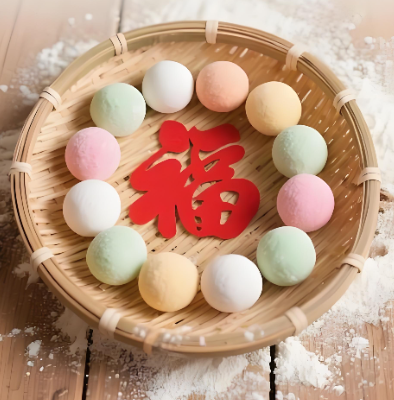
The origin of the Winter Solstice can be traced back to the Zhou Dynasty. The ancients determined the time of the Winter Solstice by observing the operation of the sun, moon, stars, and regarded it as an important symbol of the “beginning of the year”. They believed that this day marks the peak of yin energy and the birth of yang energy, a turning point in the cycle of all things. Therefore, grand sacrificial rituals were held to pray for good weather and a bumper harvest in the coming year. By the Han Dynasty, the Winter Solstice had become a national festival. The court would grant holidays, and officials would exchange greetings. During the Tang and Song Dynasties, the customs of the Winter Solstice became more diverse, adding links such as ancestor worship and family reunion, and the concept of “Winter Solstice is as important as the Spring Festival” took root in people’s hearts. Since the Ming and Qing Dynasties, the dietary customs in the north and south have gradually differentiated, forming the distinctive feature of “eating dumplings in the north and glutinous rice balls in the south”, which has continued to this day as a core custom.
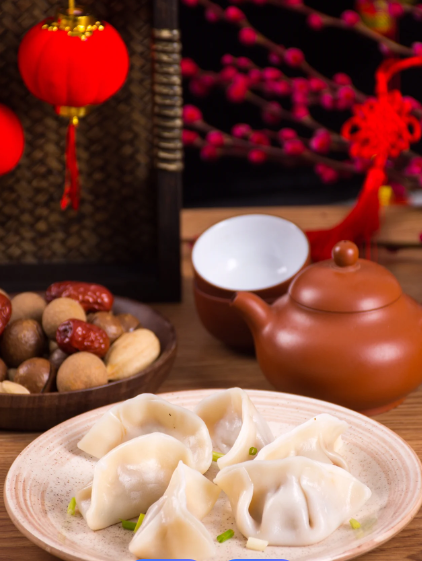
The “north-south dietary difference” is the most recognizable folk symbol of the Winter Solstice, carrying different cultural meanings and regional characteristics. In Northern China, dumplings on the Winter Solstice are not only a cold-resistant delicacy but also hide the allusion of “the Medical sage saving the people”. It is said that during the Eastern Han Dynasty, the famous doctor Zhang Zhongjing returned to his hometown on the Winter Solstice and saw that the people suffered from frostbite. He made “Jiao’er” (the prototype of dumplings) with mutton, chili, and other ingredients, boiled them into soup to treat the people. Later generations followed and inherited this practice, gradually forming the saying that “eating dumplings on the Winter Solstice prevents frozen ears”. Today, northern families must eat dumplings on the Winter Solstice, with a variety of fillings such as pork and cabbage, chives and eggs, and three delicacies, each with unique flavors. Family members sit around rolling wrappers and making dumplings, gathering reunion feelings in laughter and chatter.
In Southern China, glutinous rice balls (tangyuan) are a must-have delicacy for the Winter Solstice. Also known as “tangtuan”, the round shape symbolizes “reunion and perfection”, and the soft and glutinous taste carries wishes for a smooth life. Southerners often add brown sugar when boiling glutinous rice balls, which are sweet and warm. In some regions, glutinous rice balls are filled with sesame, peanuts, red bean paste, etc., with rich layers. In addition to glutinous rice balls, some areas in the south of the Yangtze River have the custom of eating rice cakes and red bean glutinous rice. Rice cakes symbolize “stepping higher and higher”, while red bean glutinous rice is believed to dispel cold and dampness, reflecting the ancients’ wisdom of “nourishing the body to resist cold”. Moreover, in Guangdong and Guangxi, people prepare preserved meats and hot pot (dabianlu) for the Winter Solstice, while in Fujian, there is a tradition of eating ginger duck. Although the ways of winter nourishment vary in different regions, the core is to resist the cold and pray for blessings through food.
In addition to dietary customs, the Winter Solstice also includes traditional rituals such as ancestor worship and “counting the nine cold periods”. Ancestor worship is an important part of the Winter Solstice. Some families prepare abundant sacrifices on the Winter Solstice, go to clan halls or worship in front of ancestral memorial tablets at home, expressing longing and gratitude to their ancestors and inheriting family Culture. “Counting the nine cold periods” is a folk activity after the Winter Solstice. The ancients divided the 81 days after the Winter Solstice into nine periods, each lasting nine days, from the “First Nine” to the “Ninth Nine”. There is a popular “Nine-Nine Cold Relief Song” and cold relief chart among the people. People record the progress of winter by counting the nine periods and look forward to the return of spring. Today, although counting the nine periods is no longer a necessity of life, it has become a cultural symbol carrying winter feelings, and some regions still hold related folk activities to pass on the tradition.
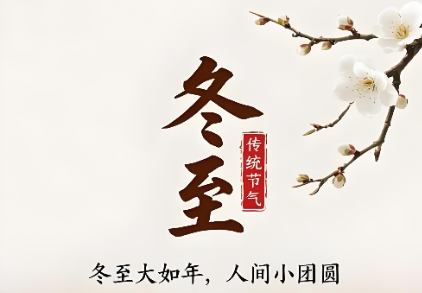
For foreign travelers, experiencing Winter Solstice customs requires both respect for etiquette and practical preparations. Firstly, Winter Solstice family reunions are mostly private occasions. If invited, be polite, take the initiative to help the family prepare food, follow local etiquette during meals, and do not casually comment on the taste of ingredients. Secondly, dumplings and glutinous rice balls are mostly made of glutinous rice or flour, and some fillings contain nuts and meat. Confirm the ingredients before eating to avoid allergies. Meanwhile, these foods are not easy to digest, so it is recommended to eat in moderation. For travel, the Winter Solstice coincides with severe winter in Northern China, so prepare warm clothes and non-slip shoes. Although the temperature in the south is higher, it is cold and humid, so you can carry a light down jacket and warm accessories. Some scenic spots hold Winter Solstice folk activities, which you can check in advance to participate in and feel the strong festival atmosphere.
The Winter Solstice is not merely a food festival; its essence is the Chinese people’s reverence for the laws of nature, cherishment of family reunion, and yearning for a better life. It allows people to stop in the cold winter, comfort their bodies and minds with food, warm the years with reunion, and pass on the cultural concept of “honoring the deceased and nourishing the body” from generation to generation. In the process of experiencing Winter Solstice customs, foreign travelers can not only taste authentic Chinese food but also understand the deep connotation of “complying with nature and uniting through emotions” in Chinese Culture, making this winter journey more unforgettable because of the warmth of reunion.




暂无评论内容