




Among China’s numerous ethnic minority festivals, the Zhuang ethnic group’s San Yue San (Third Month Third Festival) stands out as one of the most representative folk feasts, featuring a strong atmosphere of singing and dancing, unique food Culture, and profound ethnic heritage. On the 3rd day of the 3rd lunar month every year, grand celebrations are held in the Guangxi Zhuang Autonomous Region and other Zhuang-inhabited areas around it. People express emotions through songs, convey wishes through food, and pray for blessings through customs, showing the Zhuang people’s love for life and commitment to their culture. For foreign travelers visiting Guangxi during this period, they can not only immerse themselves in the lively scene of song duels at the folk song fair but also deeply experience the unique charm of ethnic minorities, gaining a journey full of warmth and cultural significance.
The origin of Zhuang San Yue San can be traced back to the sacrificial customs of ancient times, integrating the Zhuang ancestors’ reverence for nature, yearning for love, and memory of heroes. Among them, the legend of “Song Fairy Liu Sanjie” is the most deeply rooted in people’s hearts. It is said that Liu Sanjie used songs as a weapon to resist oppression and uphold justice, eventually becoming a song fairy. To commemorate her, the Zhuang people designated the Third Month Third as the folk song fair day, inheriting Culture and seeking bosom friends through singing duels. Today, San Yue San is not only a traditional festival of the Zhuang ethnic group but also included in the national intangible cultural heritage list. Since 2014, Guangxi has also designated it as a statutory holiday, allowing this ancient festival to radiate new vitality in modern times.
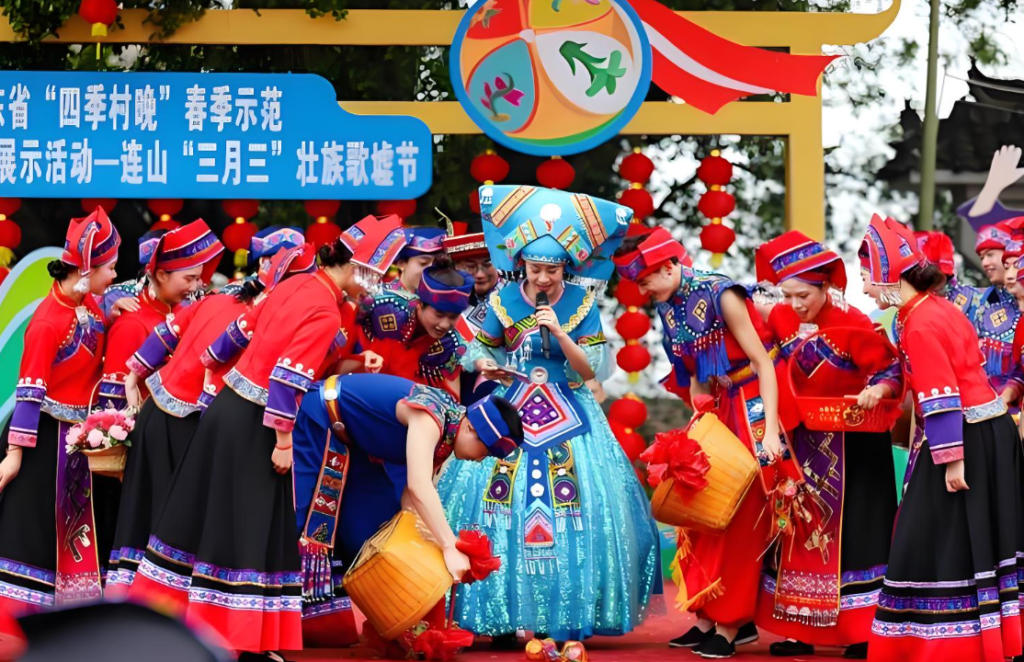
The “folk song fair” is the core custom of San Yue San and the most ornamental highlight of the festival. Literally meaning “a market for singing”, the folk song fair gathers Zhuang people of all ages in festive costumes on fields, riversides, and squares on the festival day, engaging in singing duels with folk songs as the medium. The content of the songs is diverse, including love songs praising romance, odes eulogizing hometown, and wisdom-competing puzzle songs, with melodious tunes and impromptu lyrics, showing the talent and romance of the Zhuang people. Young men and women express their affection for each other through singing duels, which is one of the traditional marriage customs of the Zhuang ethnic group; while the middle-aged and elderly exchange life experiences and inherit history through singing, making folk songs a carrier of ethnic memory. Today’s folk song fairs also include chorus and folk song competitions, attracting tourists from all over the world and creating a grand scene.
food Culture is an indispensable part of San Yue San, among which “five-colored glutinous rice” is the most representative, carrying the Zhuang people’s expectations for nature and good luck. Made of glutinous rice, five-colored glutinous rice is dyed with natural plants such as maple leaves, blue grass, gardenia jasminoides, and sappanwood, presenting five colors—black, blue, yellow, red, and white—after steaming, with bright colors and rich aroma. Each color has a unique meaning: black symbolizes calmness, blue represents purity, yellow implies a bumper harvest, red stands for joy, and white signifies auspiciousness. Overall, it embodies the Zhuang people’s wishes for a good harvest and a happy life. In addition to five-colored glutinous rice, customs such as eating mugwort leaf cakes and drinking rice wine are also popular during San Yue San. Mugwort leaf cakes are soft, glutinous, and fragrant, while rice wine is sweet and mellow, fully showing the ingenuity and characteristics of Zhuang cuisine.
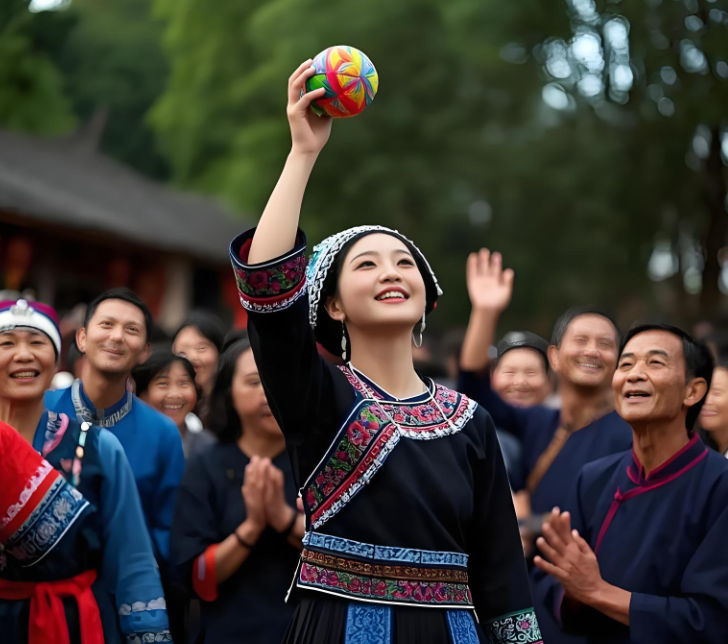
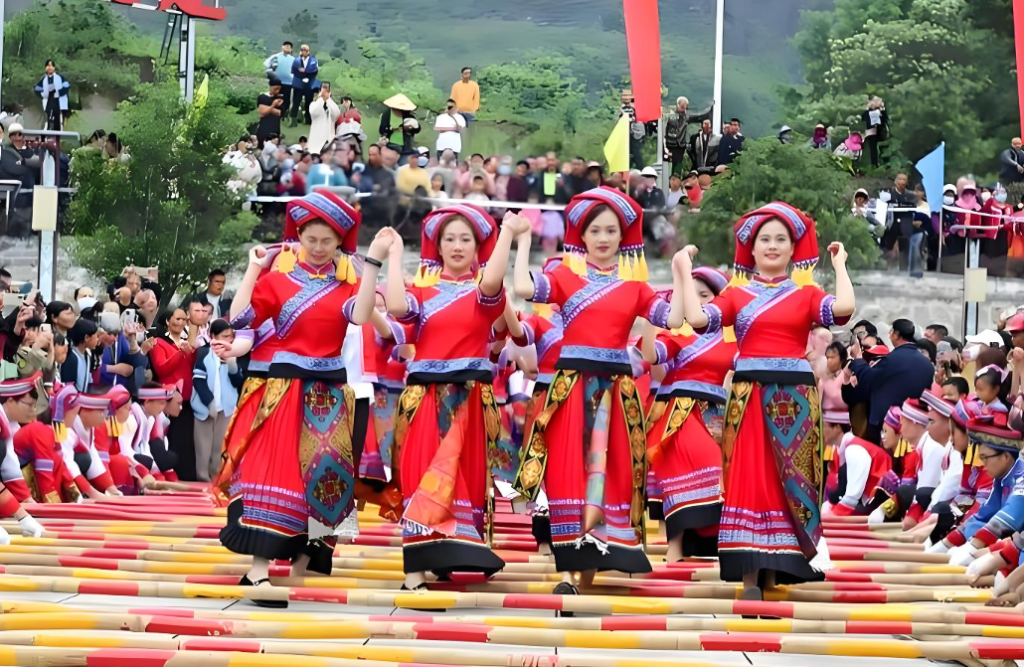
Besides singing duels and food, San Yue San also features a variety of colorful folk activities such as throwing silk balls, playing bronze drums, and bamboo pole dancing. Throwing silk balls is a traditional social etiquette of the Zhuang ethnic group. Silk balls, sewn with colored cloth and embroidered with flower and bird patterns, symbolize auspiciousness. People throw and catch silk balls to convey blessings and friendship, and silk ball throwing competitions are held in some areas to add fun to the festival. Playing bronze drums is an ancient sacrificial ritual of the Zhuang ethnic group. As a cultural symbol of the Zhuang people, bronze drums are exquisitely decorated and have a loud sound. On the festival day, drummers beat bronze drums and dance to pray for blessings and ward off disasters, showing the bold spirit of the Zhuang people. Bamboo pole dancing is highly interactive: two long bamboo poles open and close alternately, and dancers jump in the gaps with light and flexible movements. Tourists can participate in it to feel the joy of folk customs.
When experiencing San Yue San customs, foreign travelers need to respect ethnic traditions and etiquette details, and make adequate travel preparations. Firstly, when participating in the folk song fair, you can listen actively and applaud. If invited to sing a duel, you can respond politely without forcing yourself; dress appropriately, avoid being overly exposed, and respect the ethnic costume culture. In terms of diet, although five-colored glutinous rice is delicious, it is not easy to digest, so it is recommended to eat in moderation. Some ingredients may cause allergies, so you can consult about the ingredients before eating. For travel, San Yue San is a peak tourist season in Guangxi. It is advisable to book transportation and accommodation in advance. Recommended core experience destinations include Nanning, Liuzhou, Guilin, and Baise, where large-scale folk song fairs and folk performances are held, allowing you to better feel the festival atmosphere. In addition, some folk activities have specific processes; please follow on-site guidelines and do not arbitrarily disrupt the ritual order.
The Zhuang San Yue San is not merely a festival celebration, but a condensation and inheritance of Zhuang culture. With folk songs as the link, food as the carrier, and folk customs as the bridge, it shows the vitality and warmth of ethnic minorities. In the process of experiencing San Yue San customs, foreign travelers can not only feel the lively atmosphere of singing and dancing carnivals but also understand the Zhuang people’s love for nature, love, and life, and deeply appreciate the diversity and inclusiveness of China’s multi-ethnic culture. This folk feast full of ethnic characteristics will immerse every participant and leave an unforgettable travel memory.




暂无评论内容