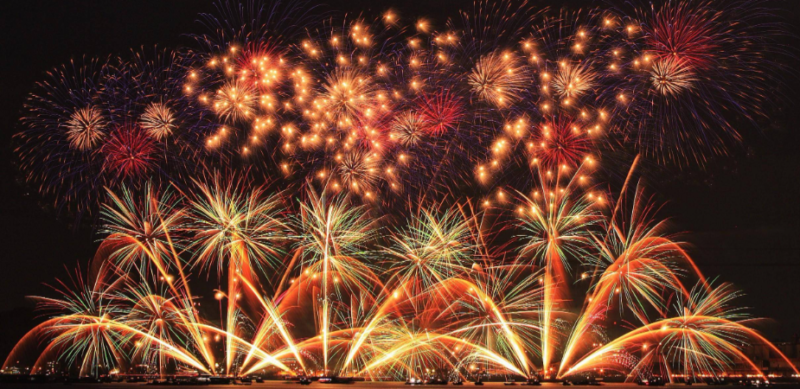





In China, setting off firecrackers during Spring Festival is a cultural symbol deeply rooted in the nation’s memory, embodying thousands of years of cultural accumulation and emotional sustenance. From Lunar New Year’s Eve to the 15th day of the first lunar month, the successive crackles of firecrackers pierce the night sky, elevating the festive atmosphere of the New Year to its peak. This custom did not emerge by chance but is a unique tradition that integrates ancient legends, cultural meanings, and ritualistic sense of life.
The origin of setting off firecrackers can be traced back to evil-warding legends in ancient times. According to folklore, there was a fierce monster named “Nian” in primitive times that would break into villages at the end of each year, harming people and destroying homes. After a long period of fighting against “Nian”, people discovered that the monster feared loud noises, firelight, and the color red. Thus, they lit bamboo joints, using the crackling sound produced by burning bamboo to drive away the monster. This was the embryonic form of “firecrackers” — initially, firecrackers were not gunpowder products as they are today, but burning bamboo joints. The poem “The old year fades away amid the crackle of firecrackers” confirms the origin of this ancient custom. With the invention and popularization of gunpowder technology, bamboo joints were gradually replaced by paper firecrackers filled with gunpowder, but their core meaning of warding off evil and disasters remained unchanged.
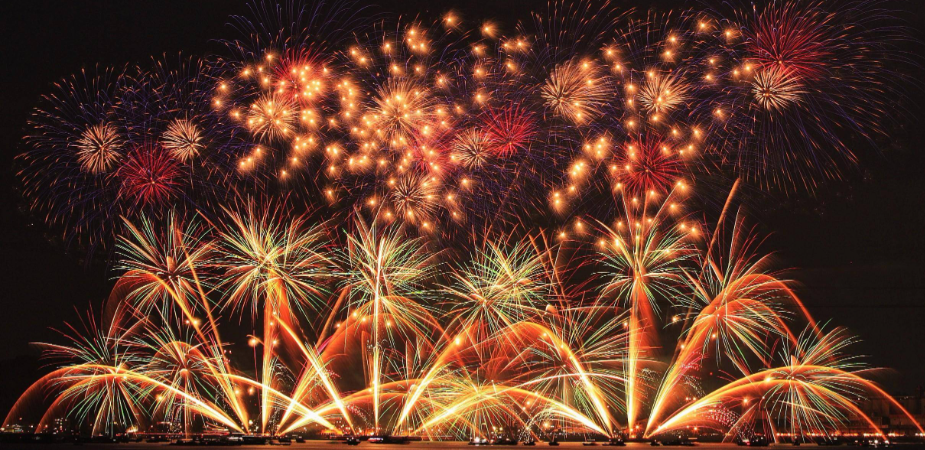
After thousands of years of evolution, the meaning of setting off firecrackers has long surpassed its initial function of warding off evil, deriving multiple connotations such as bidding farewell to the old and welcoming the new, and praying for blessings and good fortune. From a temporal perspective, the “New Year’s Eve Watch Firecrackers” at midnight on New Year’s Eve is the core part of setting off firecrackers during Spring Festival. At the moment when the old year transitions to the new, people light firecrackers, using the loud noise to bid farewell to the misfortunes and regrets of the past year and welcome the hopes and smoothness of the new year. This ritualistic sense reflects the Chinese people’s reverence for the passage of time and yearning for a better life. In terms of symbolism, the “crackle” of firecrackers is homophonic with “prosperity” in Chinese, symbolizing thriving careers and a prosperous life; the blooming fireworks represent a bright future and a happy family. Elders pray for their younger generations by setting off firecrackers, while younger generations feel the joy of the New Year amid the fireworks, passing on the intergenerational family love and expectations.
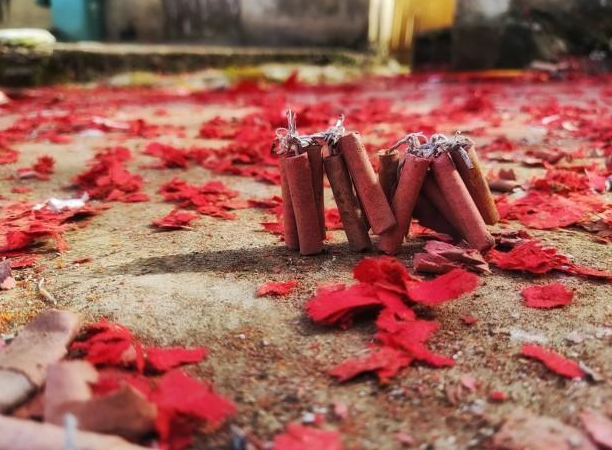
In traditional customs, setting off firecrackers also runs through multiple important nodes of the Spring Festival, forming a complete ritual system. The “Opening Door Firecrackers” on the early morning of the first day of the lunar new year is the first ritual of the New Year. People light firecrackers as soon as they open the door, symbolizing “opening the door to welcome blessings” and hoping for prosperity and good luck in the new year. The “Lantern Festival Firecrackers” on the 15th day of the first lunar month complement lanterns and riddles, with fireworks and lights shining together, symbolizing the successful conclusion of the New Year customs. In addition, in the traditions of some regions, firecrackers are also set off at festive occasions such as weddings and housewarmings, but their scale and significance are not as grand as those during Spring Festival, highlighting the core status of setting off firecrackers in many folk customs.
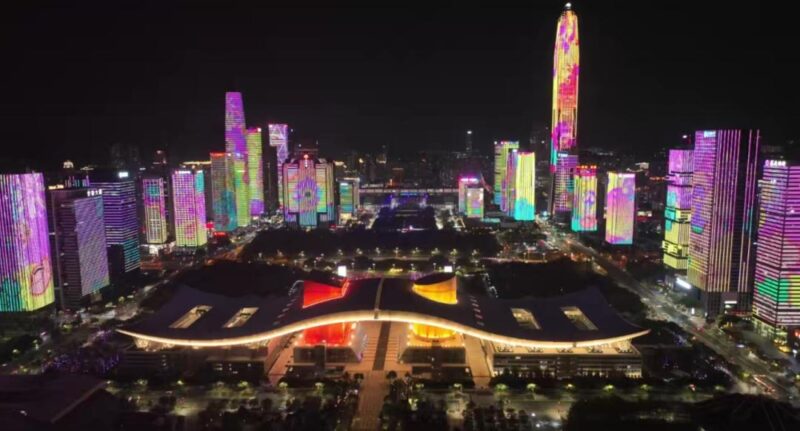
With the development of the times, the custom of setting off firecrackers has been constantly adapting to modern society. Considering environmental protection, fire safety, and public security, many cities in China have introduced policies restricting or banning the setting off of firecrackers. traditional gunpowder firecrackers have gradually been replaced by environmentally friendly alternatives such as electronic firecrackers and simulated fireworks. Even so, the cultural emotions carried by setting off firecrackers have not faded — the simulated sounds of electronic firecrackers and the fireworks effects presented by light shows can still arouse the collective memory of the Chinese people for the New Year. This change is not only an adaptation to the needs of modern society but also an innovation in the inheritance of traditional Culture, allowing the “festive atmosphere of fireworks” to continue in a more sustainable way.
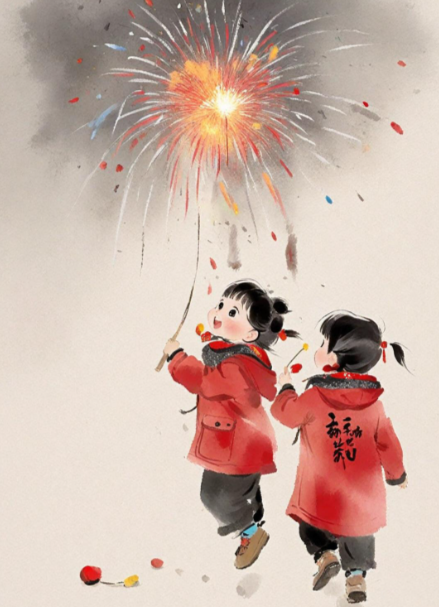
For the Chinese people, the crackle of firecrackers during Spring Festival is the flavor of the New Year in childhood memories, the joy of family reunion, and the inheritance of cultural genes. It is not only a custom but also a unique way for the Chinese people to express their emotions, respect nature, and look forward to the future. Even today, when the concept of environmental protection is deeply rooted in people’s hearts, this cultural code hidden in the fireworks can still span time and space, connecting the past and the future, and becoming the most recognizable cultural symbol of the Spring Festival.




暂无评论内容