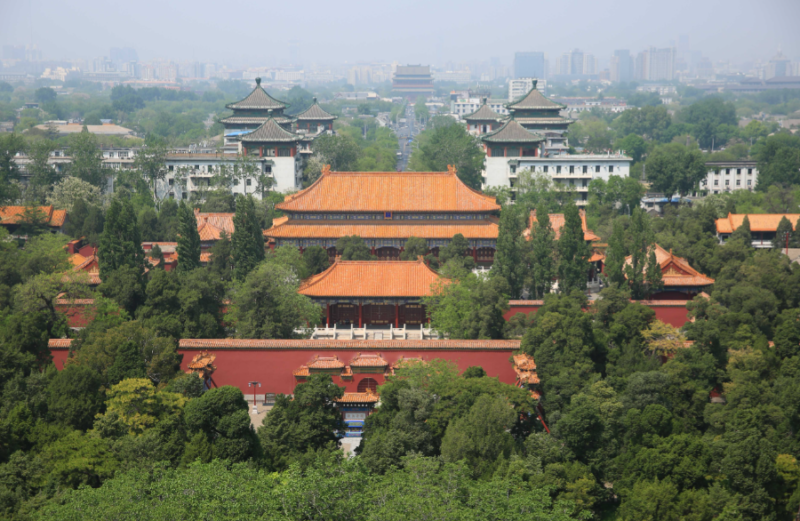





The architecture and landmarks of a city are the concrete expression of its civilization, as well as the eternal engraving of national spirit and living context. Beijing, as an ancient capital of multiple dynasties and the contemporary capital of China, has nurtured a group of architectural landmarks with profound historical depth, cultural connotation and artistic height. They connect the millennial context of the central axis, carry the daily life of old Beijing, and highlight the spiritual essence of the Chinese nation.
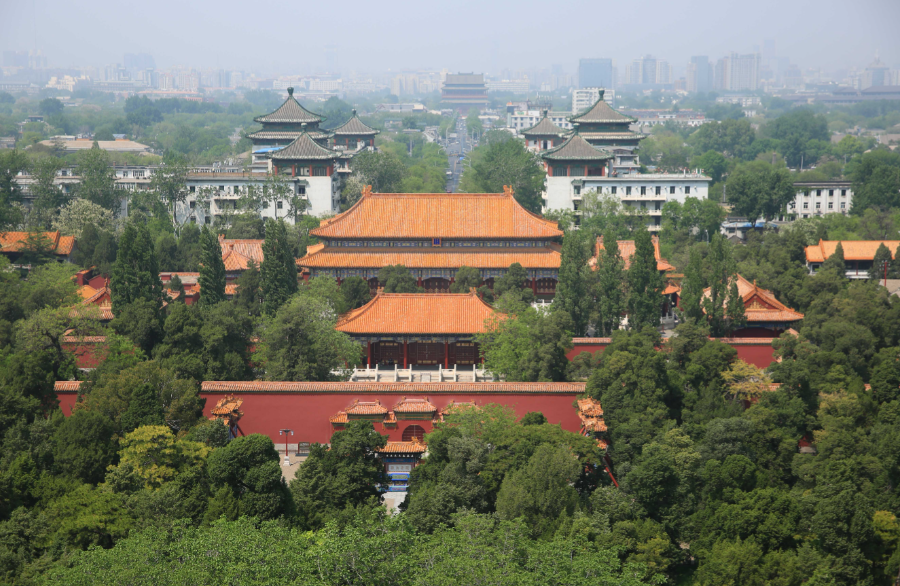
As a World Heritage Site, the Beijing Central Axis is the spiritual backbone of the city. Stretching from Yongdingmen to the Bell & Drum Towers, it constructs the beauty of order in ancient capitals with the planning concept of “symmetrical axis”, connecting core landmarks such as the Forbidden City, Tian’anmen Square & Gate, and Bell & Drum Towers into a line, becoming a model of capital planning in Chinese civilization. Located at the core of the central axis, the Forbidden City is the largest wooden palace complex in the world. The red walls and yellow tiles embody the ruling marks of 24 emperors of the Ming and Qing dynasties. It is not only the absolute symbol of royal power, but also condenses the exquisite craftsmanship of ancient craftsmen, with the scattered halls showing the majesty and solemnity of imperial etiquette.
Tian’anmen Square & Gate, as a national symbol, has witnessed numerous major events that have influenced China’s historical process. As the largest urban square in the world, this area connects the royal heritage of the Forbidden City on one side and carries the spiritual core of contemporary China on the other, becoming a core venue attracting global attention and uniting national emotions. In contrast, the Temple of Heaven, a sacred place for royal sacrifices to heaven and grains, interprets the ancients’ awe of nature with the design philosophy of “round heaven and square earth”. The layout and structure of the halls, circular mound altar and Hall of Prayer for Good Harvest perfectly integrate architectural aesthetics with religious rituals, making it a treasure among the largest ancient sacrificial complexes in the world.
The Great Wall (Beijing Section) stands majestically on the mountain tops with magnificent momentum. Sections such as Juyongguan and Badaling, with their precipitous terrain and grand scale, have become symbols of the national spirit. For thousands of years, the history of resisting foreign aggression and guarding the homeland has endowed every brick with an unyielding character. As the largest royal garden in China, the Summer Palace combines the gentleness of Jiangnan water towns with the grandeur of northern royalty. The Long Corridor, known as the “world’s longest corridor”, is covered with thousands of paintings depicting landscapes, figures and allusions, like an open-air art Museum, showing the ultimate wisdom of ancient garden design.
As the landmark at the northern end of the central axis, the Bell & Drum Towers served as the timekeeping center of the Yuan, Ming and Qing dynasties. The sound of morning bells and evening drums once echoed through the morning and evening of the capital, becoming a concrete carrier of time and witnessing the rise and fall of the city. Courtyard Houses and Hutongs are the epitome of old Beijing’s life: Courtyard Houses are laid out with the concept of “harmony between man and nature”, and the enclosed high walls balance privacy and family living needs, making them the architectural expression of traditional family ethics; Hutongs, as the relics of the checkerboard pattern of the Yuan Dadu, crisscross and carry the daily life of the city, with the cries of vendors and neighborhood affection precipitated in the texture of gray bricks and tiles.
Yonghe Lama Temple, the largest lama temple in Beijing, is unique for its Sino-Tibetan architectural style. Once the former residence of Emperor Yongzheng, it is known as “a place of imperial auspice”. The exquisite carvings and paintings of the halls and the solemnity of the Buddha statues not only show royal dignity, but also witness the integration of Han and Tibetan Cultures. These architectures and landmarks, whether royal regulations, residential dwellings or spiritual totems, jointly constitute Beijing’s city card, allowing thousands of years of civilization to be inherited among bricks and tiles, and becoming a cultural link connecting the past, present and future.




暂无评论内容