




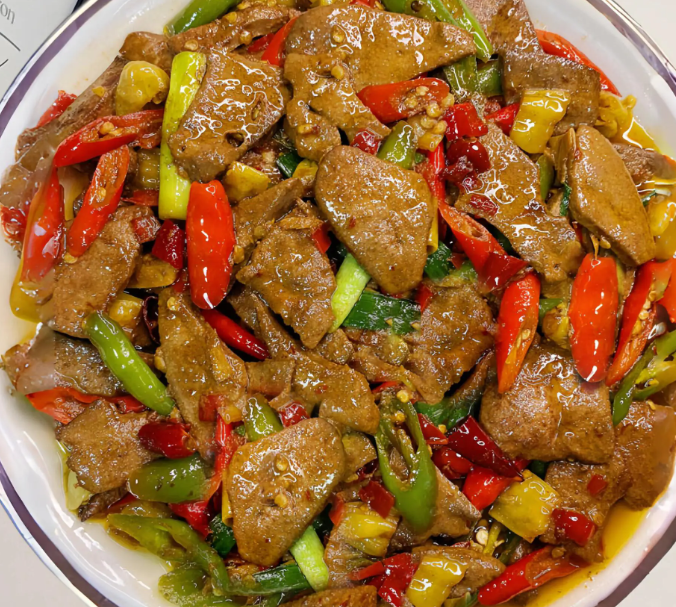
In the breakfast scene and late-night fireworks of old Beijing, Chaogan (Garlicky Thickened Soup with Pork Intestines and Liver) is a special snack with its own “exclusive ritual”. It has neither the exquisite demeanor of Peking duck nor the rich flavor of Luzhu Huoshao, but with its unique thick texture and strong garlic flavor, it has become a daily taste memory deeply rooted in old Beijingers. This delicacy, centered on pork intestines and liver, stands out for its “starch thickening and prominent garlic flavor”, and also has an authentic eating method of “drinking by swirling the bowl without chewing”. For foreign tourists, it is not only a novel challenge for the taste buds but also an excellent window to deeply experience old Beijing’s food Culture.
The origin of Chaogan hides an evolution history from “boiled offal” to a characteristic snack. In the mid-Qing Dynasty, vendors on Beijing streets sold “white water offal”, which was made by boiling pork offal in water and serving with simple seasonings, a cost-effective option for ordinary people to supplement nutrition. However, the offal at that time had a light taste and insufficient flavor. By the late Qing Dynasty and early Republic of China, to enhance the flavor and optimize the taste, vendors improved it: increased the amount of garlic to neutralize the fishy smell of offal, added starch to thicken the soup so that it could better adhere to the ingredients and bring a creamy texture, and removed the less tasty parts such as pork heart and lungs, focusing on pork intestines and liver. Thus, Chaogan was finalized. Interestingly, although named “Chao” (stir-fried), Chaogan actually relies on “boiling and thickening” as the core process. The name is said to cater to diners’ preference for “stir-fried flavor” and has been used ever since.
The soul of this snack lies in the double blessing of “garlic flavor” and “thickness”, with strict requirements in every step of production. First, the selection and processing of ingredients directly determine the quality and taste of Chaogan. Fresh pork large intestine heads are selected for their plump meat and toughness. They are repeatedly rubbed and cleaned with salt and flour to remove impurities and fishy smell from the inner wall, cut into sections after blanching, and boiled until tender but chewy. Fresh pork liver is chosen, with fascia and blood vessels removed, cut into uniform thin slices, and soaked in clear water to remove blood foam to avoid dryness and fishiness after cooking. The core of ingredient processing is “removing fishy smell thoroughly”. Authentic restaurants go through multiple cleaning procedures to ensure that only the fresh aroma of offal and garlic remains in the mouth.
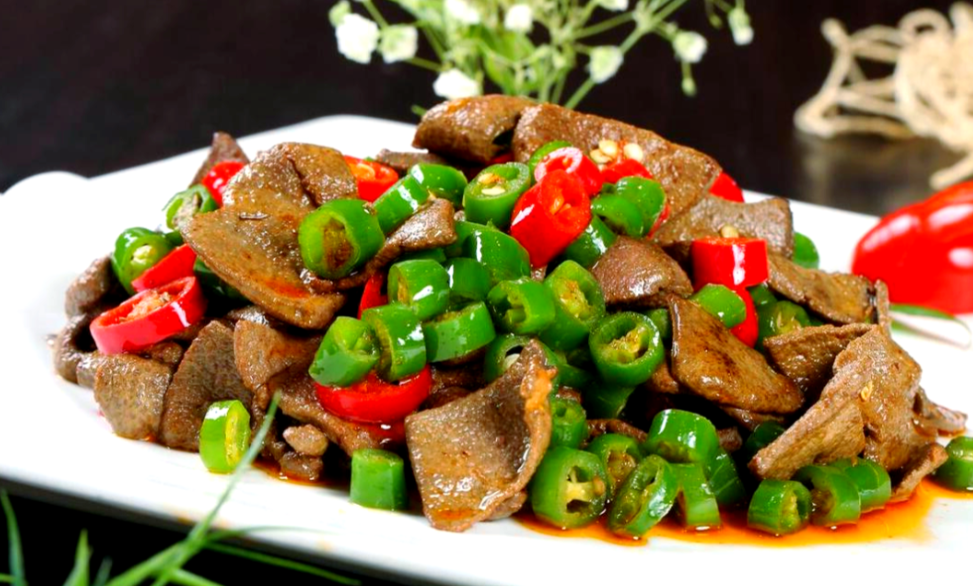
Garlic flavor is the iconic feature of Chaogan, with an “generous” amount of garlic used. The amount of garlic in authentic Chaogan is almost equal to that of the ingredients. Garlic is peeled and mashed into garlic paste instead of minced garlic, which can fully release the garlic flavor. When integrated with the soup, it forms a rich and long-lasting aroma, which can neutralize the greasiness of offal and endow the dish with a unique taste impact. Starch thickening is the key to creating a thick texture. Mung bean starch is selected and mixed with clear water into starch paste in proportion. After the ingredients are cooked to taste, the starch paste is slowly poured along the edge of the pot while stirring constantly, making the soup gradually thicken to a state of “adhering to the wall without flowing” — neither too thin nor too sticky, with a creamy and smooth taste.
The production process of Chaogan seems simple but requires extremely precise heat control. Bring water to a boil in a pot, add pork intestines, ginger slices and a little cooking wine, and boil until 80% cooked. Add pork liver slices and blanch quickly to avoid overcooking. Then add a large amount of garlic paste, season with soy sauce, salt, star anise and other condiments. After boiling out the garlic flavor, pour in the starch paste to thicken, simmer over low heat for 3-5 minutes to fully integrate the soup with the ingredients, and finally drizzle a little sesame oil to enhance the aroma. A pot of authentic Chaogan is ready. During the whole process, the heat needs to be turned from high to low, and the starch paste must be stirred evenly when thickening to ensure that the soup texture is delicate without lumps or particles.
The most distinctive feature of Chaogan is the authentic eating method of “drinking by swirling the bowl without chewing”, a tradition passed down by old Beijingers for many years. Due to the thick soup and tender ingredients, there is no need to chew. Just hold the bowl with both hands, slowly swirl it along the edge to evenly distribute the thick soup and ingredients, then sip slowly, allowing the garlic flavor, sauce aroma and fresh offal flavor to fully blend in the mouth. This eating method can not only avoid food residue in the teeth but also maximize the creamy texture and complex flavor of the soup. For foreign tourists trying it for the first time, it is recommended to slow down to adapt to the thick texture before trying the “swirling” action. If the garlic flavor is too strong, it can be paired with light side dishes or drinks to neutralize it.
Choosing the right restaurant can enhance the Chaogan experience with more authentic flavor. Beijing’s time-honored Chaogan restaurants have their own characteristics, carrying different taste memories: Yao Ji Chaogan Store (Gulou Dongda Street Store) is one of the most famous time-honored brands, founded in 1989. Its Chaogan has a strong garlic flavor, thick soup, and ample portions of pork intestines and liver. It is a classic match with the store’s pork and scallion steamed buns, a must-visit for Chinese and foreign tourists. Although there is often a queue during peak hours, the cost performance is extremely high. Tianxingju (Qianmen Store) is a century-old time-honored brand, known as “the first house of Chaogan”. Its Chaogan has a creamy soup, moderate saltiness, tender pork liver and soft, flavorful pork intestines. The store has an antique environment, suitable for tourists pursuing traditional flavors. Beixinqiao Luzhu Laodian (Dongsi Beidajie Store) not only serves Luzhu but also excellent Chaogan with a strong garlic flavor and good soup thickening effect, suitable for tourists who want to experience old Beijing offal snacks in one stop. Huguosi Snacks (multiple branches) offers Chaogan with a milder taste and lighter garlic flavor, suitable for first-time tasters with low acceptance of garlic.
There are several practical tips for tasting Chaogan to help foreign tourists better unlock this Beijing-style snack. First, Chaogan is best eaten immediately after being made. Enjoy it while it’s hot; when cold, the soup will become too thick and the flavor will be greatly reduced. Second, matching suggestions: in addition to the classic pork steamed buns, it can also be paired with fried dough sticks or sesame cakes, which can neutralize the garlic flavor and increase satiety. Third, drink options: old Beijingers prefer to pair it with Douzhi (fermented mung bean juice) or jasmine tea. The sour aroma of Douzhi collides uniquely with the garlic flavor of Chaogan, while jasmine tea can refresh and relieve greasiness, which can be chosen according to personal taste. Fourth, for the first try, you can ask the restaurant for “less garlic and slightly thinner soup” to lower the acceptance threshold, and then try the authentic flavor after adaptation.
Beijing Chaogan has no complex ingredients or exquisite plating, but with its straightforward garlic flavor, creamy texture and unique eating method, it has become a vivid carrier of old Beijing’s food Culture. It hides in breakfast shops on streets and alleys, in the daily three meals of old Beijingers, carrying the fireworks warmth and dietary wisdom of this city. For foreign tourists, tasting Chaogan is not only a novel taste experience but also an immersive opportunity to feel the local life of old Beijing — in a bowl of thick garlicky soup, understand old Beijingers’ persistence in flavor and love for life.







暂无评论内容