




In the offal snack scene of old Beijing, Baodu (Blanched Tripe) stands out uniquely. Unlike the rich flavor of Luzhu Huoshao and the thick garlicky taste of Chaogan, it has become a beloved specialty of old Beijingers solely relying on its extremely crispy and tender texture, as well as the delicate distinction of “13 cuts with different flavors”. This snack, made from fresh beef and lamb tripe blanched quickly, takes heat control as its soul. Every bite embodies the dietary wisdom of old Beijingers. For foreign tourists, it is not only a novel exploration of taste buds but also an excellent way to deeply experience Beijing’s street Culture.
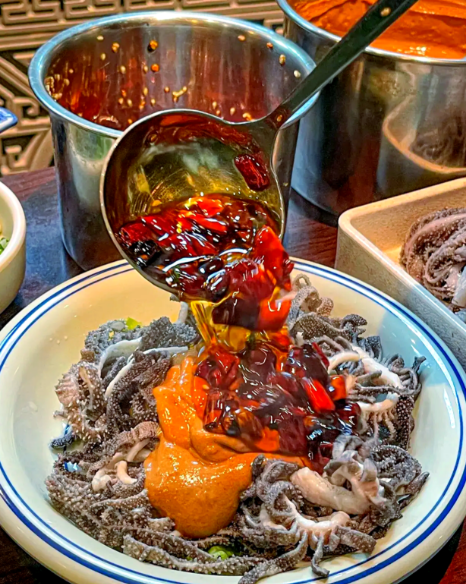
The origin of Baodu is deeply rooted in Beijing’s streets in the late Qing Dynasty and early Republic of China. At that time, offal snacks were popular on Beijing’s streets. To make the most of ingredients, vendors divided beef and lamb tripe into different cuts, locked in freshness and tenderness through quick blanching, and sold them with secret dipping sauces. Affordable and delicious, it quickly became a favorite snack among both ordinary people and literati. After a century of inheritance, Baodu has gradually formed fixed craftsmanship and eating methods, and many time-honored brands have emerged. Among them, brands such as “Baodu Feng” and “Jinshenglong” not only adhere to traditional techniques but also have made Baodu a iconic symbol of old Beijing’s food Culture, allowing this street snack to step out of alleys and become a sought-after Beijing flavor among Chinese and foreign tourists.
The essence of Baodu lies in three core elements: “freshness, cutting, and heat”, with strict requirements for each step, none of which can be missing. First is “freshness”, the foundation of Baodu’s texture. Authentic Baodu uses fresh beef and lamb tripe from the day’s slaughter, rejecting frozen ingredients—fresh tripe has firm meat and sufficient moisture, which can present a crispy and tender texture after blanching; frozen tripe will have loose and dry meat, losing the core flavor of Baodu. After arriving at the store, the ingredients need to go through multiple cleaning processes: repeatedly rubbed with salt and flour to remove mucus and impurities from the inner wall of the tripe, then rinsed with clean water until there is no fishy smell at all, retaining only the natural fresh aroma of the tripe.
Second is “cutting”, and the knife work directly determines the texture level of Baodu. Chefs adopt corresponding cutting methods according to the texture of different parts of the tripe: crispy parts are cut into uniform thin shreds or strips for quick blanching and even heating; slightly softer parts are cut a little wider to retain chewiness. The cut tripe shreds must be uniform in thickness to avoid some being overcooked and some undercooked during blanching, ensuring consistent texture in every bite. Compared with the rough processing of other offal snacks, the knife work of Baodu shows the delicacy of old Beijing snacks.
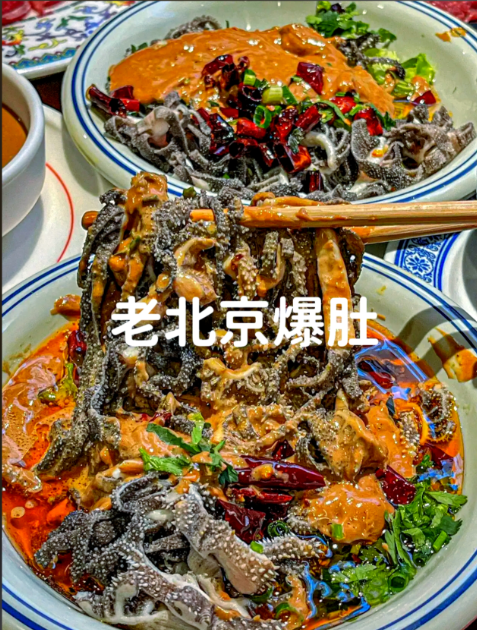
The most critical element is “heat”, that is, the control of blanching temperature, which is the key to the success of Baodu. The “Bao” in Baodu does not mean stir-frying, but “quick blanching”—bring water in a pot to a rolling boil, and a few slices of ginger and cooking wine can be added to remove odor according to preference. When the water boils, put in the cut tripe shreds and stir quickly with chopsticks to ensure even heating. Depending on the part, the blanching time is only 3 to 10 seconds. Excessive heat will make the tripe shreds old and dry, losing the crispy and tender texture; insufficient heat will leave a fishy smell, affecting the eating experience. Experienced chefs can accurately judge the time to take it out of the pot just by observing the color change of the tripe shreds with the naked eye, ensuring that each serving of Baodu is crisp and tender.
The most distinctive feature of Baodu is the delicate division of “13 cuts with different flavors”, which is also the core highlight that distinguishes it from other tripe snacks. These 13 cuts cover different areas of beef and lamb tripe, with textures ranging from crispy to tender, firm to soft, with extremely rich layers. Among them, there are 8 cuts of lamb tripe and 5 cuts of beef tripe, each with its own unique flavor: Lamb Sandan (lamb tripe lining) is the most popular cut, thin in texture and extremely crispy, melting in the mouth after blanching with full fresh aroma; Lamb Duren (lamb tripe kernel) is a treasure among lamb tripe, with soft and delicate meat without any fascia, mild texture, and relatively high price; Lamb Hulu (lamb tripe section) has thick meat, crispy with elasticity, and a strong tripe aroma when chewed; Beef Baiye (beef tripe) has firm and crispy texture, clear texture, and full flavor after absorbing the dipping sauce; Beef Duling (beef tripe neck) has soft texture with a little oil aroma, suitable for diners who prefer mild taste.
The secret dipping sauce is the soul mate of Baodu, which can maximize the fresh aroma of the tripe. The traditional dipping sauce for Baodu is based on sesame paste, mixed with garlic puree, chive flower sauce, fermented tofu sauce, and chili oil in proportion. Some stores also add a little wasabi oil to enhance the taste, with a rich and mellow flavor that can neutralize the slight fishy smell of the tripe and enhance the layering of the crispy and tender texture. For foreign tourists trying it for the first time, it is recommended to start with the basic dipping sauce (less spicy, more garlic), which can not only feel the integrated flavor of the dipping sauce and Baodu but also not cover the natural fresh aroma of the tripe with heavy taste; if you prefer a refreshing texture, you can also choose a simple dipping sauce mixed with garlic puree, soy sauce, and vinegar, which can better highlight the crispy and tender original flavor of Baodu.
Mastering the authentic eating method can enhance the Baodu experience. Baodu should be eaten while it’s hot after being taken out of the pot, as the texture is most crispy and tender at this time; the meat will shrink and dry when cold. When eating, you can choose the combination of parts according to personal preference: for the first try, you can start with crispy parts such as Lamb Sandan and Beef Baiye, which are easy to accept; those who like mild texture can choose Lamb Duren and Beef Duling. For staple food, old Beijingers prefer sesame cakes and fried dough sticks. The crispy staple food echoes the crispness and tenderness of Baodu, providing a strong sense of satiety; for drinks, sour plum soup or jasmine tea is recommended. The sweet and sour taste of sour plum soup can relieve greasiness, and the fresh aroma of jasmine tea can neutralize the heaviness of the tripe, making the taste more refreshing.
Choosing the right restaurant is crucial to tasting authentic Baodu. Beijing’s time-honored Baodu restaurants have their own characteristics, carrying different taste memories: Baodu Feng (Qianmen Store) is a century-old time-honored brand, inheriting three generations of craftsmanship. It has precise heat control for Baodu, complete 13 cuts, and authentic dipping sauce flavor. The store has an antique environment, suitable for tourists pursuing traditional flavors; Jinshenglong (Dewai Store) specializes in “imperial-style Baodu”, with strict ingredient selection, only using high-quality beef and lamb tripe, crispy and tender without fishy smell, and it is a classic match with the store’s sesame cakes; Baodu Zhang (Xisi Store) is hidden in an alley, full of street atmosphere, with large portions and high cost performance, loved by locals and tourists; Menkuang Hutong Baodu (multiple branches) focuses on home-style flavor, with flexible part selection, and can be paired with a variety of snacks for one-stop experience, suitable for foreign tourists trying for the first time.
There are several practical tips for tasting Baodu to help foreign tourists better unlock this Beijing-style snack. First, for the first try, it is recommended to order a “cut platter” to experience multiple textures at one time and find your favorite type; second, the blanched Baodu should be dipped in sauce and eaten immediately to avoid affecting the crispness and tenderness due to long-term storage; third, tripe has a high purine content, so it should be eaten in moderation; fourth, if you are sensitive to fishy smell, you can inform the store in advance to add more garlic puree and cooking wine, or choose parts with less fishy smell such as Lamb Sandan and Beef Baiye.
Beijing Baodu has no complex ingredients or exquisite plating, but with its delicate division of cuts, strict heat control, and extreme crispy and tender texture, it has become a vivid carrier of old Beijing’s food Culture. It hides in small shops on streets and alleys, in the taste memory of old Beijingers, carrying the street warmth of this city and the pursuit of extreme flavor. For foreign tourists, tasting Baodu is not only a novel taste experience but also an immersive opportunity to feel the local life of old Beijing—in every crispy and tender bite, understand old Beijingers’ persistence and ingenuity in snacks.








暂无评论内容