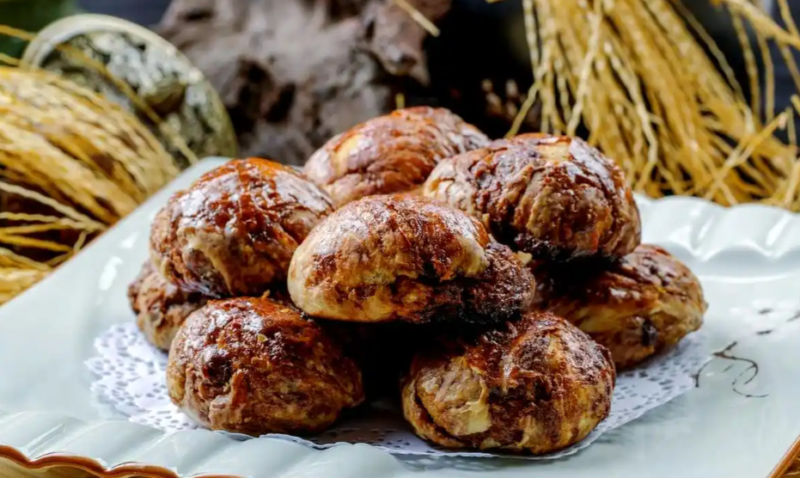





Among the flavorful snacks of old Beijing, Tanghuoshao (Brown Sugar and Sesame Paste Bun) is a representative sweet treat full of street charm. Without the exquisite plating of imperial snacks, it achieves a unique texture of being crisp outside and soft inside, with a rich sweet aroma, relying on the golden combination of flour, brown sugar and sesame paste, as well as layered pressing and slow baking. When it comes to Tanghuoshao, Dashunzhai in Tongzhou is an indispensable benchmark. This century-old time-honored brand has inherited the craftsmanship and flavor of this snack for hundreds of years, elevating Tanghuoshao from a street snack to a characteristic delicacy carrying Beijing’s flavor memories, making it a must-try for foreign tourists exploring authentic Beijing flavors.
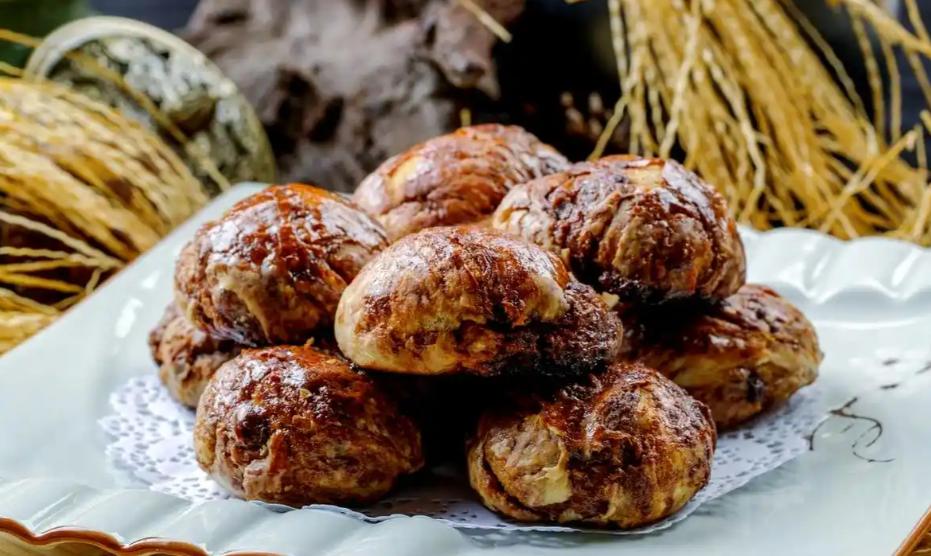
The origin of Tanghuoshao lies in the clever use of ingredients by northern people, and its fame is closely linked to the inheritance of Dashunzhai. In the early years, wheat and sesame were abundant in the north. To enrich the dietary taste, people mixed brown sugar and sesame paste as fillings, wrapped them into dough and baked them to make simple sweet pasta. In the late Ming and early Qing dynasties, Dashunzhai was founded in Tongzhou. The founder improved Tanghuoshao by accurately controlling the ingredient ratio and heat, innovating the “layered pressing” process, upgrading the texture from a single softness to a crisp and soft layered one, and making the sweet aroma more lingering. After hundreds of years of development, Dashunzhai Tanghuoshao has not only become a iconic snack in Tongzhou and even Beijing, but also been included in lists related to intangible cultural heritage, becoming an important symbol of Beijing’s food Culture.
The soul of Tanghuoshao lies in the “golden ingredient ratio” and “layered pressing process”, which together create its core trait of being crisp outside, soft inside and rich in sweet aroma. Authentic Tanghuoshao has strict requirements for raw materials, and each ingredient directly determines the flavor direction: medium-gluten flour must be used, with moderate gluten, which can support the layered structure without being too tight; brown sugar must be high-purity, aromatic old brown sugar instead of refined white sugar. The warm sweet aroma of old brown sugar complements the richness of sesame paste; sesame paste should be pure stone-ground sesame paste without adding other oils, with a more intense aroma and thicker texture, which can firmly adhere to the dough and avoid falling off during baking.
The layered pressing process is the core difference between Tanghuoshao and ordinary sweet pasta, and also the essence of Dashunzhai’s centuries-old inheritance. During production, first add warm water, a little yeast and alkaline water to medium-gluten flour, knead into a smooth dough, and proof until it doubles in size. The fully proofed dough is soft and tough, easy for layering. Then roll the proofed dough into a thin, uniform rectangular sheet, evenly spread a layer of adjusted sesame paste (a little brown sugar can be added and mixed in advance to enhance the sweet aroma), with a spreading thickness of about 0.3 cm, ensuring every part is covered. Then gently roll it up from one end of the sheet to form a tight cylinder, cut into small sections with a knife, press each section horizontally and roll into a round cake. At this time, the inside of the cake forms fine layers, which is the key to ensuring a crisp and soft texture — the more layers, the crisper the outer layer and the softer the inner layer after baking.
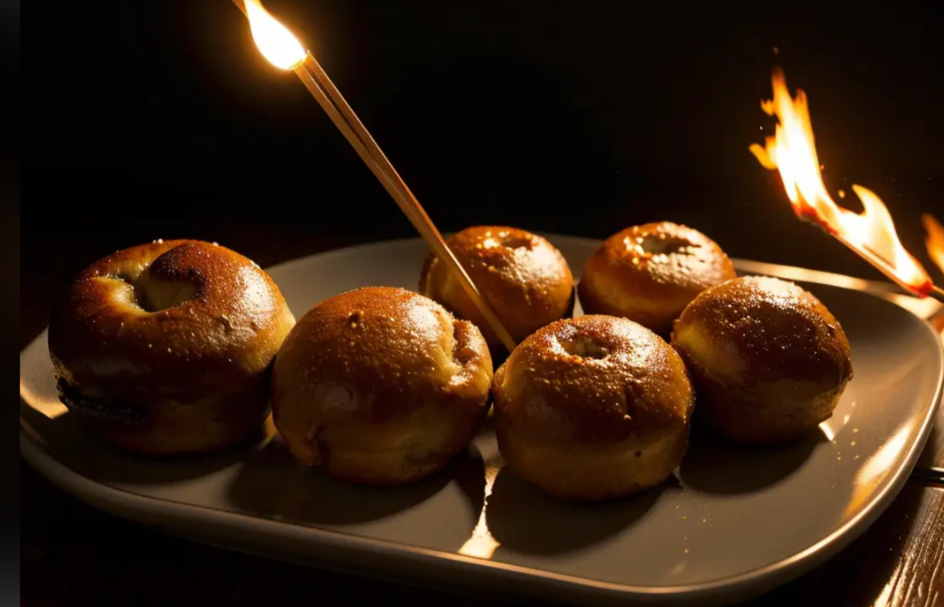
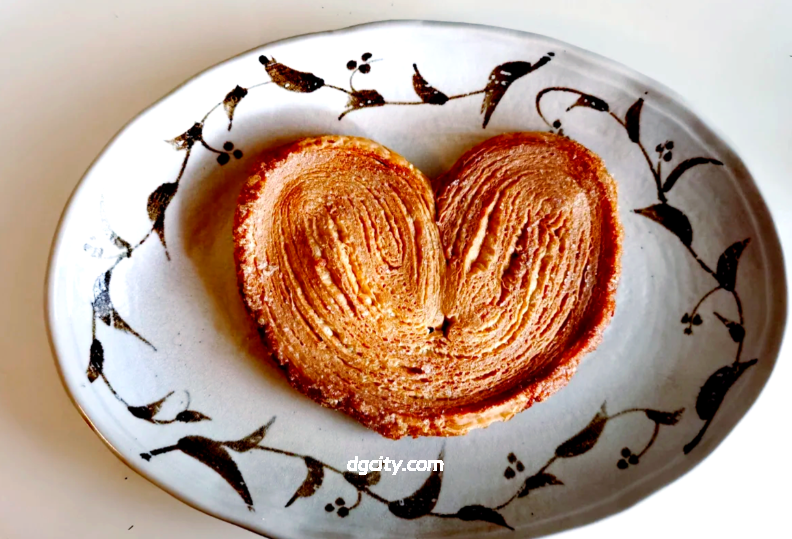
The baking process also tests craftsmanship. Dashunzhai has always adhered to the traditional charcoal baking process, which has been improved modernly but the core heat control remains unchanged. Put the shaped cakes into a baking tray and send them to an oven preheated to 180℃ (traditional charcoal requires controlling the oven temperature and distance to avoid burning), bake for 20-25 minutes, and turn them over in a timely manner to ensure even heating on both sides. During baking, the aromas of brown sugar and sesame paste are fully released, penetrating into every layer of the dough, while a thin crispy crust forms on the surface of the dough, and the inside remains soft and moist due to the layered structure. The baked Tanghuoshao is deep golden yellow in color, with slightly fragrant burnt spots on the surface. It can be easily broken to see clear layers, and the sweet aroma mixed with wheat and sesame aromas instantly stimulates appetite.
High-quality Tanghuoshao has distinct characteristics: the outer skin is crispy and dry, and fine crumbs will fall off when touched gently; the inner part is soft and moist, but not sticky to the teeth or collapsing. Every bite can feel the softness of the dough and the creaminess of the filling; the sweet aroma is rich but not greasy. The sweetness of old brown sugar and the richness of sesame paste neutralize each other, with a faint wheat aroma in the aftertaste, becoming more flavorful as you chew. The traditional eating method requires no complex matching — eating it directly allows you to fully experience its natural flavor. To enrich the texture, it can be paired with a cup of warm jasmine tea or Pu’er tea. The tea aroma can neutralize the slight sweetness, making the flavor more layered. When eating in winter, Tanghuoshao can be slightly heated to enhance the crisp and soft texture and make the sweet aroma more intense.
To taste the most authentic Tanghuoshao, Dashunzhai in Tongzhou is the first choice, and its multiple branches also retain the core flavor. Dashunzhai (Xinhua Street Store), as an old store, adheres to traditional craftsmanship, following centuries-old standards from raw material selection to baking. The produced Tanghuoshao has fine layers and a mellow sweet aroma, a hidden gem among old Beijingers; Dashunzhai (Niujie Branch) is closer to the city center, convenient for tourists to check in, with the same taste as the old store and high cost performance. In addition to Dashunzhai, time-honored brands such as Huguosi Snacks and Baiji Rice Cake also sell Tanghuoshao. Although the flavors are slightly different, they can also show the basic characteristics of Tanghuoshao, suitable for tourists to taste and compare.
There are several practical tips for tasting Tanghuoshao to help foreign tourists better unlock this delicacy. First, storage method: freshly baked Tanghuoshao can be stored at room temperature for 1-2 days, and refrigerated for 3 days after sealing. Reheat for 1-2 minutes when eating again to restore the crisp and soft texture. Second, flavor adaptation: if you don’t like overly sweet food, you can choose the version with more sesame paste, as the rich sesame aroma can neutralize the sweetness of brown sugar. Third, eating precautions: Tanghuoshao is high in calories and should be eaten in moderation. Fourth, souvenir selection: Dashunzhai has vacuum-packed Tanghuoshao, which is easy to carry and an excellent Beijing-style souvenir for relatives and friends.
Beijing Tanghuoshao has no gorgeous appearance, but achieves a century-old unchanged flavor with the simplest ingredients and most exquisite craftsmanship. It hides in the windows of Dashunzhai and on the breakfast tables of old Beijingers, carrying the street warmth and culinary ingenuity of this city. For foreign tourists, tasting Tanghuoshao is not only a sweet taste experience, but also an immersive opportunity to feel Beijing’s flavor inheritance — in a bite of crispness, softness and sweetness, understand the persistence in natural flavor and respect for craftsmanship in old Beijing snacks.



暂无评论内容