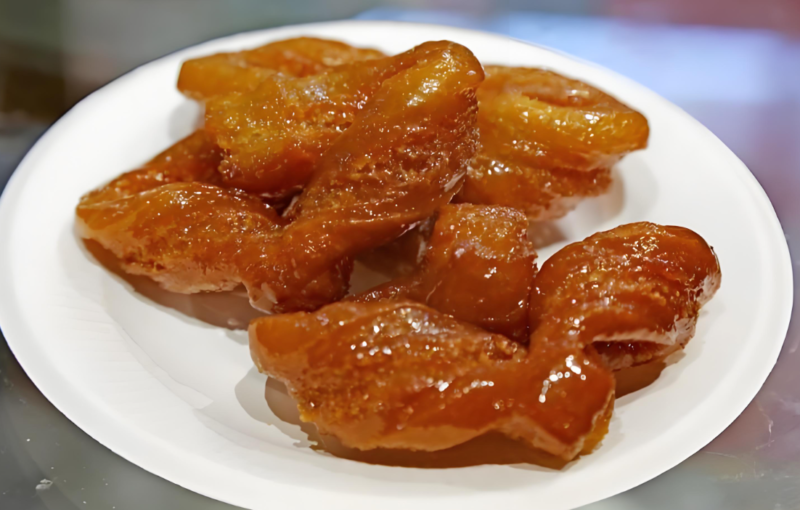





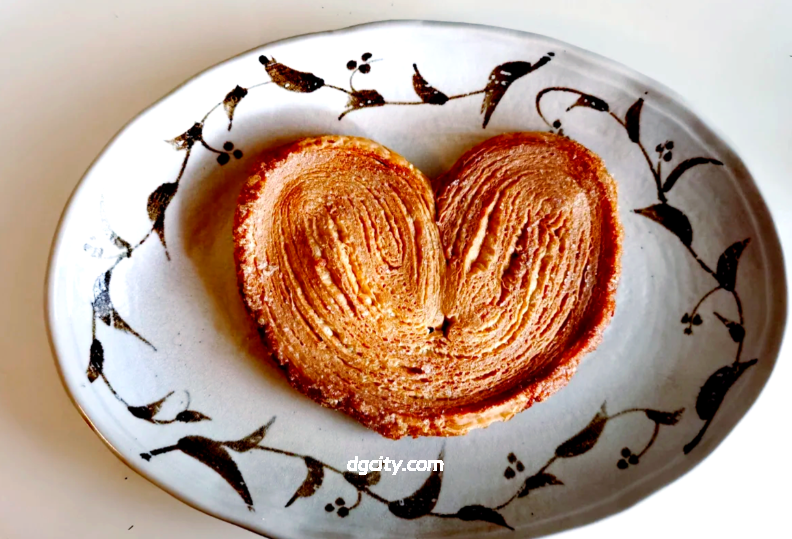
In the landscape of old Beijing’s street snacks, Tang’erdou (Sugar Ear) is a delicacy with an inherent “sentimental filter”. Unlike the profound inheritance of Tanghuoshao (Brown Sugar Bun) or the intangible cultural heritage aura of Ludagun (Glutinous Rice Roll), it has become a vivid childhood taste symbol for generations of Beijingers with its curved ear-like shape, crispy outer layer and moderately sweet flavor. This snack, hidden in alley breakfast shops and the windows of time-honored brands, is full of street charm and a sense of time. It can not only satisfy the craving for crisp sweetness but also evoke childhood memories, making it an excellent entry point for foreign tourists to experience the daily warmth of old Beijing.
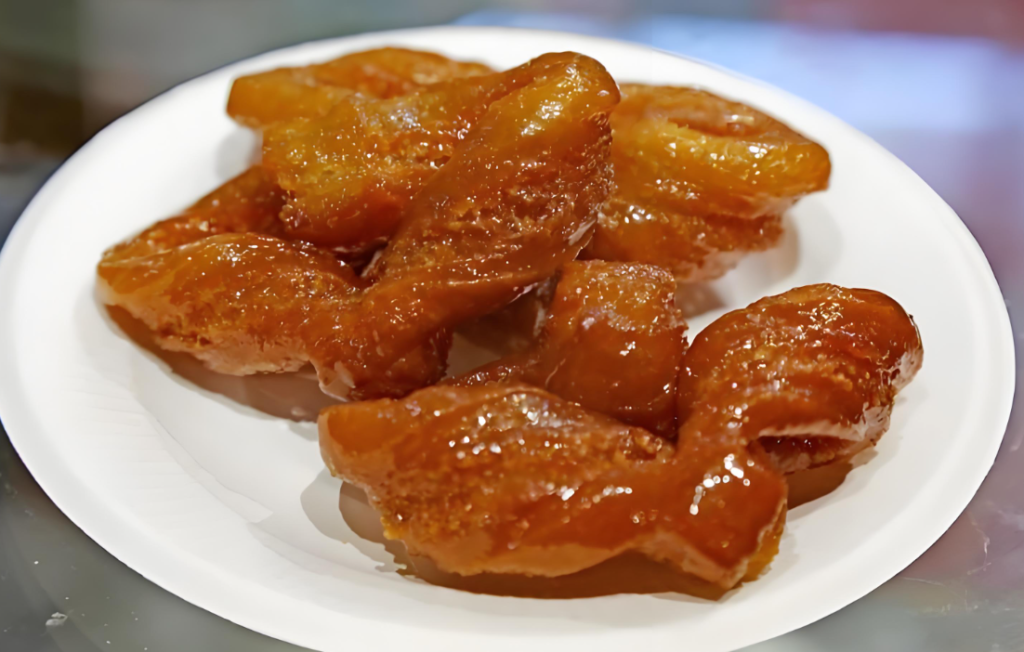
The origin of Tang’erdou is rooted in the streets of Beijing in the late Qing Dynasty and early Republic of China, and its name is straightforward and full of life interest. In the early years, most sweet food shops on Beijing’s streets served ordinary people. To attract children, chefs shaped dough into curved ear-like forms, fried them and coated them with syrup. Thanks to its lovely appearance and sweet taste, it quickly became a hit on the streets, named “Tang’erdou” (Sugar Ear), also known as “Honey Fried Dough Twists” (different names in some regions, while Beijingers prefer to call it Tang’erdou). Unlike the exquisite carving of imperial snacks, Tang’erdou has been people-friendly since its birth. It could be bought for a few cents, making it a “luxury” in children’s eyes and a casual snack for adults after meals. After hundreds of years of circulation, it has always been the most vivid sweetness in old Beijingers’ memories.
The soul of Tang’erdou lies in the perfect integration of “shape, crispness and sweetness”, with craftsmanship reflected in every detail. Authentic Tang’erdou requires precise ingredient ratio: medium-gluten flour is the main component, mixed with an appropriate amount of warm water, yeast, sugar and a small amount of edible oil, kneaded into a smooth and soft dough, and proofed until it doubles in size. The proofed dough must maintain toughness while having good ductility to be shaped into regular ear forms, and it should not deform or break easily after frying. Syrup is the core of the flavor: rock sugar and maltose are mixed in a ratio of 2:1. Rock sugar brings a sweet taste, while maltose increases viscosity and tenderness, avoiding excessive sweetness and greasiness. At the same time, it allows the syrup to cling firmly to the dough, forming a mellow and sweet interior after cooling.
Shaping and frying processes are the keys that distinguish Tang’erdou from other sweet and crisp snacks. During production, divide the proofed dough into evenly sized pieces. Roll each piece into a strip about 15 centimeters long and of uniform thickness, then bend both ends of the strip inward to form an ear-like arc, and smooth the edges to ensure a full and symmetrical shape. For frying, pour a sufficient amount of peanut oil into the pot and heat it to 170-180℃, at which point the oil surface smokes slightly. Put the raw Tang’erdou into the pot in batches to avoid overcrowding. Gently turn them with chopsticks to ensure even heating on all sides, fry until the surface is golden and crispy with a light texture, then take them out to drain the oil. The frying time must be accurately controlled: under-frying results in an uncrispy outer layer, while over-frying makes the interior dry and loses the sweet and tender taste.
The syrup-coating step directly determines the final flavor of Tang’erdou and is also the most patient-testing part. Pour the boiled thick syrup (boil until it can pull out thin threads when picked up with chopsticks) into a container. When the fried Tang’erdou has cooled slightly but is still warm, put them into the syrup and coat them evenly, ensuring every part, especially the curved gaps, is fully soaked. After coating, take them out and cool them in a well-ventilated place to allow the syrup to solidify naturally, forming a texture of “slightly crispy outer layer and thick sweet syrup inside”. At this time, Tang’erdou has a crispy fried aroma on the outside and a dense, tender syrup inside. The sweet flavor progresses layer by layer, not cloying at all. The more you chew, the more you can feel the blend of wheat aroma from the flour and sweetness from the syrup.
High-quality Tang’erdou has distinct characteristics: it is uniformly golden yellow in color, with a naturally curved, full and regular ear shape, no damage or deformation; the outer layer is crispy and dry, making a slight “crunch” sound when bitten gently without excessive crumbs; the interior is wrapped with thick syrup, tasting sweet and tender without sticking to the teeth. The syrup and dough blend perfectly, with a rich but not obtrusive sweet aroma. The traditional eating method requires no complex matching — eating it directly allows you to fully experience its natural flavor. Old Beijingers prefer to pair it with a bowl of warm soybean milk or tender tofu pudding; the salty and fresh taste neutralizes the sweetness of Tang’erdou, making the taste buds more comfortable. It can also be paired with jasmine tea, whose fragrance can resolve slight greasiness and enhance the flavor layers.
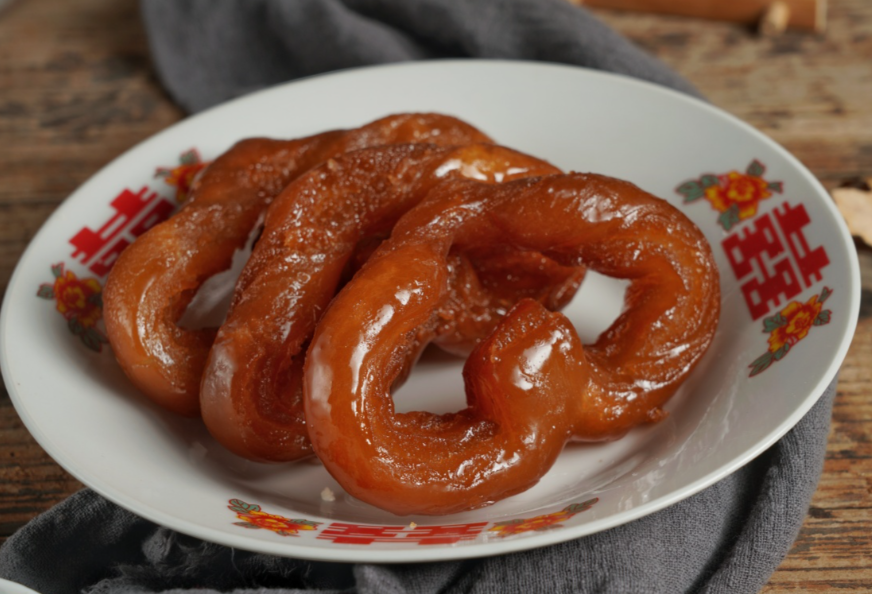
To taste the most authentic Tang’erdou, you can’t go wrong with time-honored brands that adhere to traditional craftsmanship. Huguosi Snacks (multiple branches) offers classic Tang’erdou, made following old Beijing craftsmanship with a regular ear shape, crispy outer layer and sweet interior, moderate sweetness and high cost performance, making it the first choice for foreign tourists trying it for the first time. Niujie Hongji Snacks (Niujie Store) uses solid ingredients for its Tang’erdou, coated with thick syrup and rich in wheat aroma, loved by old Beijingers and can be enjoyed with other snacks in the store. Baiji Rice Cake (Niujie Store) has Tang’erdou with a softer texture and tender syrup, suitable for tourists who prefer mild tastes. In addition, old breakfast shops in alleys may also hide surprises — freshly fried and syrup-coated Tang’erdou have a more vivid flavor, allowing you to experience the purest street taste.
There are several practical tips for tasting Tang’erdou to help foreign tourists better unlock this delicacy. First, eating time: it is best to eat immediately after making, when the outer layer is crispest and the syrup is tenderest. It will become soft when cooled, and the syrup is easy to solidify, greatly reducing the taste. Second, flavor adaptation: if you don’t like overly sweet food, pair it with salty and fresh drinks to neutralize the sweetness and avoid taste fatigue. Third, storage method: freshly made Tang’erdou is recommended to be eaten the same day. If storage is needed, seal it and place it at room temperature for no more than 4 hours. Do not refrigerate it, as it will affect the crispy texture. Fourth, eating precautions: Tang’erdou is high in calories and rich in syrup, so it should be eaten in moderation.
Beijing Tang’erdou has no gorgeous appearance or profound intangible cultural heritage background, but it occupies a place in old Beijing’s snacks with its crisp sweetness and vivid childhood memories. It hides in the windows of time-honored brands, in the morning street charm, and in the youth of a generation, carrying the daily warmth and simple happiness of old Beijing. For foreign tourists, tasting Tang’erdou is not only a crispy and sweet taste experience but also an immersive opportunity to feel the life atmosphere of old Beijing — in a bite of sweetness, understand the most simple and touching taste memory of this city.






暂无评论内容