




When you wander along the old street of Nanqiao in Fengxian District, Shanghai, a mellow sauce aroma drifting between the blue bricks and gray tiles is the code to the century-old flavor of this city — Dingfeng Fermented Tofu, also known as Nanqiao Sufu. As a century-old local brand in Shanghai, it is even the representative brand of southern fermented tofu, enjoying the reputation of “Wangzhihe in the north and Dingfeng in the south”. It is a must-try food for foreign visitors to understand the warmth of Shanghai’s daily life and experience the local intangible cultural heritage.
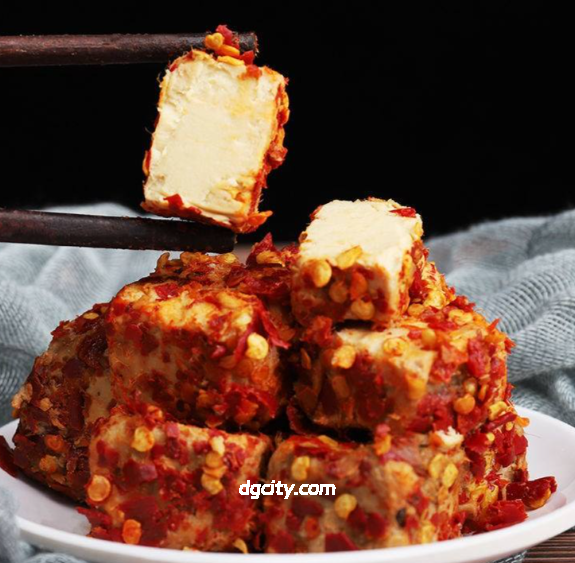
The story of Dingfeng Fermented Tofu began in 1864 (the third year of Tongzhi in the Qing Dynasty). Xiao Languo, a businessman from Haiyan, Zhejiang Province, moved his “Xiao Dingfeng” sufu workshop to East Street, Nanqiao Town, Fengxian District, and has taken root in this fertile land ever since. After nearly 160 years of trials and hardships, it has developed from a small workshop into a world-famous time-honored Chinese enterprise. Its brewing technology was included in the first batch of Shanghai Intangible cultural heritage List in 2007, becoming a vivid carrier of Shanghai’s food Culture.
The most widely spread story about Dingfeng Fermented Tofu is the legend of “Beijing-bound Sufu”. It is said that during the Qing Dynasty, a Hanlin official from Fengxian took Dingfeng Fermented Tofu back to Beijing as a gift for his colleagues when he returned home from a visit. Everyone praised it after tasting it, and they never expected that this snack from the south of the Yangtze River had already quietly entered the capital. When the workshop owner learned about it, he specially made a golden signboard inscribed with “Beijing-bound Sufu” and hung it prominently in the store. Since then, Dingfeng Fermented Tofu has become famous far and wide, not only selling well in Beijing and Tianjin, but also gradually moving overseas. Today, it has been exported to 18 countries and regions in Asia, Africa and Europe, allowing the world to taste the unique charm of the flavor from the south of the Yangtze River.
A high-quality Dingfeng Fermented Tofu cannot do without strict material selection and cumbersome craftsmanship. From soybeans to finished products, it needs to go through at least 53 processes and take more than half a year, with every step embodying the ingenuity of old craftsmen. At the beginning of production, high-quality soybeans with plump grains are selected, made into fresh tofu through multiple processes such as washing, soaking, grinding and curdling, then cut into small squares and placed in a warm and airtight environment for natural fermentation. After the surface of the tofu grows white fluff, it is rubbed, salted, and matched with glutinous rice, rose flowers, rice wine and other auxiliary materials, slowly pickled and brewed, and finally forms a unique flavor with bright color, strong aroma and smooth taste.
Different from the salty and rich northern sufu, Dingfeng Fermented Tofu focuses on the sweet and mellow flavor of the south of the Yangtze River, with a smooth and creamy taste, moderate saltiness and long-lasting aroma. It is divided into three categories: red sufu, white sufu and colored sufu, each with its own unique taste, suitable for visitors with different tastes. Among them, rose sufu is Dingfeng’s signature product, which is pickled with high-quality rose flowers and sufu together. When you open the jar, you can smell the light rose fragrance. It is smooth and sweet in the mouth, with both the mellow taste of sufu and the sweetness of roses, which is the most popular variety among foreign visitors; white sufu (commonly known as “stinky tofu”) retains the original flavor of tofu, with a fresh taste and clean aroma, which is a perfect match with Jiangnan soaked rice; red sufu has a bright red color and strong sauce aroma, suitable for accompanying meals and cooking, which can add a unique flavor to dishes.
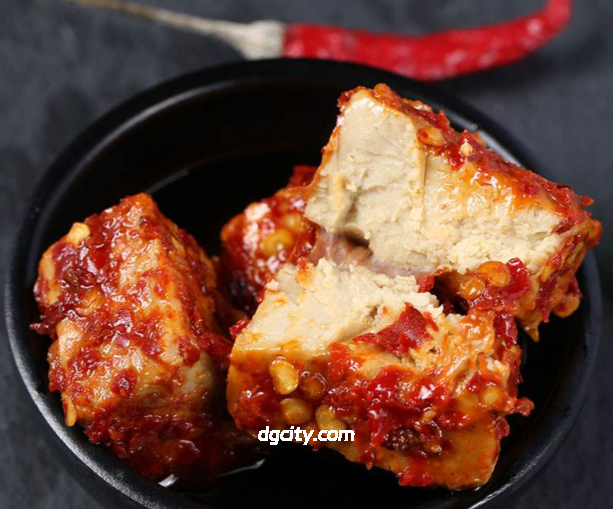
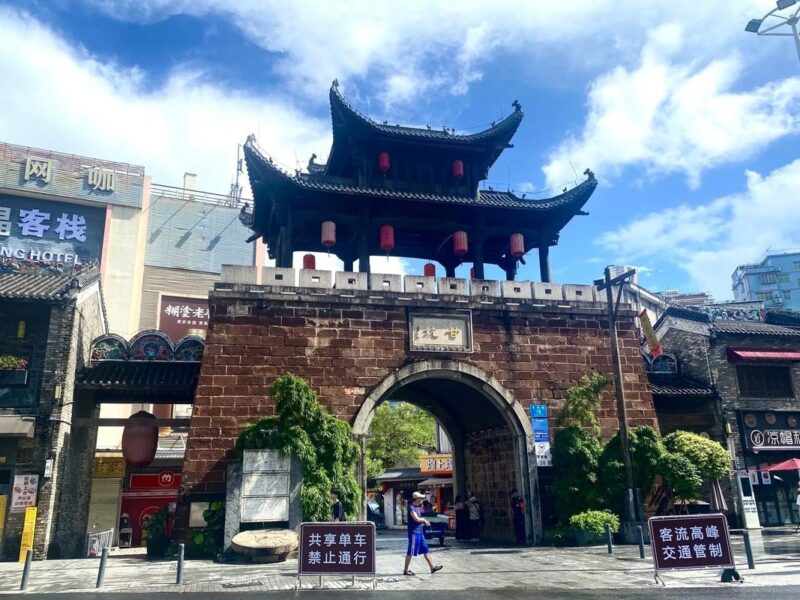
For foreign visitors, the best way to experience Dingfeng Fermented Tofu is to walk into Nanqiao Old Street and immerse themselves in its intangible cultural heritage charm and daily life atmosphere. Nanqiao Old Street is the birthplace of Dingfeng Fermented Tofu. The site of Dingfeng’s old workshop is still preserved here. In the shops along the streets, Dingfeng Fermented Tofu can be seen everywhere. You also have the opportunity to watch old craftsmen demonstrate the key processes of sufu brewing on site, and feel the exquisiteness of intangible cultural heritage craftsmanship up close. In addition, Dingfeng Store located at No. 496 Xinjian Middle Road, Nanqiao Town is the first choice for buying authentic Dingfeng Fermented Tofu. It has a complete range of products, from classic rose sufu and red sufu to gift boxes suitable for giving to relatives and friends. The clerks will also patiently introduce the characteristics and eating methods of different varieties to you.
In addition to Nanqiao Old Street, Dingfeng Fermented Tofu is also sold in major supermarkets and time-honored food stores in Shanghai, making it convenient for foreign visitors to buy at any time when visiting other scenic spots in Shanghai. As an authentic Shanghai souvenir, Dingfeng Fermented Tofu has a simple and elegant packaging, which not only has a traditional charm, but also is easy to carry. Whether it is given to family and friends or used as a travel souvenir for yourself, it is an excellent choice. At the same time, sufu is rich in hydrolyzed protein, free amino acids and other nutrients, known as “Chinese Cheese” by foreigners. It is not only delicious, but also can supplement the nutrients needed by the human body. However, it should be noted that sufu has a high salt content, and patients with hypertension and gout are advised to eat it in moderation.
In terms of eating methods, Dingfeng Fermented Tofu is flexible and diverse, simple and easy to operate, very suitable for foreign visitors to try. The most classic way to eat it is to accompany meals, which can be matched with rice, steamed buns and bread. Taking a bite, it is smooth and sweet, which can instantly enhance the flavor of the staple food; it can also be used as a cooking auxiliary material to make dishes such as sufu chicken wings, sufu pork belly and sufu tofu, which can not only remove fishy smell and increase aroma, but also make the dishes taste richer; in addition, mixing sufu with sesame paste and coriander can also make a delicious hot pot dipping sauce, which is better to eat with hot pot ingredients.
When traveling to Shanghai, in addition to the prosperity of the Bund and the ancient charm of Yu Garden, you must not miss Dingfeng Fermented Tofu, the intangible cultural heritage flavor hidden in the daily life. It is not only a small side dish, but also a witness to Shanghai’s century-old history and a microcosm of Jiangnan food Culture. For foreign visitors, tasting Dingfeng Fermented Tofu can not only unlock a new taste experience, but also walk into Shanghai’s local life, understand the tenderness and thickness of this city, and let every trip to Shanghai carry a unique sauce aroma memory and return with a full load.




暂无评论内容