




As the last day of the lunar year, Chinese New Year’s Eve, also known as “Chu Xi” or “New Year’s Eve Dinner Day”, is one of the most important and ceremonial traditional festivals in Chinese Culture. It is a day when hundreds of millions of Chinese people gather with their families, bid farewell to the old year, and welcome the new one with sincere wishes. With a history of thousands of years, this festival has not only witnessed the changes of times but also carried the deep emotions and cultural memories of the Chinese nation, becoming an indispensable part of Chinese people’s spiritual life.
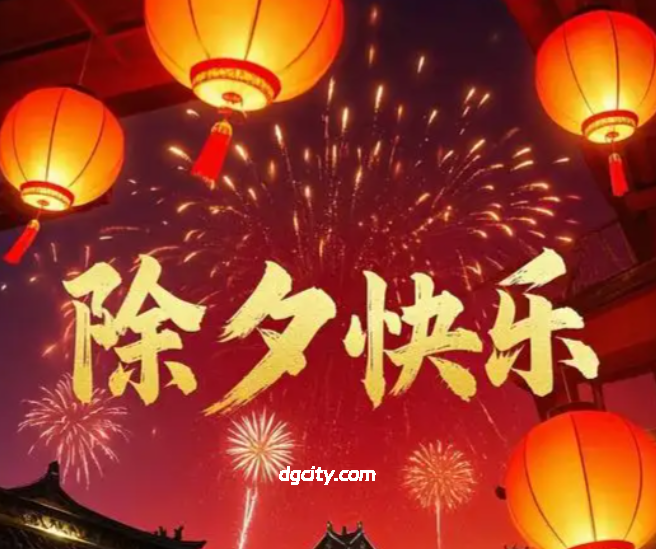
The origin of Chinese New Year’s Eve can be traced back to the pre-Qin period, closely related to the ancient “La Festival” customs. According to “Lu Shi Chun Qiu · Ji Dong Ji” (The Spring and Autumn Annals of Lu Buwei), during the Zhou and Qin dynasties, at the end of each year, the imperial palace would hold a grand ritual called “Da Nuo” (Grand Exorcism). People would beat drums, dance exorcism dances, and drive away “epidemic ghosts” to pray for peace and prosperity in the coming year, which is the origin of the meaning of “Chu” (expelling) in “Chu Xi”. The name “Chu Xi” was first clearly mentioned in “Feng Tu Ji” (Records of Local Customs) written by Zhou Chu in the Western Jin Dynasty, which recorded customs such as exorcism and staying up late on New Year’s Eve, many of which are similar to those of today.
A widely spread folk legend adds a touch of romance to Chinese New Year’s Eve. It is said that in ancient times, there was a ferocious monster named “Xi”, which would come out to hurt people and destroy crops on the last day of the lunar year. The wise people found that “Xi” was afraid of red, fire and loud noises. Therefore, on this day, they pasted red paper on their doors, set off firecrackers, and kept the lights on all night. Finally, they successfully drove away the monster. To celebrate this victory, people wore new clothes and visited relatives and friends to express their blessings. Since then, this day has been called “Chu Xi”, meaning “expelling the evil and welcoming the new life”.
Over thousands of years, the customs of Chinese New Year’s Eve have been constantly enriched, but they have always adhered to the core of “family reunion and bidding farewell to the old”. Pasting “Nian Hong” (New Year red decorations) is the most lively opening of Chinese New Year’s Eve morning and the first ritual for every family to welcome the new year. Spring Festival couplets, also known as “Peachwood Talismans”, originated in the Song Dynasty and became popular in the Ming Dynasty. With neat and antithetical words, they express people’s expectations for a bumper harvest and family well-being. “Kan Lian Cong Hua” (A Collection of Couplets), compiled by Liang Zhangju, detailedly records the origin and artistic characteristics of Spring Festival couplets.
In addition to Spring Festival couplets, window grilles and “Fu” (blessing) characters are also indispensable. Hollowed-out window grilles, painted with flowers, birds, fish and insects, symbolize good luck and prosperity. Red “Fu” characters are pasted on door lintels or walls; sometimes they are pasted upside down, because “Fu Dao” (upside-down Fu) sounds the same as “Fu Dao” (blessings arrive) in Chinese, implying people’s yearning for a happy life. Some “Fu” characters are also exquisitely painted with patterns such as longevity stars, peach of immortality, and dragons and phoenixes bringing auspiciousness, adding more festive atmosphere. In addition, pasting door gods is also a traditional custom. Portraits of door gods such as Qin Shubao and Yuchi Jingde are pasted on the gate, symbolizing protecting the family’s safety and driving away evil spirits.
The New Year’s Eve dinner is the soul of Chinese New Year’s Eve and the most valued symbol of family reunion for Chinese people. As Liang Shiqiu once said, Chinese New Year can only have its true flavor in one’s hometown, and that flavor is hidden in the New Year’s Eve dinner table. No matter how far away they are, people will rush home on this day to sit around the table and share a rich feast. Even if the journey is long and snowy, they will not hesitate, just for this dinner that symbolizes reunion. The preparation for the New Year’s Eve dinner usually starts a few days in advance, with all kinds of delicacies such as chicken, duck, fish, and seafood. Each dish has a unique meaning, embodying Chinese people’s life wisdom and good expectations.
Hot pot is a common dish on the table; the steaming hot pot base symbolizes a prosperous and thriving life. A whole fish is an essential dish; “fish” sounds the same as “yu” (surplus) in Chinese, implying “having surplus every year” and embodying people’s expectations for a prosperous and healthy coming year. Dumplings in the north and rice cakes in the south are the finishing touches. Dumplings are shaped like silver ingots, symbolizing attracting wealth and treasure, and also meaning “geng sui jiao zi” (the transition between the old and new years). Rice cakes sound the same as “nian gao” (higher year by year), implying making steady progress and being healthy year after year. Some families also wrap coins in dumplings; whoever eats them will be blessed with good fortune in the coming year. The table is filled with laughter and joy, full of the happiness of reunion.
Staying up late on New Year’s Eve, known as “ao nian” in Chinese, is the most emotional custom of Chinese New Year’s Eve. It was first recorded in documents in the Western Jin Dynasty and has a history of nearly 2,000 years. On New Year’s Eve, every house is brightly lit; family members sit together, light candles or oil lamps, and stay up all night. It not only expresses people’s nostalgia for the past year but also their expectations and blessings for the new year. In ancient times, staying up late was to avoid the monster “Xi” and protect the family’s safety. Today, staying up late has long lost its meaning of exorcism and has become a beautiful time for family members to accompany each other and share their hearts.
Adults sit around chatting, reviewing the gains and losses of the past year, and planning their expectations and goals for the new year. Children play around, receiving New Year’s money from their elders. New Year’s money, also known as “ya sheng qian” (lucky money to ward off evil), symbolizes the elders’ protection for the younger generation, hoping that they will grow up healthily and stay away from disasters in the new year. With the development of the times, watching the Spring Festival Gala has also become a new custom of staying up late. The cheerful programs connect the reunion time of hundreds of millions of families, becoming the warmest background sound of Chinese New Year’s Eve.
There are also many conventional taboos on Chinese New Year’s Eve. These taboos are not feudal superstition but people’s awe and expectations for the new year. In ancient times, people were not allowed to say inauspicious words such as “ghost”, “death”, and “kill” on Chinese New Year’s Eve, and were forbidden to break bowls and dishes. If they accidentally broke them, they would say auspicious words such as “sui sui ping an” (safe every year) and “luo di kai hua” (blooming when falling) to resolve the bad luck. They were also forbidden to pour sewage or sweep garbage, for fear of sweeping away the family’s wealth and blessings. When offering sacrifices to ancestors, the seats on both sides of the altar could not be occupied at will, and people were not allowed to make noise or curse, to show respect for ancestors. Today, many taboos have been broken with the development of the times, but people’s expectations for a better life have never changed. These taboos passed down for thousands of years have also become part of the Culture of Chinese New Year’s Eve, carrying Chinese people’s good yearning for the new year.
It is worth mentioning that since 2025, Chinese New Year’s Eve has been officially listed as a statutory holiday. This measure not only allows people to have more time to accompany their families and inherit traditional customs but also highlights the country’s attention and protection of traditional Culture. Today, the customs of Chinese New Year’s Eve are also keeping pace with the times. New forms such as online New Year greetings and WeChat red envelopes coexist with traditional customs, making this sense of reunion ritual cross distances and warm everyone. Whether it is the New Year’s Eve celebrations held by overseas Chinese or the reunion moments of every family in China, Chinese New Year’s Eve carries the family and country feelings of Chinese people. It is not only a festival but also a cultural inheritance and an emotional sustenance.
When the midnight bell rings, the sound of firecrackers (now mostly electronic firecrackers) resounds through the night sky, marking the end of the old year and the beginning of the new year. Chinese New Year’s Eve is a feast of reunion, a ritual of bidding farewell to the old, and a new start of hope. It carries a thousand years of cultural heritage and hides the simplest emotions of Chinese people. No matter how the times change, this sense of reunion engraved in the bones will never change, becoming the warmest and most touching chapter in Chinese traditional culture.


暂无评论内容