




Recently, the Census and Statistics Department of the Hong Kong Special Administrative Region released the 2025 economic data. The total Gross Domestic Product (GDP) for the whole year was about 3.05 trillion RMB at the average exchange rate of the year, with a real year-on-year growth of 3.5%. It officially joined China’s “3-trillion city club”, becoming the sixth city with a GDP exceeding 3 trillion RMB after Shanghai, Beijing, Shenzhen, Chongqing and Guangzhou, and the third city in the Guangdong-Hong Kong-Macao Greater Bay Area to receive this honor. This marks that Hong Kong’s Economy has achieved high-quality development in the continuous recovery and further consolidated its core position as an international financial center.
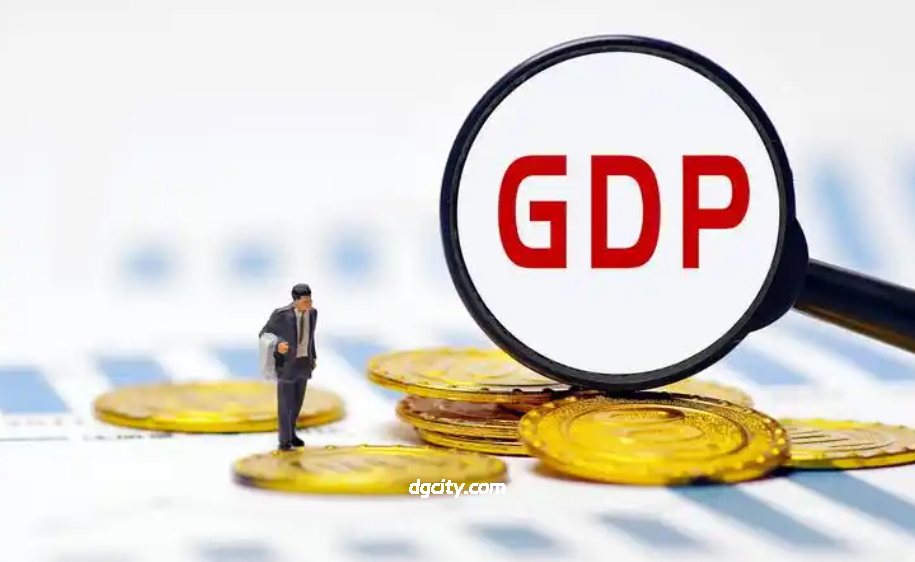
Hong Kong’s GDP breaking the 3-trillion mark in 2025 is not accidental, but the inevitable result of the superposition of multiple advantages and continuous efforts. As a “super connector” linking the Chinese mainland with the world, Hong Kong, relying on its unique location and institutional advantages, has continued to lead in core areas such as finance, trade and logistics, building an economic system dominated by the service industry — its tertiary industry accounts for more than 93% of the total Economy for a long time, and the four pillar industries have fully recovered, injecting strong momentum into economic growth. Among them, the financial industry performed particularly well. In 2025, Hong Kong regained the top spot in the global IPO market, the activity of cross-border financial services continued to increase, attracting global capital to gather, and becoming the core engine driving economic growth; the trade and logistics industry also made synchronous efforts, with total exports reaching 5.2 trillion Hong Kong dollars, a year-on-year increase of 15.4%, benefiting from the prosperity of trade with the Chinese mainland and ASEAN, as well as the strong global demand for electronic products, further consolidating its position as a global trade hub.
In terms of development trends, Hong Kong’s Economy has maintained growth for three consecutive years. It gradually recovered from the impact of the epidemic in 2023, and its GDP reached 2.9 trillion RMB in 2024, laying a solid foundation for breaking the 3-trillion mark in 2025. In 2025, the economic growth rate showed a steady upward trend in the four quarters: a year-on-year increase of 3.1% in the first quarter, 3.2% in the second quarter, 3.7% in the third quarter, and 3.8% in the fourth quarter. The quarter-on-quarter growth rate also continued to improve, showing strong resilience and sustainability of economic development. At the same time, Hong Kong has an obvious advantage in economic density. With a land area of only 1,115 square kilometers and a permanent population of 7.51 million, its per capita GDP exceeds 400,000 RMB, and the per unit area GDP is as high as 2.75 billion RMB per square kilometer, both ranking first among key cities in China and in the world’s first echelon, showing efficient resource utilization efficiency and development quality.
Hong Kong’s entry into the ranks of 3-trillion cities is not only an important milestone in its own economic development, but also of great significance for the coordinated development of the Guangdong-Hong Kong-Macao Greater Bay Area. At present, the total GDP of the Guangdong-Hong Kong-Macao Greater Bay Area has reached 15.3 trillion RMB. Hong Kong’s joining makes the Greater Bay Area the only urban agglomeration in China with three 3-trillion cities, further strengthening the economic strength and radiation-driven capacity of the Greater Bay Area. As one of the core cities in the Greater Bay Area, Hong Kong has formed a pattern of complementary advantages and coordinated development with Shenzhen and Guangzhou. The combination of Hong Kong’s advantages in finance and trade with Shenzhen’s advantages in technological innovation and manufacturing promotes the industrial upgrading of the Greater Bay Area, facilitates the free flow of capital, talents, technology and other factors, and injects new vitality into the high-quality development of the regional economy.
It is worth noting that Hong Kong’s real estate market also bottomed out and rebounded in 2025, with private residential property prices rising by 3.3% and rents increasing by 4.3%, ending the previous “three consecutive declines”. This is supported by the Fed’s interest rate cuts and the influx of high-end talents from the Chinese mainland through the Top Talent Admission Scheme, which also reflects the growing market confidence in Hong Kong’s economic development. At the same time, Hong Kong’s consumer market has gradually recovered, private consumption expenditure has grown steadily, and investment expenditure has increased at an accelerated pace, with domestic and external demand working together to form a virtuous economic cycle.
Of course, Hong Kong’s economic development also faces some challenges, such as limited land space, relatively single industrial structure, and a slightly softened labor market. However, relying on its unique position as an international financial center, a sound legal environment and in-depth linkage with the Chinese mainland, Hong Kong has a solid foundation to meet the challenges. Looking ahead to 2026, the market predicts that Hong Kong’s economy will continue to grow at a rate of 2.5% to 3.5%, housing prices are expected to rise steadily, and the quality of economic development will be further improved.
Hong Kong’s GDP exceeding 3.05 trillion RMB is not only an affirmation of the achievements of economic recovery in the past few years, but also a new starting point for future development. As an important window for China’s opening up to the outside world, Hong Kong will continue to give play to the unique advantages of “One Country, Two Systems”, deepen cooperation with the Chinese mainland, expand the global market, promote higher-quality economic development, and make greater contributions to China’s economic growth and global economic recovery.






暂无评论内容