




Hong Kong Mass Transit Railway (MTR) is the most convenient, efficient and safe public transportation method in Hong Kong, and even the core travel choice for foreign tourists to explore Hong Kong. As a three-dimensional transportation network covering Hong Kong Island, Kowloon, New Territories and the airport, MTR connects major scenic spots, business districts and transportation hubs in Hong Kong, including Airport Express and Urban Lines. With a convenient ticketing system and Octopus Card payment method, foreign tourists don’t have to worry about language barriers and travel troubles, and can easily shuttle around every corner of Hong Kong. Whether arriving in the urban area from the airport or traveling to popular destinations such as Mong Kok, Central and Tsim Sha Tsui, MTR can provide a fast and comfortable travel experience, becoming a “good travel partner” for foreign tourists to explore Hong Kong. This guide will detail the operation details of MTR Airport Express and Urban Lines, as well as ticket purchase methods, Octopus Card usage skills and practical tips, helping foreign tourists quickly master the essence of MTR travel and start a smooth Hong Kong trip.
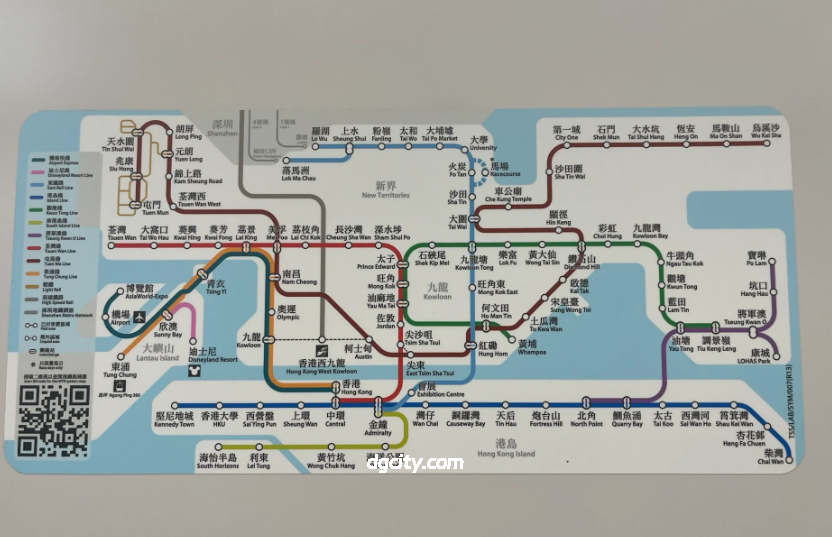
The core lines of Hong Kong MTR are mainly divided into Airport Express and Urban Lines. The two lines have different positioning, meeting the different travel needs of foreign tourists, connecting the core areas and transportation hubs of Hong Kong, and forming an efficient and convenient travel network. Among them, Airport Express is the preferred transportation method for foreign tourists after arriving in Hong Kong. It is specially designed for traveling between Hong Kong International Airport and the urban area, with direct and fast whole journey, comfort and convenience, no transfer halfway, which greatly saves travel time, especially suitable for foreign tourists with luggage.
The Airport Express is about 35 kilometers long, with 5 stations in total, namely Hong Kong Station, Kowloon Station, Tsing Yi Station, Airport Station and AsiaWorld-Expo Station, connecting Hong Kong International Airport with the core urban area. For foreign tourists, the most commonly used stations are Airport Station, Hong Kong Station and Kowloon Station – departing from Airport Station, it only takes 24 minutes to reach Hong Kong Station (the core area of Central) and 20 minutes to reach Kowloon Station (near Tsim Sha Tsui and Mong Kok). Compared with taxis and buses, it is not only faster but also more cost-effective, and you can also enjoy the urban scenery and sea view along the way. The operating hours of Airport Express are from 5:50 a.m. to 12:48 a.m. the next day, with frequent departures every 10-15 minutes. During peak hours (7:00-9:00 a.m. and 6:00-8:00 p.m.), the frequency will be increased to every 7-8 minutes, ensuring that foreign tourists can transfer quickly after arriving at the airport without long waiting.
The carriages of Airport Express are spacious and comfortable, specially equipped with luggage racks and barrier-free facilities, which are convenient for foreign tourists to place luggage, strollers and other items. At the same time, the carriages are equipped with free Wi-Fi and charging sockets, so tourists can connect to the Internet and charge electronic devices at any time, solving the network and power needs during travel. In addition, Airport Express also provides convenient transfer services. At Hong Kong Station, you can transfer to Tsuen Wan Line and Island Line of Urban Lines; at Kowloon Station, you can transfer to Kwun Tong Line; at Tsing Yi Station, you can transfer to Tung Chung Line, realizing seamless connection between the airport and major scenic spots and business districts in the urban area. It should be noted that foreign tourists with valid travel documents can enjoy preferential fares for Airport Express. For specific discounts, you can consult the customer service center at Airport Station or check through the official MTR APP.
Compared with the fast and direct Airport Express, MTR Urban Lines have a wider coverage, running through the core areas of Hong Kong Island, Kowloon and New Territories, and are the main choice for foreign tourists to travel in the urban area. Urban Lines include multiple sub-lines, among which the most concerned by foreign tourists are Tsuen Wan Line, Island Line, Kwun Tong Line, Tseung Kwan O Line, Tung Chung Line, etc. Each line has clear signs and terminal stations, which are easy for tourists to identify, and even foreign tourists who do not understand Chinese can take it easily.
Tsuen Wan Line is one of the busiest lines in Urban Lines, connecting popular areas such as Central, Tsim Sha Tsui, Mong Kok and Tsuen Wan. Foreign tourists can take Tsuen Wan Line directly to popular scenic spots such as Lan Kwai Fong in Central, Avenue of Stars in Tsim Sha Tsui and Ladies’ Market in Mong Kok, without transfer, which is very convenient. Island Line runs through the north and south of Hong Kong Island, connecting stations such as Kennedy Town, Central, Causeway Bay and Tin Hau, connecting popular destinations such as Kennedy Town sunset scenic spot, Causeway Bay business district and Victoria Park in Tin Hau, and is the core line for foreign tourists to explore Hong Kong Island. Kwun Tong Line connects areas such as Kwun Tong, Wong Tai Sin and Mong Kok in Kowloon, and can directly reach scenic spots such as Wong Tai Sin Temple, which is convenient for foreign tourists to experience Hong Kong’s folk Culture.
The operating hours of Urban Lines are roughly from 5:30 a.m. to 12:40 a.m. the next day, and the specific operating hours of different lines are slightly different. Foreign tourists can check the first and last train times of specific lines through the official MTR APP in advance to avoid missing the last train. The frequency of Urban Lines is very frequent, with one train every 2-3 minutes during off-peak hours and one train every 1-2 minutes during peak hours. Even during peak hours, you can get on the train quickly without long waiting. The carriages are also equipped with Wi-Fi and clear Chinese and English announcement systems. There are Chinese and English signs on the platforms and carriages of each station, clearly marking the next station, transfer lines and exit information. Foreign tourists can easily reach their destinations by paying attention to the signs.
For foreign tourists, mastering MTR ticket purchase methods and Octopus Card usage skills can greatly improve travel convenience. There are mainly two ways to buy MTR tickets: manual window ticket purchase and self-service ticket machine purchase. Both ways support multiple payment methods to meet the different needs of foreign tourists. Manual windows are mainly located in the customer service centers of major stations. The staff can provide Chinese and English services. Foreign tourists can directly tell the staff their destination, and the staff will help buy the corresponding tickets. They can also consult travel-related questions, which is suitable for tourists who are not familiar with self-service operations or have language communication difficulties.
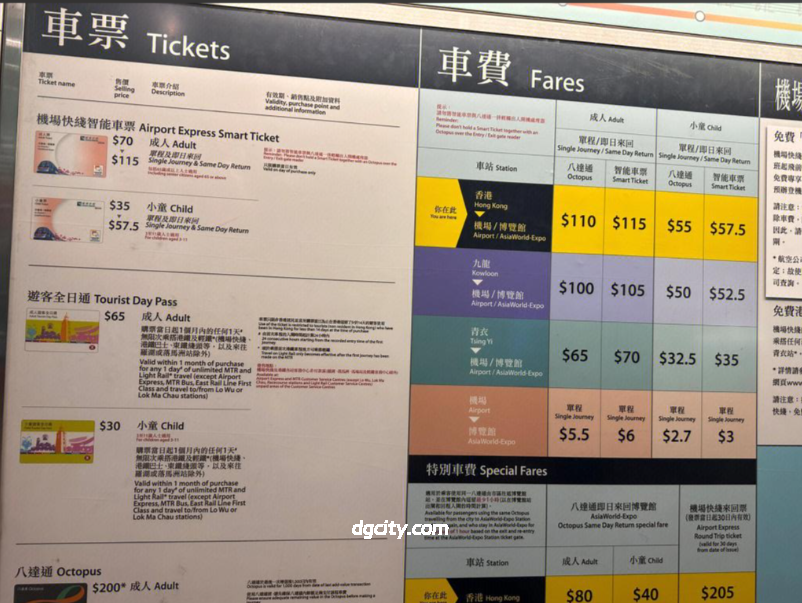
Self-service ticket machines are located at the entrance of the platform of each station, which are simple and convenient to operate, supporting cash (Hong Kong dollars), credit cards (Visa, Mastercard, etc.) and mobile payment (Alipay, WeChat Pay). Foreign tourists can choose the payment method according to their own situation. There are Chinese and English interfaces on the self-service ticket machines, which can switch languages. Tourists only need to select the destination station, the system will automatically display the fare, confirm and select the payment method to complete the ticket purchase. The whole process only takes 1-2 minutes. It should be noted that MTR tickets are for one-time use, only valid for the same day and the same line, and will not be reissued if lost. Tourists need to keep them properly.
In addition to one-time tickets, the Octopus Card is an “essential artifact” for foreign tourists to travel in Hong Kong. It can not only be used for MTR travel, but also for public transportation such as buses, trams and ferries. At the same time, it can also be used for consumption in convenience stores, supermarkets, restaurants and other places, realizing “one card for all uses”, which greatly facilitates the travel and consumption of foreign tourists. Octopus Cards are divided into ordinary Octopus Cards and Tourist Octopus Cards. Foreign tourists can choose the appropriate type according to their own itinerary. Ordinary Octopus Cards can be purchased at the customer service centers of major MTR stations and 7-Eleven convenience stores, with a deposit of 50 Hong Kong dollars, which can be recharged for use. When leaving Hong Kong, you can return the card at designated stations and get a refund of the deposit and remaining balance (a small handling fee will be deducted).
Tourist Octopus Cards are specially designed for foreign tourists, including 1-day pass, 2-day pass, 3-day pass and other types. Cardholders can take MTR Urban Lines (excluding Airport Express) unlimited times within the validity period. Some Tourist Octopus Cards also include Airport Express discounts, which are suitable for foreign tourists who stay in Hong Kong for many days and travel frequently. Tourist Octopus Cards can be purchased at Hong Kong International Airport and the customer service centers of major MTR stations. The price varies according to the validity period. A valid travel document is required when purchasing. When using the Octopus Card to take MTR, you only need to hold the Octopus Card close to the sensor area of the turnstile, and the turnstile can automatically identify and deduct the fee, no additional operation is required, which is very convenient. At the same time, you can also enjoy certain fare discounts.
To make foreign tourists’ MTR travel smoother, here are some practical tips. First of all, smoking, eating and drinking, and loud talking are prohibited in MTR stations. Tourists need to abide by relevant regulations and travel in a civilized manner. Secondly, Hong Kong MTR implements the rule of “standing on the right, walking on the left”. When taking the escalator, you need to stand on the right side, leaving the left side for passengers who need to pass quickly to avoid affecting others. Thirdly, foreign tourists need to keep their personal belongings when taking MTR, especially during peak hours, to guard against pickpockets. At the same time, avoid carrying large luggage to block the passage and affect other passengers’ travel.
In addition, MTR stations have many exits, and each exit corresponds to different scenic spots, business districts or streets. Before exiting the station, foreign tourists can check the exit guide in the platform to confirm the exit corresponding to the destination to avoid going in the wrong direction. If you are not sure about the exit, you can consult the station staff, who will provide Chinese and English guidance and help. In addition, foreign tourists can download the official MTR APP, which supports multiple languages. They can check lines, schedules, fares, exit information, etc., and also check the train arrival time in real time, plan travel routes in advance, and avoid delaying the itinerary.
It should be noted that MTR fares are calculated according to the travel distance. The farther the distance, the higher the fare. The specific fare can be checked through self-service ticket machines, official APP or fare tables in the station. Foreign tourists can take MTR for free if they carry children under 1.1 meters tall; children between 1.1 meters and 1.4 meters tall can buy children’s tickets and enjoy a 50% discount. In addition, MTR stations are equipped with barrier-free facilities, including wheelchair ramps and elevators, to facilitate the travel of tourists with reduced mobility. If you need help, you can contact the station staff.
Hong Kong MTR, with its convenient, efficient and safe characteristics, has become the preferred transportation method for foreign tourists to travel around Hong Kong. Whether it is the fast and direct Airport Express or the wide coverage of Urban Lines, it can meet the different travel needs of foreign tourists; the convenient ticket purchase method and the “one card for all uses” of Octopus Card further improve the travel experience, allowing foreign tourists to travel without worrying about language barriers and travel troubles, and easily shuttle around every corner of Hong Kong. Mastering the relevant information in this guide, foreign tourists can skillfully use MTR, efficiently plan travel routes, save travel time, and devote more energy to Hong Kong’s beautiful scenery, delicious food and cultural experiences, starting a smooth and pleasant Hong Kong trip.



暂无评论内容