




In the food map of Tongnan, Chongqing, Tai’an Fish is definitely a bright business card. Commonly known as “Tuotuo Fish” (lump fish), it originates from Tai’an Town, Tongnan District, is a classic work in Chongqing Jianghu cuisine, and is also a treasure of food listed in the municipal intangible cultural heritage list of Chongqing. Tai’an Town is an important transportation hub between Sichuan and Chongqing, adjacent to the Jialing River. The abundant water resources have nurtured delicious fish and spawned this unique Jianghu food. From its embryonic form in the Tang Dynasty to its popularity today, Tai’an Fish has experienced thousands of years of precipitation, carrying the historical Culture and fireworks of Tongnan, and every bite hides the boldness and delicacy of Chongqing Jianghu cuisine.
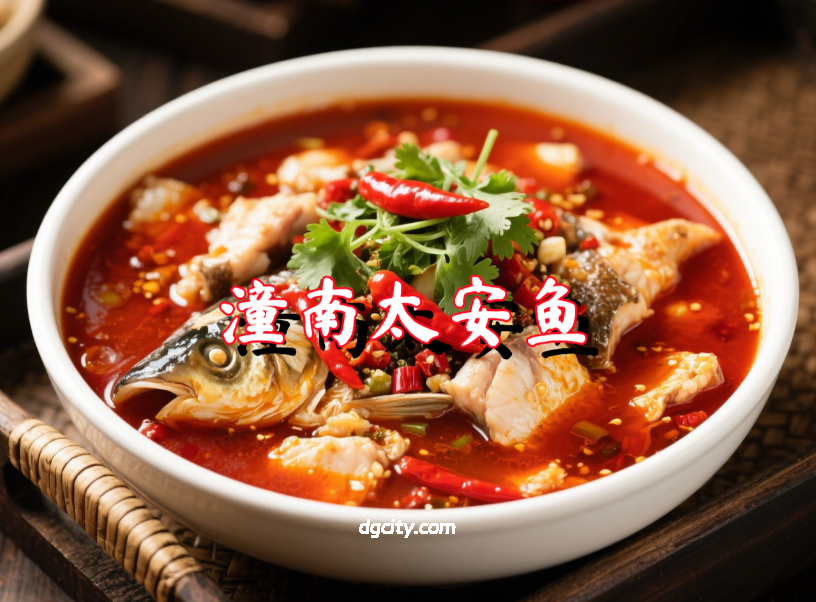
The history of Tai’an Fish can be traced back to the Tang Dynasty. Initially, it used bream as the main ingredient. Later, after improvement by chefs of successive dynasties, it gradually used silver carp and bighead carp with more tender meat and fewer bones. In the late 1980s and early 1990s, Tai’an Fish became a famous dish in Chongqing with its unique approach and delicious taste. Drivers passing through Tai’an Town from north and south would stop to taste it specially. Through word of mouth, Tai’an Fish became more and more famous, gradually walking out of Tongnan and moving towards the whole country. In 2009, the cooking technique of Tai’an Fish was officially included in the municipal intangible cultural heritage list of Chongqing, which is not only an recognition of the flavor of Tai’an Fish, but also a inheritance and protection of the traditional techniques behind it.
As an intangible cultural heritage food, the production technique of Tai’an Fish has strict requirements. Every step from ingredient selection to cooking steps must not be careless. The main ingredient is preferably silver carp or bighead carp from the Jialing River basin. This kind of fish has tender meat, moderate fat content, few bones and thick flesh, which is very suitable for cutting into pieces for frying, stewing and boiling. When processing the fish, remove the scales, gills and internal organs, wash it, and cut it into 3-4 cm square fish pieces, commonly known as “Tuotuo Fish”, which is the origin of the common name of Tai’an Fish. After cutting the fish pieces, marinate them with cooking wine and ginger slices for 10 minutes to remove the fishy smell, then add egg white and sweet potato starch and mix well, so that each piece of fish is evenly coated with a thin paste, which can lock the moisture of the fish meat and make the fish pieces crispy outside and tender inside after frying.
The core flavor of Tai’an Fish lies in the matching of seasonings and the control of heat. The seasonings include local dried chili, Chinese prickly ash, broad bean paste, ginger, garlic, pickled peppers, etc. Among them, the dosage of dried chili and Chinese prickly ash is particularly critical. It is necessary to ensure the spicy and numbing flavor without covering the umami taste of the fish meat. When cooking, first put the coated fish pieces into hot oil and fry until golden and set, then take them out for later use. It is necessary to control the oil temperature well. If the oil temperature is too high, the fish pieces will be charred outside and raw inside; if the oil temperature is too low, the fish pieces will absorb too much oil and taste greasy.
After frying the fish pieces, leave a little bottom oil in the pot, add ginger, garlic, broad bean paste, pickled peppers, dried chili, Chinese prickly ash and other seasonings, stir-fry over low heat to release the aroma until the red oil is fried out; then add an appropriate amount of water, put in the fried fish pieces, add an appropriate amount of salt, light soy sauce and cooking wine to taste, bring to a boil over high heat, then turn to low heat and simmer for 15-20 minutes, so that the flavor of the seasonings can fully penetrate into the fish meat; finally, add the cut konjac, pickled mustard greens and other side dishes, continue to stew for 5 minutes, let the side dishes absorb the umami taste of the soup, sprinkle with chopped scallions and coriander before serving, and a bright red, fragrant Tai’an Fish is completed.
There are unique requirements for tasting Tai’an Fish. Look at the color: the finished Tai’an Fish is bright red, the fish pieces are golden and plump, and the side dishes are dotted in between, which is very attractive visually; smell the aroma: the spicy aroma, fish aroma and seasoning aroma are intertwined, rich but not pungent, making people salivate; taste the taste: the fish pieces are crispy outside and tender inside, take a bite, the outer skin is crispy, the inner part is tender and juicy, the soup is spicy, fresh and fragrant, not dry or greasy, the side dishes are full of soup, crispy and refreshing, and each bite is rich in layers. The spiciness of Tai’an Fish is different from the strong spiciness of other Chongqing Jianghu dishes. It is spicy with fresh aroma, long aftertaste, and more delicious the more you eat.
When coming to Tongnan, to taste the most authentic Tai’an Fish, the first choice is the time-honored restaurants in Tai’an Town. Most of the chefs here have inherited the intangible cultural heritage cooking techniques and can make the most authentic Tai’an Fish flavor. In addition, many restaurants in downtown Tongnan can also serve delicious Tai’an Fish, among which “Tai’an Fish Street” is the most concentrated. Diners can choose freely here and feel the unique charm of intangible cultural heritage food. In addition to tasting Tai’an Fish, you can also learn about the production techniques of Tai’an Fish, feel the food Culture of Tongnan, and satisfy both your taste buds and your soul.






暂无评论内容