




Tongliang Dragon Dance, hailed as “China’s No.1 Dragon Dance”, is a spectacular traditional folk art originating from Tongliang District, Chongqing, a land deeply rooted in Bayu Culture. Listed in the first batch of China’s National Intangible cultural heritage (ICH) in 2006, it is the most representative treasure of Chinese dragon Culture and a iconic cultural calling card of Chongqing. Evolving from a rural folk custom in the Ming and Qing dynasties to a star performance on national and global stages, it has been showcased in over 30 countries and regions, perfectly presenting the majestic spirit of the Chinese dragon and becoming a vital bridge for cross-cultural communication between China and the world.
With a long history dating back to the Ming Dynasty, Tongliang Dragon Dance has been recorded in local chronicles as a key folk activity for the Lantern Festival since the Guangxu period of the Qing Dynasty. Local people once held the saying “Worship Buddha in Dazu, Watch Dragon Lantern in Tongliang”, showing its profound influence in Bayu area. Initially, it was a ritual for praying for good weather, harvest and peace, and has gradually developed into a comprehensive art integrating traditional lantern crafting, dance, percussion music and folk ceremonies over hundreds of years. Later, its dragon lantern crafting technique was also selected as National ICH, making it a rare “dual national ICH” art form with extraordinary cultural value.
1. Diverse Styles: Unique Charms of Different Dragon Dances
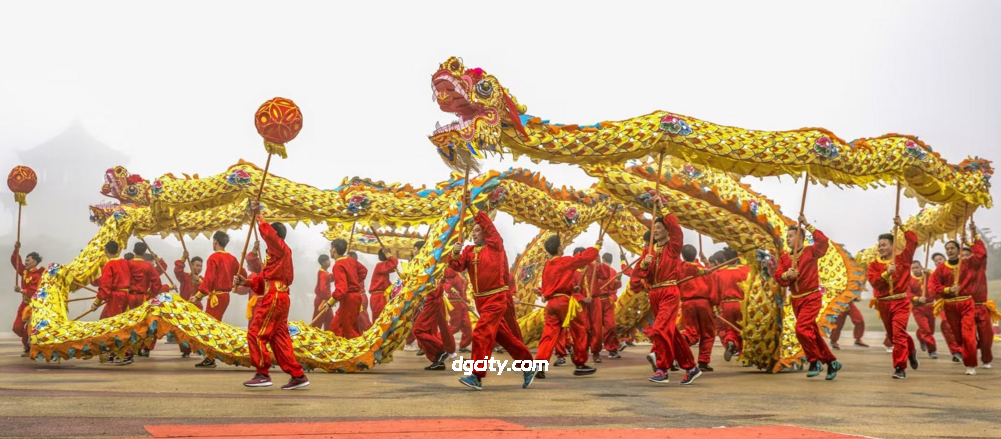
Tongliang Dragon Dance has a complete system, mainly divided into two major categories: dragon lantern dance and colored lantern dance, with dozens of distinctive styles. Among them, the Big Creeping Dragon and Fire Dragon are the most famous and visually stunning representatives. The Big Creeping Dragon, known as the “King of Dragon Lanterns”, is the signature type of Tongliang Dragon Dance. It is up to 50 meters long with 24 sections, symbolizing the 24 solar terms of a year. Featuring a majestic dragon head and exquisitely painted body, it twists, rolls and soars gracefully during performances, presenting a grand and solemn momentum, often staged on important national celebrations and grand opening ceremonies.
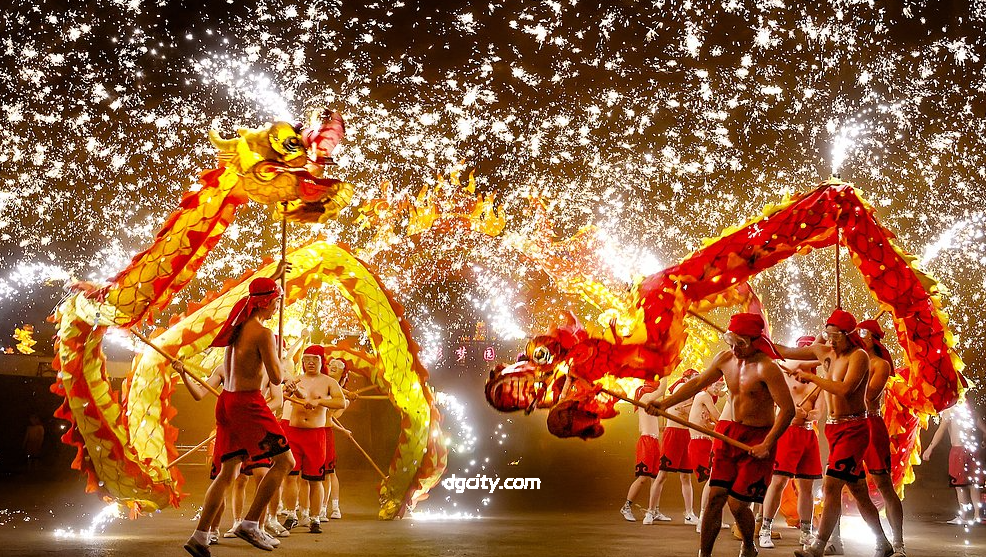
The Fire Dragon is the most thrilling and passionate style, full of wild Bayu charm. Usually 18 meters long with 9 to 13 sections, its performance is a breathtaking visual feast. Performers, bare-chested and wearing red shorts, dance and leap through splashing molten iron at over 1500℃, with sParks flying all over the sky, accompanied by loud gongs and drums. The spectacular scene of “people dancing in fire, dragon flying in fire” makes it the most popular show during Spring Festival and Lantern Festival. In addition, there are other styles like the elegant Lotus Dragon, rustic Straw Dragon, portable Bench Dragon and colorful Small Dragon, each with unique performance routines and cultural implications.
2. Exquisite Craftsmanship: Handmade Lanterns with Ingenuity
The charm of Tongliang Dragon Dance lies not only in the performance, but also in its exquisite traditional handcrafted dragon lanterns. Each dragon lantern is made through a series of strict manual processes: material selection, skeleton making, pasting, painting, decoration and eye-dotting. Artisans use high-quality local bamboo from Tongliang to make flexible and solid skeletons, paste silk and satin on the body, and draw scales and auspicious patterns with mineral pigments. The final eye-dotting ceremony is a sacred ritual that endows the dragon lantern with vitality. Every dragon lantern is a masterpiece of craftsmanship, ensuring both beauty and flexibility for smooth and vivid performances.
3. Glorious Moments: From Rural Stages to Global Arena
Tongliang Dragon Dance has stepped out of rural China and become a symbol of Chinese cultural confidence. It has appeared four times at the National Day celebrations on Tian’anmen Square for the 35th, 50th, 60th and 70th anniversaries of the People’s Republic of China. In 2008, it made a stunning appearance at the opening ceremony of the Beijing Olympic Games, amazing the world with its grandeur. It has also been showcased at international events like the Shanghai World Expo and Beijing International Horticultural Exhibition. In global cultural exchanges, it has toured more than 30 countries and regions, including France, Canada, Thailand and Singapore, and once paraded on the Champs-Élysées in Paris, conveying Chinese blessings and promoting dragon Culture worldwide.
4. Inheritance and Viewing: Experience the Intangible Heritage Immersively
Nowadays, Tongliang Dragon Dance is innovating while inheriting traditions. Tongliang District has established a complete inheritance system, with professional dragon dance teams and national-level ICH inheritors. It has also introduced dragon dance into primary and secondary schools, training young inheritors to pass on the skills from generation to generation. Integrated with cultural tourism, regular dragon dance shows are held in multiple venues in Tongliang, especially during Spring Festival and Lantern Festival, becoming a popular tourist attraction in Chongqing. Watching Tongliang Dragon Dance allows visitors to feel the warm atmosphere of traditional folk customs, appreciate exquisite intangible heritage craftsmanship, and understand the persistent and aspiring spirit of Chinese dragon culture.
From rural folk customs to national ceremonies, from Bayu land to the world stage, Tongliang Dragon Dance has maintained vigorous vitality after hundreds of years. It is not only a dance performance, but also a treasure of Bayu culture and a symbol of Chinese dragon culture. For visitors to Chongqing, watching Tongliang Dragon Dance live is an unmissable experience to feel the grandeur and profoundness of traditional Chinese culture.




暂无评论内容