




As one of the most stunning Folk Arts in Chongqing, Southwest China, the Pengshui High-Platform Lion Dance stands out for its breathtaking high-altitude performances and profound cultural deposits. Originating from Pengshui Miao and Tujia Autonomous County, this traditional dance has a history of about 150 years, and was inscribed on the third batch of the National Intangible cultural heritage List in 2011. It is also the only folk sports project in Chongqing selected as the “2025 Excellent Chinese Sports Culture Project”, becoming a iconic cultural card of Chongqing’s intangible cultural heritage and cultural tourism.
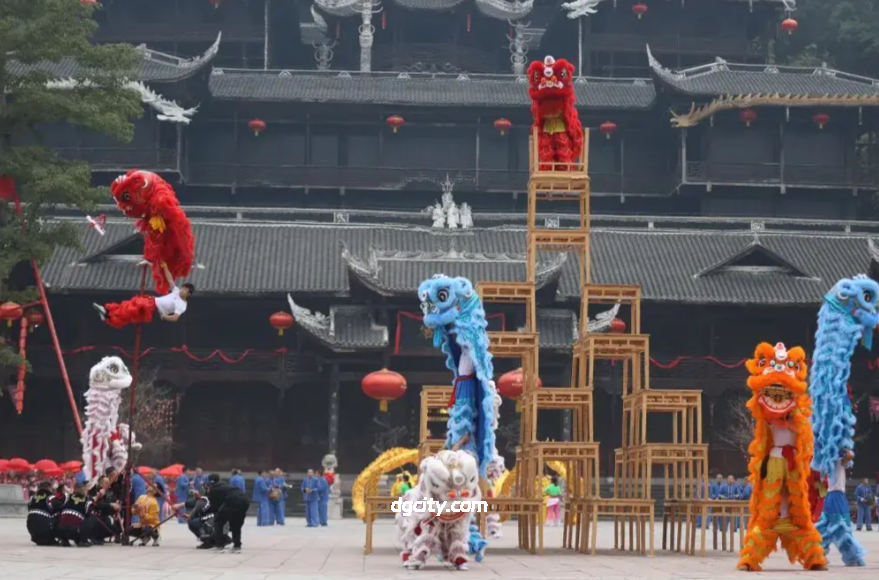
Different from common ground lion dances that are popular in daily festivals, weddings and opening ceremonies, Chongqing High-Platform Lion Dance focuses on high-altitude acrobatic performances, which is a comprehensive art form combining martial arts, acrobatics, traditional dance and folk customs. It originated in the middle and late Qing Dynasty, created by local Miao and Tujia people to celebrate festivals, pray for good luck and drive away evil spirits. For hundreds of years, it has been an indispensable folk activity during major festivals such as the Spring Festival, Miao Caihuashan Festival and temple fairs, carrying the local people’s wishes for peace, prosperity and good fortune.
The preparation of the high-platform lion dance is full of traditional characteristics, with solid wood square tables as the core prop. Performers stack dozens of square tables firmly to build a high platform, which usually consists of 15 to 24 tables for regular shows, and can reach up to 108 tables in extreme performances, forming a platform of more than ten meters high. The top of the platform is called “Yizhuxiang” by local artists, a narrow space of less than one square meter, where the most difficult and exciting stunts are performed. No modern protective equipment is used during the whole performance, which fully retains the original ecological charm of traditional folk skills and tests the performers’ balance and courage extremely.
The whole performance is divided into three parts: ground warm-up, layer-by-layer climbing and high-altitude stunts, accompanied by traditional percussion instruments including gongs, big drums, cymbals and small drums. The rhythm changes flexibly with the performance progress, slow and steady at the beginning, then fast and intense, creating a festive and tense atmosphere for the audience. At the opening, performers dressed in lion costumes do basic movements on the ground to warm up the atmosphere, such as shaking heads, wagging tails, rolling and paying homage to four directions. Then two performers cooperate to play a lion, climbing up the high platform step by step along the drumbeat, with simple flipping and standing movements on each layer to attract the audience’s attention.
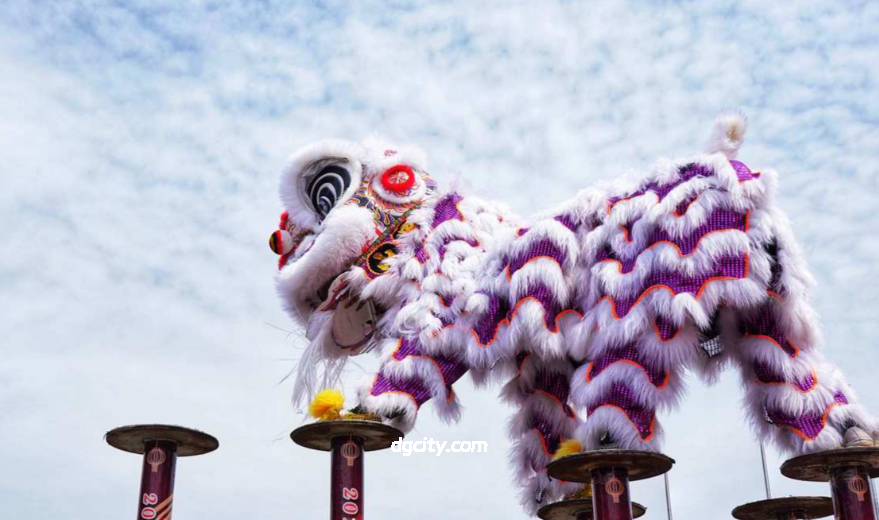
When reaching the top platform, the performance comes to the most exciting climax. Performers complete dozens of difficult stunts in the narrow space, such as standing on one leg, somersaulting, twisting waist and walking on the edge of the table. These movements require superb skills, strong physical strength and perfect tacit understanding between partners. Every perfect completion of the stunts wins warm cheers from the audience. Unlike the fancy lion dances in some regions, Chongqing High-Platform Lion Dance maintains a simple and rugged style, integrating thrilling acrobatics and vivid folk fun, showing the simplicity and courage of Bayu folk artists.
At present, Pengshui has more than 30 professional inheritance teams such as Dingshui Tangjia Troupe and Yupeng Blue Lion Art Troupe, with over 160 registered inheritors. Local government has built inheritance and education bases in Wenwu School and Jiuli City, carrying out regular “intangible cultural heritage into campus, scenic spots, communities and villages” activities. More than 200 performances are held every year, realizing the living inheritance of this traditional art.
In recent years, Chongqing High-Platform Lion Dance has stepped out of southeastern Chongqing, appearing on CCTV programs such as “China in Intangible cultural heritage” and “Rural Stage”, and participating in major cultural events like Xiong’an Lion Dance Conference. It has gained wide popularity across China and even attracted international attention. For tourists, the authentic high-platform lion dance can be watched in Jiuli City, local inheritance bases or during major traditional festivals in Pengshui. It is not only a visual feast, but also a great chance to experience the unique ethnic Culture and intangible cultural heritage charm of Chongqing.
Chongqing High-Platform Lion Dance is not only a folk performing skill, but also a living carrier of Bayu Culture and ethnic culture of Miao and Tujia groups. It carries hundreds of years of folk memory and shows the craftsmanship and perseverance of folk artists. In the era of cultural tourism integration, it still maintains vigorous vitality, becoming a must-see intangible cultural heritage experience in Chongqing for global visitors.




暂无评论内容