




Rongchang pottery, widely known as Antao, is named after Anfu Subdistrict in Rongchang District, Chongqing Municipality. As one of the Four Famous pottery Types in China, it stands alongside Yixing Purple Sand pottery, Jianshui Purple Pottery and Qinzhou Nixing Pottery. In 2011, Rongchang Pottery Making Craft was included in the third batch of National Intangible cultural heritage Extended List, becoming a iconic traditional handicraft of Chongqing that carries thousands of years of Bayu folk Culture and artisan spirit. Antao is highly praised for its classic features: “red as jujube, thin as paper, clear as chime, bright as mirror”, with over 800 years of inheritance, it still retains the purest traditional handicraft techniques, and every finished product is a treasure made by the collision of clay and fire, boasting both practical use and artistic collection value.
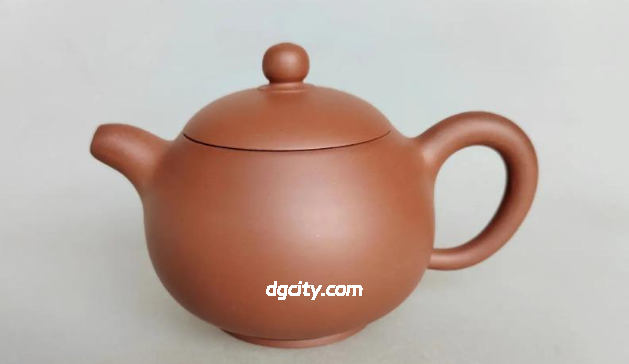
The history of Rongchang Antao can be traced back to the Han Dynasty, and its large-scale production gradually took shape in the Tang and Song Dynasties, reaching its peak in the Qing Dynasty. After the “Migration from Huguang to Sichuan” movement, immigrants from all over the country brought diverse pottery making skills, making Antao craft more mature and perfect. The unique Jurassic sedimentary clay shale from Yayu Mountain in Rongchang is the exclusive raw material of Antao, divided into red clay and white clay. It features fine texture and excellent viscosity without any auxiliary materials, and the fired pottery body is light, thin and hard with warm luster, which is the core advantage distinguishing Antao from other pottery types. traditional Antao is mainly divided into two categories: “Refined Clay Ware” without glaze, showing a simple texture with the natural color of the clay; and “Glazed Ware” with special glazes such as cinnabar glaze and green glaze, with bright and smooth glaze and rich decorative charm. It covers daily-use pottery, craft pottery, packaging pottery and garden pottery, among which pickle jars and tea sets are indispensable utensils in the daily life of people in Sichuan and Chongqing.
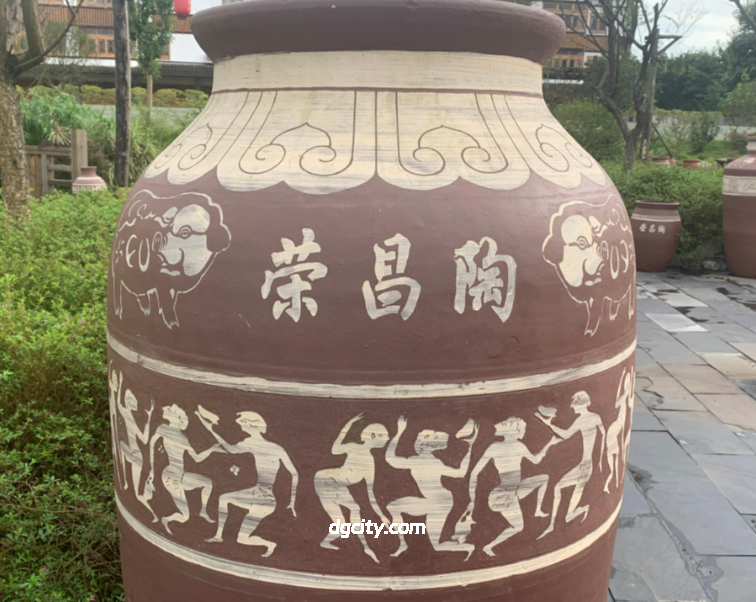
Rongchang Antao making craft has complicated and complete procedures, all completed by pure handwork, including more than 20 core steps: clay selection, clay drying, clay grinding, slurry mixing, slurry filtering, clay treading, clay kneading, blank forming, blank airing, polishing, carving, glazing, kiln loading, firing, kiln unloading and inspection. Every step tests the artisan’s experience and patience, allowing no carelessness. First is clay selection and refining: artisans select high-quality deep clay from Yayu Mountain, remove impurities, dry in the open air, grind and add water to make slurry, filter repeatedly to remove fine sand, then tread the clay repeatedly with bare feet to make it even and fine, and knead the clay many times to expel air, achieving the best flexibility. This step is crucial to the quality of blank forming, and inexperienced artisans can hardly control the dryness and flexibility of the clay.
Blank forming is the core of Antao craft, divided into manual wheel throwing and mold forming; all high-quality traditional Antao products adopt pure manual wheel throwing. Artisans use simple tools and rotate the clay evenly on the wheel, shaping the ordinary clay into regular and smooth blanks through pinching, pressing and lifting. From small teacups and tea pets to large pottery jars, they can be accurately formed with uniform thickness and regular shape. After forming, the blank is placed in a cool and ventilated place to dry naturally. When it reaches half-dry state, rough polishing is carried out to remove burrs, followed by carving decoration. Antao carving pays attention to appropriate depth and concise lines, mostly themed with flowers, birds, landscapes and folk patterns, combining the freehand style of Chinese painting and folk art characteristics. Some high-quality products also adopt complex crafts such as hollowing and embossing to further enhance artistic value.
Glazing and firing are the final and most critical steps of Antao forming. Glaze is prepared according to the ancient formula, evenly applied on the dried blank, and then loaded into the kiln after drying again. Traditional Antao is fired in dragon kilns and steamed bread kilns, using local pine trees and ring-cupped oaks as fuel, which have high oil content and provide gentle and lasting fire to perfectly integrate glaze and blank. During firing, artisans must stay on duty all the time, accurately control the kiln temperature and fire with experience. The whole process takes dozens of hours from ignition, kiln fumigation, heating to constant temperature and kiln closing. A slight deviation in temperature control may cause problems such as blank cracking and uneven glaze color. After being taken out of the kiln, pottery must undergo strict inspection and fine polishing, and finally become a qualified Antao product, which makes a clear and pleasant sound when tapped, with delicate and warm texture.
Nowadays, Rongchang Antao has broken through the boundary of traditional daily-use pottery. With the innovation and improvement of intangible cultural heritage inheritors, it integrates modern design concepts and develops diversified products such as cultural and creative products, light luxury tea sets and art ornaments. It not only retains the essence of ancient crafts, but also fits the aesthetic and needs of contemporary people. As a national AAAA-level scenic spot, Antao Town has become an important carrier for intangible cultural heritage experience and cultural inheritance, where visitors can experience the complete pottery making process and feel the unique charm of millennium kiln fire. As a national intangible cultural heritage, Rongchang Antao making craft is not only a handicraft, but also an important carrier of Bayu Culture, witnessing the inheritance and development of China’s traditional pottery making craft. This millennium refined craftsmanship deserves more attention, protection and inheritance.






暂无评论内容