




1. Origin: A Millennium-old Heritage Craft
Liangping Bamboo Curtain, also known as Liangshan Bamboo Curtain, is a traditional handicraft technique originating in Liangping District, Chongqing, Southwest China. It was inscribed on the second batch of China National Intangible cultural heritage List in 2008, and is honored as one of the “Three Wonders of Liangping” together with Liangping woodblock New Year paintings and Liangping Laizi gongs and drums. It has even been praised as “the best curtain under heaven” by Chinese and foreign crafts lovers.
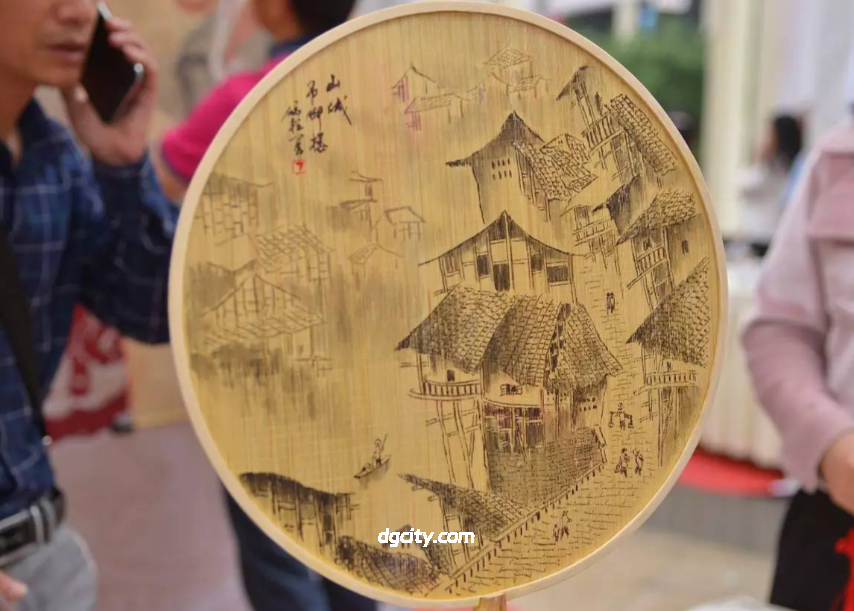
With a history dating back to the Song Dynasty over 1,000 years ago, this craft evolved from the paper-making bamboo screen used in ancient papermaking. Initially, it was made as daily necessities such as door curtains, sedan chair curtains and chair curtains. After continuous improvement through the Song, Yuan, Ming and Qing dynasties, folk painters in the late Qing Dynasty and early Republic of China created the art of painting on bamboo curtains, turning practical daily items into exquisite artworks. In modern times, it has become a national gift, displayed in the Great Hall of the People and Diaoyutai State Guesthouse, carrying the ingenuity of Bashu folk crafts for thousands of years.
Made of high-quality local cizhu bamboo and pure silk threads, Liangping Bamboo Curtain is purely handcrafted through more than 30 major procedures and over 80 detailed steps. The bamboo filaments are as thin as hair and as light as cicada wings, making the curtain surface smooth, flexible and durable, combining practicality and ornamental value perfectly.
2. Raw Material Selection: Premium Materials for Superior Quality
Strict material selection is the foundation of high-quality Liangping Bamboo Curtain. Craftsmen only choose one-year-old local cizhu bamboo, which features bright green color, long and thin nodes, excellent flexibility and no scars or damage. Perennial bamboo is too hard to be processed into fine filaments, so it is not suitable for this craft. For warp threads, high-quality pure silk called “5-7 silk” is selected, which is spun from five to seven cocoons with a diameter of about 0.12mm, featuring uniform thickness and strong toughness to keep the curtain tight and neat. Auxiliary materials include natural tung oil, special cotton threads and solid wood poles, all adopting natural and eco-friendly materials to retain the original charm of traditional crafts.
3. Complete Production Process: Meticulous Handmade Steps
1. Bamboo Filament Making: From Bamboo Tube to Fine Filaments
This is the most fundamental and demanding procedure, completed entirely by hand. First, selected cizhu bamboo is cut down, trimmed of branches and nodes, and cut into standard bamboo tubes. Then craftsmen split the bamboo tubes into thin slices, scrape off the outer green skin and inner yellow layer, keeping only the toughest middle layer. Next, the slices are split into fine filaments with a diameter of 0.2-0.5mm, and sorted repeatedly through needle-tip small holes to ensure uniform thickness and smooth texture. Finally, the bamboo filaments are air-dried to remove moisture and reduce shrinkage, and only flawless and uniform filaments are picked out for later use.
2. Silk Thread Preparation and Combing
Pure silk threads are used as warp threads for the curtain. First, silk threads are wound onto spools with a spinning wheel to avoid knotting. Then the silk threads are stretched onto a special wire rack according to the curtain width, sorted into equal intervals, with a total length of about 100 meters for conventional weaving. The key step “combting sheep horn” is to wind the sorted silk threads evenly on a special wooden frame, fixing the warp threads firmly to prevent deviation during weaving.
3. Heddle Making and Weaving: Core Handcraft Technique
Weaving is the core procedure of Liangping Bamboo Curtain, improved from the traditional wooden loom. Craftsmen divide the silk warp threads into odd and even numbers, thread them into two heddles, and control the opening and closing of warp threads by lifting the heddles. A special weaving gun filled with bamboo filaments is used as weft threads, shuttling back and forth to weave. Each bamboo filament is pressed tightly with a special tool to ensure a compact and flat curtain surface. Craftsmen rely on years of experience to control the strength and density, with over 15 bamboo filaments per centimeter, making the curtain as delicate as brocade.
4. Oiling, Shaping and Binding
The woven bamboo curtain is hung high with a heavy weight tied at the bottom to prevent deformation. Natural tung oil is evenly brushed on the surface for anti-corrosion, insect-proof, moisture-proof and shaping purposes, while making the curtain smoother for painting. After the tung oil is completely dry, excess filaments on the edges are trimmed for a neat look. Finally, top and bottom wooden poles are installed, with the top pole for hanging and the bottom pole for keeping the curtain straight and flat.
5. Painting and Decoration: Adding Artistic Value
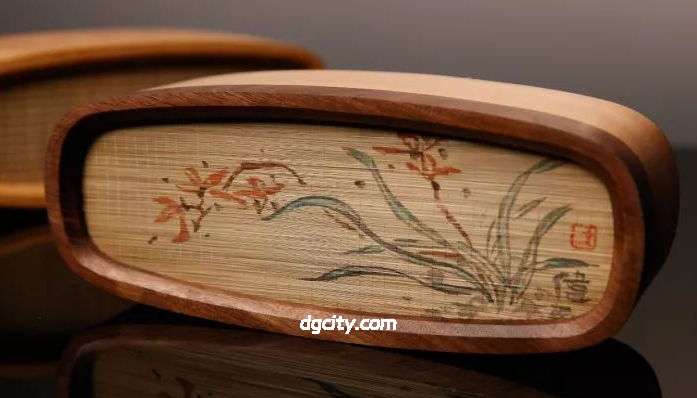
Skilled painters create Traditional Chinese paintings on the plain curtain, with themes including landscapes, flowers and birds, and figures. Since the bamboo curtain does not absorb water, painters must strictly control the water content of the brush, with delicate and precise brushstrokes. The paintings integrate perfectly with bamboo filament textures, forming a unique art form. Some high-end curtains are also decorated with Embroidery and velvet weaving to enhance artistic value.
4. Craft Features and Inheritance Value
Liangping Bamboo Curtain making is a pure handcraft without mechanical replacement, and every procedure requires years of practical experience. The finished product is light, flexible, durable, rollable and easy to carry, retaining the natural texture of bamboo and integrating Traditional Chinese painting art. Nowadays, this heritage craft is facing challenges such as aging craftsmen and shortage of inheritors. Protecting and inheriting this skill is not only preserving a traditional handicraft, but also passing down the unique folk Culture and craftsmanship of Bashu region.



暂无评论内容