




Chongqing Micro-Carving, with its core school known as Bishan Micro-Carving, is a municipal-level Intangible cultural heritage (ICH) of Chongqing and a unique traditional handicraft treasure rooted in Bayu Culture. Dubbed the “craft of ghosts” in ancient times, it stands out as a highly sophisticated integrated art form that combines calligraphy, painting and carving, creating magnificent artworks on extremely tiny carriers. Distinguished by its core philosophy of “seeing the grand in the tiny, appreciating art in the miniature”, this time-honored skill has been passed down for nearly 200 years, sticking to pure handcraftsmanship and preserving the authentic charm of traditional Chinese art.
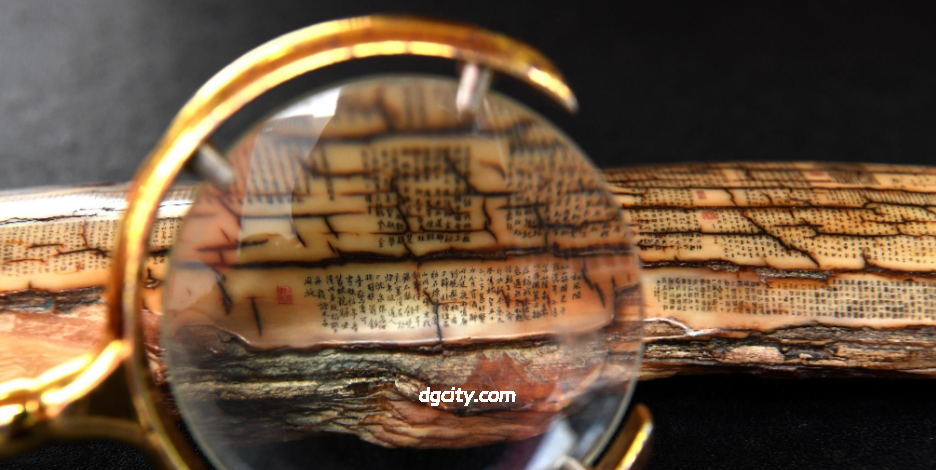
With a clear and complete inheritance lineage, Chongqing Micro-Carving originated in Laifengyi, Bishan District of Chongqing during the Daoguang reign of the Qing Dynasty. It was first created by Wang Zhuo, a local scholar proficient in calligraphy, painting and seal cutting, who integrated traditional seal carving skills with miniature carving techniques to form the initial style of Bishan Micro-Carving. Passed down and refined by generations of craftsmen, it evolved from small seal carvings to a comprehensive high-difficulty art form. It gained growing reputation during the Republic of China period, as craftsmen began creating masterpieces on tiny carriers like rice grains, ivory slices and even hair threads. In 2014, Bishan Micro-Carving was officially included in the fourth batch of Chongqing Municipal Intangible cultural heritage List, gaining systematic protection and promotion, and becoming a vital symbol of Bayu cultural inheritance.
This art form features extremely high technical difficulty, as it relies entirely on manual operation without any mechanical assistance, making it a supreme test of a craftsman’s eyesight, mental focus and hand stability. The selection of materials is extremely rigorous, only choosing high-quality, fine-textured and smooth-surfaced materials such as mammoth ivory, jade, precious seal stones, gold, silver, ceramics and even thin gold wires. Craftsmen use a specially made flat carving knife about 16 centimeters long, with a tiny and sharp blade. They must control their breathing and wrist strength precisely under a magnifying glass, making every cut accurately; a tiny mistake will ruin the entire artwork, which requires years of persistent practice and unwavering patience.
The creative themes of Chongqing Micro-Carving are rich and culturally profound, mainly covering ancient poems and essays, classic Chinese paintings of past dynasties, Bayu regional Culture, landscapes, flowers and birds. Top masterpieces can contain nearly 20,000 characters per square centimeter; while blurry to the naked eye, the strokes are clear, neat and vivid under a magnifying glass, perfectly retaining the charm of original calligraphy and paintings. Pan Qihui, the representative inheritor of this ICH, has devoted over 40 years to micro-carving. His representative work “Along the River During the Qingming Festival” is completely carved on an animal bone slice of 5.29cm long and 0.24cm wide, winning a Guinness World Record and being permanently collected by the National Museum of China. His work of carving “Song of the Pipa” on thin gold wires has also won national craft awards, making Chongqing Micro-Carving famous worldwide.
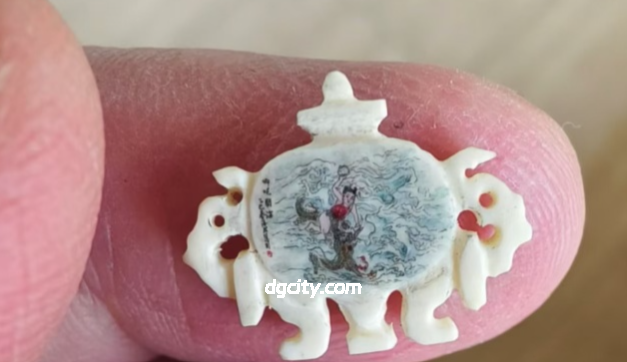
Unlike large-scale carvings, Chongqing Micro-Carving focuses on the ultimate expression of the miniature world, highlighting the craftsman’s pursuit of perfection and calm artistic state. Today, this ancient skill has broken the stereotype of being a niche art. The Fine Micro Art Museum and inheritor studios have been built in Bishan International Intangible cultural heritage Handicraft Town, displaying a wide range of exquisite micro-carving works for the public to visit and appreciate. Meanwhile, regular inheritance courses are held to attract young craftsmen, realizing the dynamic inheritance of this traditional skill.
As a bright pearl of Bayu intangible cultural heritage, Chongqing Micro-Carving is more than a traditional handicraft; it is a miniature epitome of Chinese traditional Culture, carrying the craftsmanship spirit and cultural confidence of Bayu people. It shows the infinite charm of traditional Chinese crafts to the world with its unique creative form, allowing global audiences to feel the ingenuity condensed in tiny spaces and understand the profound heritage of Chinese intangible cultural heritage. For art lovers, handicraft enthusiasts and tourists alike, exploring Chongqing Micro-Carving is a chance to encounter the ultimate beauty of traditional Chinese art and appreciate the extraordinary wisdom of ancient craftsmen.






暂无评论内容