




In the folds of the mountains in western Sichuan, the Jiajin Mountains stretch like a silver giant dragon, lying at the junction of Baoxing County in Ya’an City and Aba Tibetan and Qiang Autonomous Prefecture. It is not only an important branch of the Qionglai Mountains, but also a natural watershed between the Qingyi River and the Dadu River, and even an ecological secret land inscribed with red memories and nurturing miracles of life. In Tibetan, “Jiajin” means “steep and towering”, which appropriately outlines the majestic posture of this mountain range. With its snow-capped peaks all year round, unpredictable climate and profound cultural heritage, it has become one of the most representative mountain ranges in western Sichuan.
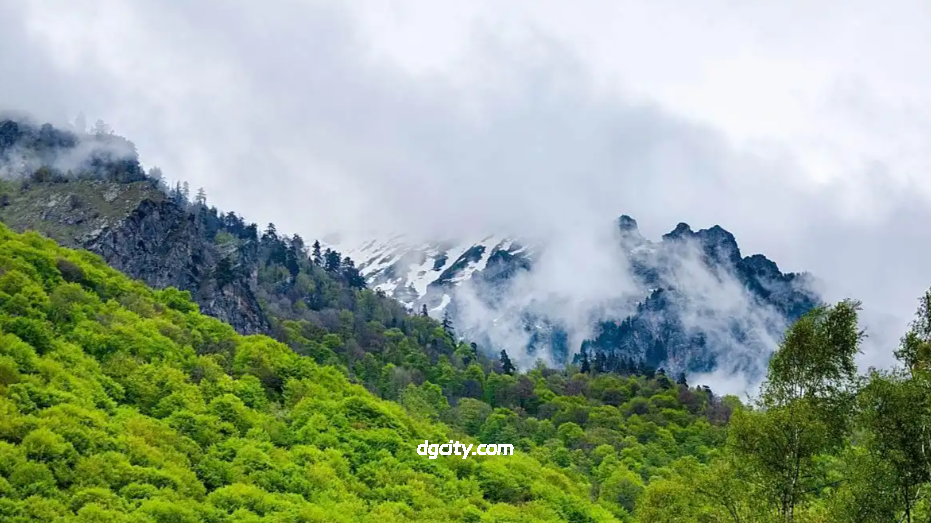
The Jiajin Mountains have a unique geological structure, belonging to the post-Longmen Mountain geosynclinal fold belt and the northern section of the Kangdian Axis. The northern part is composed of the Jintang arc fold belt and the Baoxing anticline, while the southern part belongs to the north-south structural fold fault belt. The mountain range runs northeast-southwest, with its main peak, Lion Mountain, reaching an altitude of 5338 meters, and the Wangmuzhai Pass at the junction of Baoxing and Xiaojin counties standing at 4114 meters above sea level. The mountains here are steep and dangerous, with cliffs on both sides, deep valleys and gorges. Long-term geological movements have created its unique landform landscape, including snow-capped peaks all year round, deep canyons and quiet alpine lakes, forming a richly layered landscape painting. In terms of climate, the Jiajin Mountains show distinct vertical differences, with snow all year round, thin air and unpredictable weather—sometimes cloudy, sometimes sunny, sometimes snowy, sometimes rainy. The eastern slope is on the windward side with abundant rainfall, while the western slope is dry and less rainy due to the obstruction of the mountains. This difference has also created its rich vegetation distribution.
As one of the 25 global biodiversity hotspots, the Jiajin Mountains are a “refuge” for ancient species. Here, a complete plant zonation from subtropical broad-leaved forests to cold-temperate coniferous forests has formed, with a forest coverage rate of more than 80%. As the type specimen locality for 82 species of vertebrates such as giant pandas and golden monkeys, and 105 species of higher plants such as Davidia involucrata (dove tree), it nurtures rich animal and plant resources. Snow lotus, gesang flowers and azaleas bloom competitively on the slopes, and rare birds and animals such as clouded leopards, snow leopards, white-lipped deer and takins inhabit and multiply here. In December 2000, Jiajinshan National Forest Park was officially approved, covering a total area of 23,491 hectares, among which the core landscape area and ecological conservation area account for an important proportion. With extremely high negative ion content, it is a natural ecological oxygen bar and the core area of the world heritage giant panda habitat.
The Jiajin Mountains also have a profound human history, carrying thousands of years of memories and red glory. From the 13th year to the 42nd year of the Qianlong reign in the Qing Dynasty, when the imperial court sent troops to quell the Jinchuan Rebellion, they marched and transported grain over the Jiajin Mountains from the southern slope via Yaoqi. The Muping Tusi was awarded by Emperor Qianlong for supporting the war, and his governing area was expanded. What makes the Jiajin Mountains most famous is its red mark as the first major snow-capped mountain crossed by the Central Red Army during the Long March. In June 1935, the Central Red Army crossed the Jiajin Mountains from Baoxing and successfully joined forces with the Fourth Front Army of the Red Army; in October of the same year, the Fourth Front Army of the Red Army marched south and crossed the Jiajin Mountains, activities in Ya’an for more than half a year; in February 1936, the Fourth Front Army of the Red Army crossed the Jiajin Mountains again to continue moving north. The feat of crossing three times left an immortal spirit of the Long March. Today, at the foot of the Jiajin Mountains, there are the Memorial Hall and Monument to the Red Army’s Long March Crossing the Jiajin Mountains. The memorial hall displays a large number of historical photos and cultural relics, and the monument is shaped like the Red Army’s military flag, inscribed with the heroic deeds of the Red Army overcoming difficulties and dangers, becoming an important base for patriotic education.
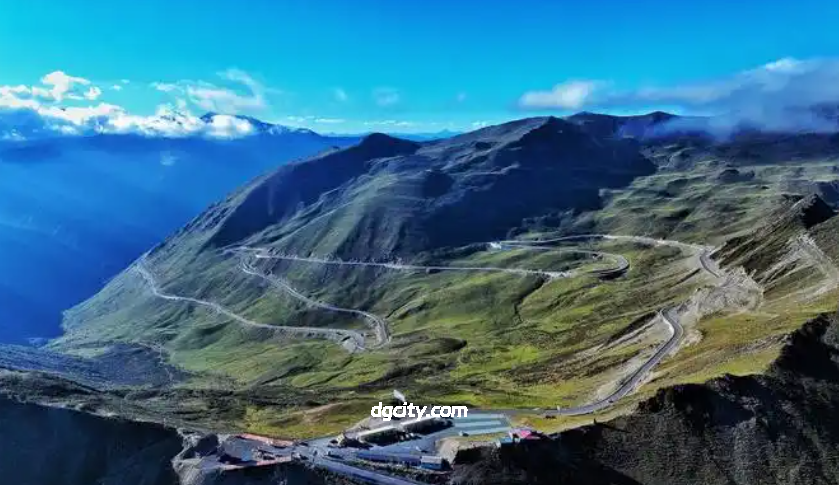
The development of the times has injected new vitality into the Jiajin Mountains, and the construction of transportation projects has made this remote mountain secret land more accessible. In the 1980s, the Jiajin Mountain Highway of Provincial Highway 210 was completed and opened to traffic. During the 2008 Wenchuan Earthquake and the 2013 Lushan Earthquake, this highway became a “lifeline” for earthquake relief, carrying the heavy responsibility of transporting rescuers and materials. In September 2025, the Jiajinshan Tunnel, which took 45 months to build, was officially put into trial operation. This 10.07-kilometer-long tunnel has set three “national firsts”, shortening the time to cross the Jiajin Mountains from 1 hour to 10 minutes, achieving a win-win situation between ecological protection and project construction, and allowing more people to easily appreciate the magnificent scenery of the Jiajin Mountains.
Today’s Jiajin Mountains have both the grandeur of the snow-capped plateau and the elegance of Jiangnan landscapes; both the depth of red history and the vitality of ecological nature. It is a gift from nature, a witness to history, and a place where the spirit of the Long March is inherited. It attracts countless people to explore its mystery and grandeur, and feel the unique charm of the integration of nature and humanity.








暂无评论内容