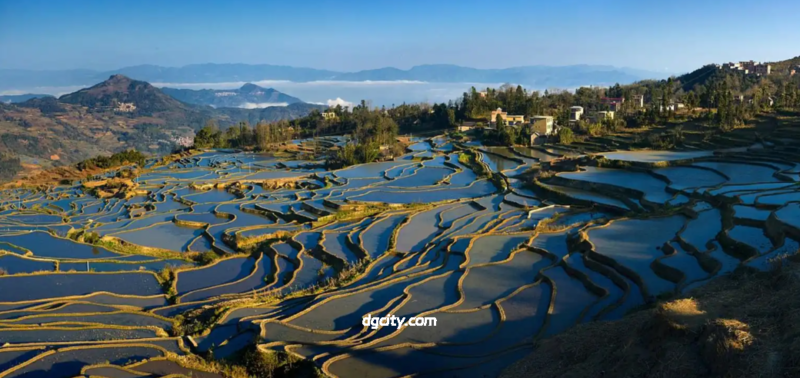





Honghe Hani and Yi Autonomous Prefecture, in southern Yunnan, is renowned worldwide for its spectacular rice terraces that cascade down mountain slopes in intricate patterns of water, earth, and cultivated greenery. Designated a UNESCO World Heritage site for their cultural landscape value, these terraces represent over 1,300 years of Hani ethnic engineering and ecological adaptation. The festivals of Honghe are intimately connected to this agricultural masterpiece, celebrating the rice cultivation cycle, honoring the natural forces that sustain terrace farming, and reinforcing the social bonds that enable collective labor on an epic scale. This guide explores Honghe’s festival traditions, showing how Hani and Yi cultural identities find expression through celebrations tied to land, water, and community in one of the world’s most remarkable agricultural landscapes.
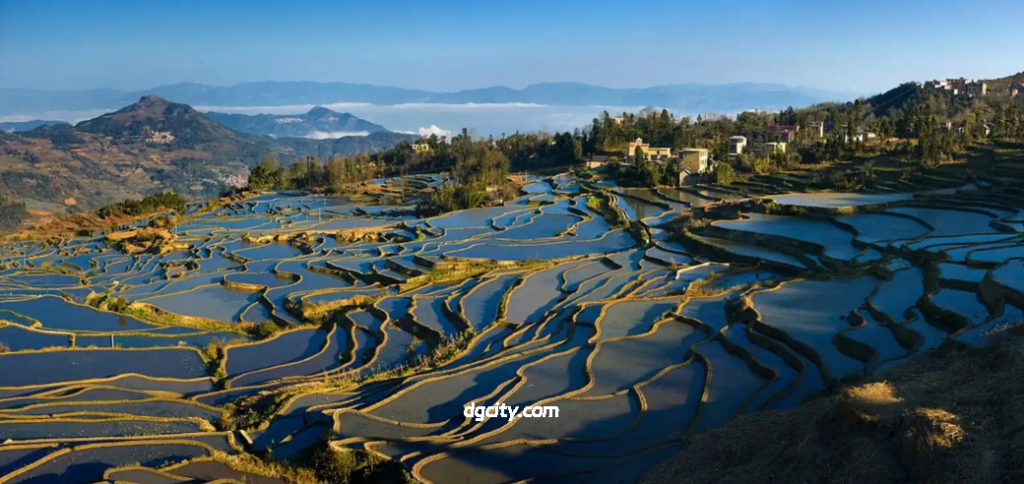
The Hani people’s festival calendar follows the rice cultivation cycle with precision, marking each stage from field preparation to harvest with appropriate rituals and celebrations. The “Angmatu” Festival, occurring before spring planting, involves ceremonies to appease the spirits of water and earth, ensuring their cooperation in the coming growing season. Villagers clean irrigation channels, repair terrace walls, and make offerings at water sources, accompanied by traditional music played on the Hani’s distinctive three-stringed plucked lute (laqin) and bamboo flutes. The festival’s highlight is the communal meal featuring last year’s stored rice, eaten with special reverence as both sustenance and connection to ancestral agricultural knowledge. For visitors, Angmatu offers insights into the meticulous planning and spiritual dimensions of terrace agriCulture, where successful cultivation depends on both technical skill and harmonious relationships with natural forces.
The Rice Transplanting Festival, usually in May or June, transforms the terraces into scenes of synchronized communal labor accompanied by song and celebration. As villagers move in lines down the flooded terrace levels, planting seedlings with rhythmic motions, traditional work songs coordinate movements and maintain morale. These songs, passed down through generations, contain agricultural knowledge, historical narratives, and social values embedded in melodic form. The festival includes competitions for the straightest planting rows, fastest transplanting teams, and most beautiful terrace patterns, with prizes that recognize both individual skill and collective achievement. For photographers and cultural observers, this festival provides unparalleled visual and auditory experiences, with the mirror-like water surfaces of prepared terraces reflecting sky, clouds, and working farmers in constantly changing compositions.
The “Kuzhazha” Festival, celebrated after the autumn harvest, gives thanks for the rice bounty through several days of feasting, singing, dancing, and ritual. The first day involves family-based ceremonies thanking household ancestors and agricultural deities for their protection and assistance. The second day features communal celebrations in village squares, with traditional Hani circle dances (accompanied by the same instruments used during planting), storytelling sessions recounting the year’s agricultural challenges and successes, and displays of the harvest’s quantity and quality. The third day often includes inter-village visits and exchanges, strengthening social networks across the terrace landscape. Kuzhazha’s culinary highlight is the first tasting of the new rice harvest, prepared in various traditional ways including steaming in bamboo tubes, cooking with wild herbs gathered from terrace edges, and fermenting for rice wine production. For visitors, participating in Kuzhazha (often by invitation from host families) offers deep immersion in Hani agricultural Culture and the profound satisfaction that comes from successful harvest after months of careful labor.
Beyond the rice cycle festivals, Honghe’s Hani communities celebrate the “Molong” Festival, dedicated to the terrace-building ancestors who first carved agricultural landscapes from steep mountainsides. This festival, usually in winter when agricultural work is minimal, features reenactments of initial terrace construction, demonstrations of traditional engineering techniques for water distribution and soil retention, and storytelling about legendary terrace masters. The festival reinforces the Hani’s historical identity as ecological engineers who created sustainable agricultural systems through careful observation of natural processes and incremental improvement over generations. For visitors interested in indigenous ecological knowledge and sustainable agriCulture, Molong offers case studies in how human communities can shape landscapes productively while maintaining ecological balance over centuries.
The Yi people, who share Honghe with the Hani, celebrate the Torch Festival with distinctive local characteristics that reflect their adaptation to terrace environments. While the basic elements of torch lighting, bonfire dancing, and livestock competitions appear throughout Yi communities, Honghe’s version incorporates terrace-specific elements. Torch processions follow irrigation channels rather than arbitrary routes, emphasizing the importance of water management. Bonfires are often lit on specially constructed platforms overlooking terrace vistas, creating dramatic nighttime scenes. The festival’s traditional bullfighting events feature animals bred specifically for terrace agriculture, judged on strength and temperament suitable for plrying wet terrace fields. These adaptations show how even pan-Yi festival traditions acquire local meanings shaped by the distinctive agricultural environment of Honghe.
Honghe’s water management festivals reflect the critical importance of irrigation in terrace agriculture. The “Water Dividing” Festival, held at the beginning of the rainy season, involves elaborate ceremonies to allocate water fairly among different terrace sections and villages. Community leaders, often elders with deep knowledge of local hydrology, use traditional measurement tools and rituals to determine water distribution, with disputes resolved through customary law rather than modern litigation. The festival includes processions along irrigation channels, offerings at key water control points, and communal meals celebrating the life-giving properties of water. For visitors, this festival offers insights into how complex irrigation systems requiring cooperation among thousands of households are managed through cultural mechanisms rather than just technical solutions.
The terrace landscape itself becomes a festival venue during the Honghe International Terrace Culture Festival, a modern event that nonetheless draws on traditional elements. Held annually, this festival includes photography exhibitions showcasing terrace beauty across seasons, academic conferences on terrace conservation, cultural performances by Hani and Yi artists, and tourism promotion activities. While more commercialized than village-based festivals, this event provides accessible introduction to Honghe’s cultural landscape for time-limited visitors and helps generate economic support for terrace maintenance. The festival’s “Long Street Banquet,” featuring hundreds of tables arranged along village streets with traditional Hani and Yi foods, has become particularly famous, offering visitors the chance to sample diverse local cuisines in festive communal settings.
For travelers seeking authentic festival experiences in Honghe, timing visits to coincide with agricultural cycle festivals provides the most meaningful encounters. The spring planting and autumn harvest periods offer particularly rich experiences, with opportunities to observe or even participate in terrace activities. Many Hani villages in core terrace areas like Yuanyang, Honghe, and Jinping counties welcome respectful visitors during festivals, especially those who arrange visits through community tourism organizations. Homestay programs allow particularly deep immersion, with opportunities to stay in traditional Hani mushroom-shaped houses (with thatched roofs resembling mushrooms), participate in household preparations for festivals, and learn about daily life in terrace communities.
Practical considerations for experiencing Honghe’s festivals include understanding the remote location of many terrace villages, preparing for basic accommodation conditions, and being mindful of cultural protocols around photography and interaction. Transportation to terrace areas often involves winding mountain roads with limited public transport, so hiring local drivers familiar with the terrain is advisable. Accommodation ranges from basic village homestays to more comfortable guesthouses in county towns, with advance booking essential during festival periods. Photography of the terraces requires careful timing for optimal light conditions—sunrise and sunset provide the most dramatic lighting on the water-filled terraces, while midday visits better show agricultural activities. Respectful engagement with local communities involves seeking permission before photographing people, participating in activities only when invited, and following local customs regarding dress and behavior.
Honghe’s festival traditions face contemporary challenges including youth migration to cities, changing agricultural economies, and tourism pressures on fragile terrace ecosystems. However, community-based initiatives have emerged that use festival tourism to support terrace maintenance, fund traditional arts, and create economic alternatives that keep young people connected to their cultural heritage. Visitors can support these sustainable approaches by choosing responsible tour operators, purchasing authentic crafts from village cooperatives, and participating in cultural exchanges that fairly compensate local communities. Such responsible tourism helps ensure that Honghe’s remarkable cultural landscape—where human creativity and natural beauty intertwine in the terraces—remains vibrant for future generations.
Whether witnessing the synchronized planting of rice seedlings across mirror-like terraces, participating in harvest celebrations after months of cultivation, learning about ancient water management systems, or simply marveling at the breathtaking beauty of the terrace landscape during festival decorations, visitors to Honghe encounter a cultural world where human labor, ecological wisdom, and community cooperation have created one of agriculture’s greatest masterpieces. The region’s festivals offer windows into sustainable relationships between people and land, demonstrating how cultural traditions can maintain productive landscapes over centuries while adapting to changing circumstances. For travelers seeking to understand humanity’s capacity to shape environments beautifully and sustainably, Honghe’s festival calendar provides essential lessons and unforgettable experiences.




暂无评论内容