




Between the mountains and seas of Dapeng Peninsula in Shenzhen lies a precious intangible cultural heritage that carries 600 years of Coastal defense memories and Hakka customs—the Dapeng Cool Hat. This city, known as “Pengcheng,” boasts both the modern sharpness of skyscrapers and the time-honored charm of ancient villages and relics. The Dapeng Cool Hat, as a vivid carrier connecting history and humanity, reveals the mysterious integration of Lingnan military and civilian Cultures to tourists from afar.
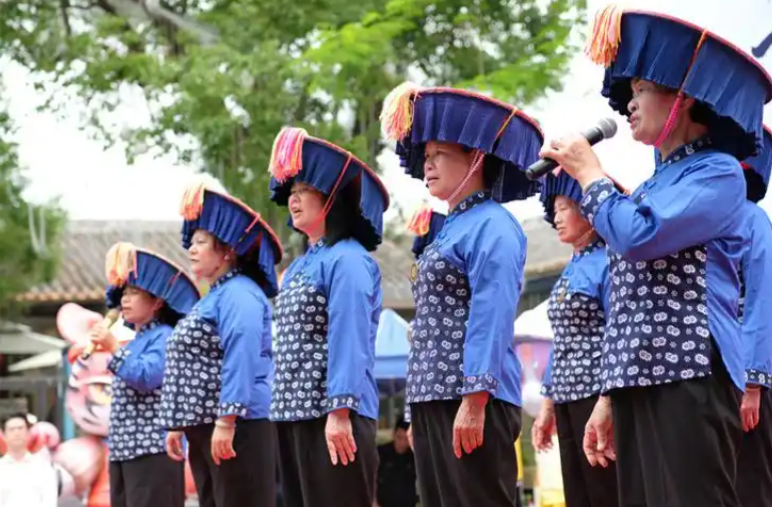
The origin of the Dapeng Cool Hat is closely linked to the Coastal defense military pattern of the Ming and Qing dynasties. In the 27th year of Hongwu in the Ming Dynasty, Dapeng Ancient City was built. Hereditary soldiers and their families stationed and cultivated here. The hot climate and strong sea breezes on the peninsula made the cool hat, which shields from the sun and rain, an essential item. Initially, the cool hat was just a simple bamboo hat. Later, improved by craftsmen, a 15-centimeter-diameter round hole was made on the top to stabilize, prevent slipping, and allow ventilation. A five-inch-wide blue cloth curtain was attached to the brim to block the scorching sun, and the top was painted red, gradually forming the iconic “red top and blue curtain” style.
This red and blue color scheme has a profound meaning: the blue curtain is derived from the navy blue of the military uniforms of the navy in the Ming and Qing dynasties, while the red top echoes the red tassel element of the Qing military caps. It is a silent expression of the descendants of military households’ commitment to their country and family. More touching is the warm story behind the cool hat. According to legend, frequent wars broke out during the Ming and Qing dynasties. When the soldiers of the Ancient City went to battle, the female relatives specially improved the style of the cool hat to express their concern and blessings implicitly with military uniform colors, becoming the warmest “cheering symbol” in the eyes of the departing soldiers.
The fluttering blue curtain not only blocks the sun and sand but also covers the eyes and eyebrows of the female relatives, conforming to the traditional etiquette of implicit women in ancient times, yet hiding passionate emotions in the color matching and details. This design that perfectly combines practical functions with emotional sustenance makes the cool hat more than an ordinary costume, but a cultural totem engraved with family love and homesickness.
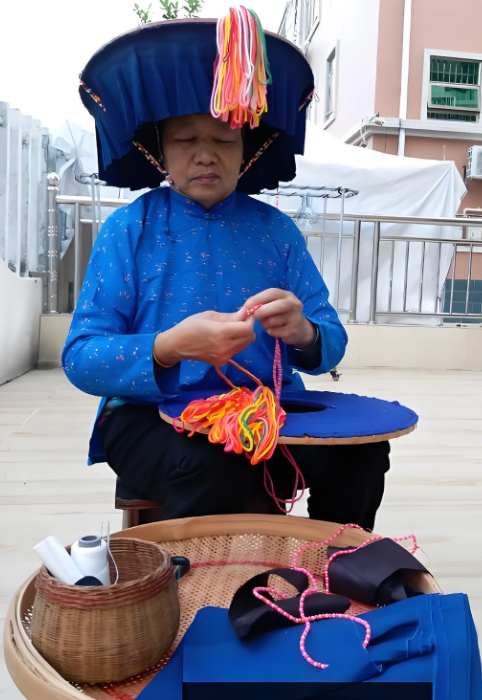
The craftsmanship of the Dapeng Cool Hat lies in each hand-made process. Making a cool hat requires dozens of procedures, including material selection, splitting bamboo strips, weaving, oil brushing, curtain sewing, and painting, with no mechanical participation throughout, relying entirely on the craftsman’s feel and experience. The raw material is local yellow bamboo with straight stems and few nodes. Skilled craftsmen split it into thin bamboo strips like cicada wings, ensuring each strip has a uniform width and thickness. When weaving, exclusive rhymes are followed to make the hat body tight, flat, breathable, and lightweight.
The blue cloth of the curtain needs to be manually folded into natural pleats, which can maintain its shape for a long time without needle and thread fixation. The red paint on the top not only prevents insects and mildew but also embodies good wishes for good luck and smoothness. Behind the complicated procedures is the craftsman’s adherence to traditional skills, and each cool hat condenses the warmth of time and the soul of handwork.
As time changes, the Dapeng Cool Hat has also witnessed the changes of folk Culture. According to local customs, the color of the hat tassel indicates marital status: unmarried women use white tassels, married young women use red ones, and middle-aged and elderly women mostly use blue-black mixed colors, becoming a unique folk code. In 2017, the production technique of Dapeng Cool Hat was included in the list of district-level intangible cultural heritage in Dapeng New Area. Although it is no longer a daily necessity, it has gained new vitality under the adherence of intangible cultural heritage inheritors.
In the old workshops of Dapeng Ancient City, tourists can experience bamboo weaving by hand, listen to craftsmen tell stories about cool hats, and take this handicraft carrying mountain and sea memories home, allowing intangible cultural heritage to flow between fingers. Wandering on the bluestone roads of Dapeng Ancient City, you can occasionally see elderly people walking with cool hats on their heads, and the red top and blue curtain are particularly striking against the mountain and sea scenery. This small cool hat is not only a practical utensil for sun protection and rain shelter but also a witness to the 600-year coastal defense history of Dapeng Ancient City and a fusion of Hakka and marine cultures. For foreign tourists, it is a key to opening the door to Lingnan culture. Through this interweaving of red and blue, you can understand the profound historical heritage and humanistic feelings behind Shenzhen, a modern city.






暂无评论内容