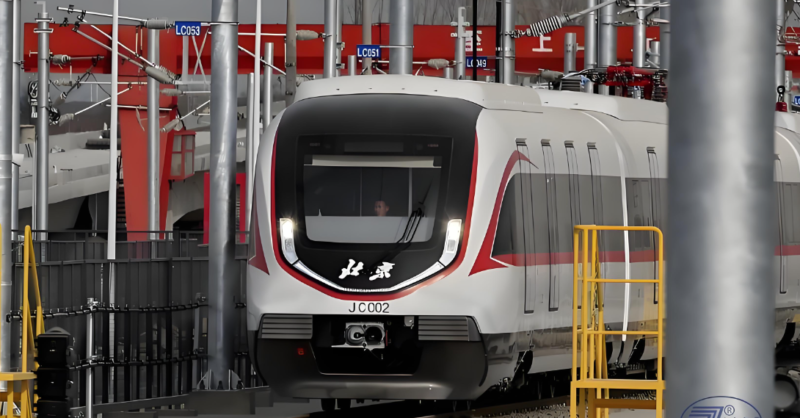





This guide explains the positioning differences of Beijing’s dual airports and the layout of 7 major railway hubs for foreigners, details transfer methods between airports, urban areas and railway stations, with itinerary connection skills and tips for smooth travel.
As a core gateway connecting the world with China’s inland, Beijing has built a three-dimensional transportation network consisting of “dual airports + seven major railway passenger hubs”, making it an ideal starting point for international tourists to travel efficiently after entry. Daxing International Airport and Capital International Airport complement each other with distinct divisions of labor, covering major global routes; the railway network composed of 124 stations radiates the Beijing-Tianjin-Hebei region and major cities across the country. Mastering the travel logic and transfer skills of these two hubs can not only save travel time, but also quickly integrate into Beijing’s transportation network, laying a convenient foundation for the journey.
Daxing International Airport, known as Beijing’s “New National Gateway”, has become one of the preferred entry points for international tourists with the strong strength of the world’s largest single terminal. Put into use in 2019, the airport is inspired by the “spreading wings of a phoenix”, with a highly visually impactful terminal appearance. The internal layout adopts a central radial design, and it takes only 8 minutes to walk from the center of the terminal to the farthest boarding gate, greatly improving travel efficiency. Its core positioning is to undertake international and domestic medium and long-distance routes, covering popular destinations in Asia, Europe, the Americas and other regions, especially suitable for tourists heading to southern Beijing, Tongzhou Sub-center and Xiongan New Area.
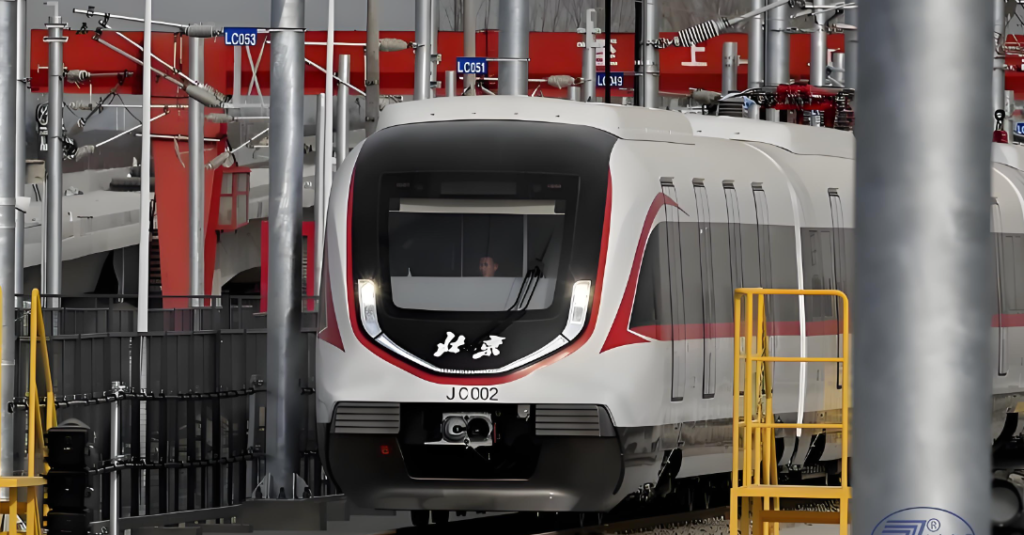
For foreign tourists, the supporting services at Daxing International Airport are quite complete. Signs in the terminal are marked in Chinese, English and icons. Duty-free shops, foreign currency exchange points and international VIP lounges are reasonably distributed to meet diverse needs. In terms of transportation transfer, the Airport Express is the most convenient option. It takes only 19 minutes from Daxing Airport Station to Caoqiao Station with a fare of 35 yuan, running every 10 minutes. At Caoqiao Station, you can transfer to Metro Line 10 and Line 19 to reach core urban business districts and scenic spots directly. Airport buses are also available, with multiple routes covering Tiananmen Square, Zhongguancun, Wangjing and other areas, with fares ranging from 25 to 40 yuan, suitable for tourists with more luggage. Pick-up points for online car-hailing and taxis are clearly marked, and the drive to the core urban area takes about 1 to 1.5 hours, with fares varying slightly by time period.
Different from the “modern convenience” of Daxing Airport, Capital International Airport, a mature hub with years of operation, focuses more on domestic routes and some international routes, suitable for tourists heading to northern and eastern Beijing. The airport has 3 terminals, with Terminal 3 mainly undertaking international flights. The internal facilities are complete, and bilingual Chinese-English services are available throughout the process. The procedures from entry quarantine, luggage claim to customs inspection are smooth and efficient. For transportation transfer, the Airport Express connects Terminals 2 and 3 with the urban area, reaching Dongzhimen Station in only 20 minutes, where you can transfer to Metro Line 2 and Line 13 to visit scenic spots such as the Forbidden City and Nanluoguxiang. Airport bus routes cover a wider range, directly reaching key nodes such as the Summer Palace and Beijing West Railway Station, facilitating transfers across transportation hubs.
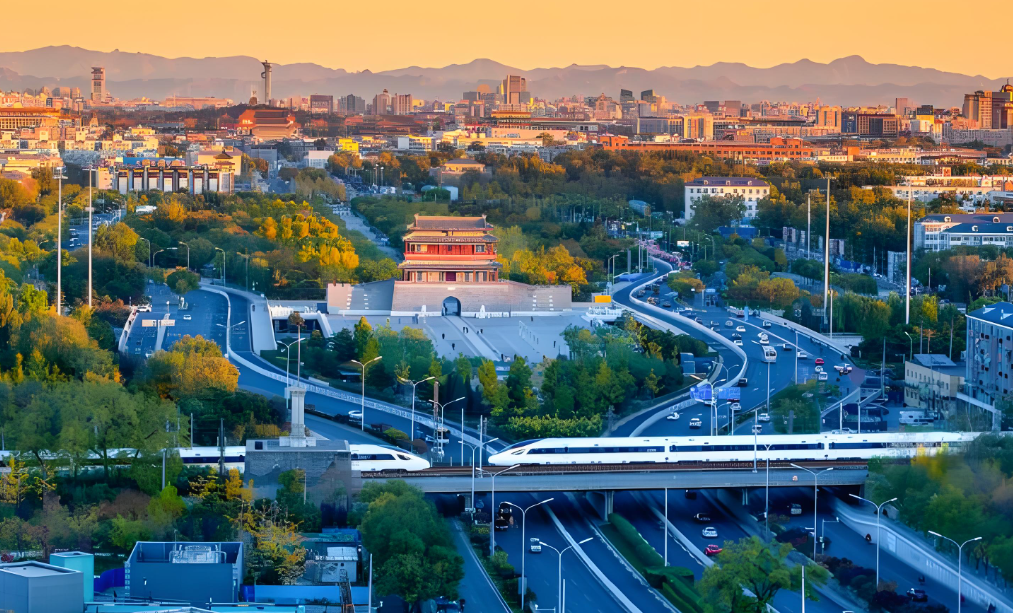
In addition to the dual airports, Beijing’s 7 major railway passenger hubs form a land transportation network radiating the whole country. Among them, Beijing West Railway Station, Beijing Railway Station, Beijing South Railway Station and Beijing Chaoyang Railway Station are the core stations most frequently contacted by foreign tourists. Beijing West Railway Station is one of the largest railway hubs in North China, mainly undertaking trains to the northwest and southwest directions, such as Xi’an and Chengdu. There are English ticketing windows and information desks in the station. Tickets can be booked in advance through the English version of the 12306 APP. Passport originals are required for entry, and it is recommended to arrive 1.5 hours in advance for security checks.
Beijing South Railway Station mainly operates high-speed rail lines, reaching major eastern cities such as Tianjin and Shanghai. It takes only 30 minutes to go to Tianjin from here by Beijing-Tianjin Intercity Railway, making it an excellent choice for a one-day tour. The station is seamlessly connected to Metro Line 4 and Line 14, with rich commercial supporting facilities in the station for convenient supply of travel supplies. Beijing Chaoyang Railway Station focuses on routes to the northeast, with most high-speed trains to Shenyang, Changchun and other cities departing here. Transportation transfer can rely on Metro Line 3, Line 10 and special buses. It is recommended to check transfer schedules in advance to avoid delays.
An efficient itinerary plan connecting airports and railway hubs can make the journey smoother. If you plan to go to Tianjin after entering the country via Daxing Airport, you can take the Airport Express to Caoqiao Station, transfer to Metro Line 10 to Beijing South Railway Station, and then take the Beijing-Tianjin Intercity Railway, taking about 1.5 hours in total. If you need to go to Xi’an after entering via Capital International Airport, you can take the Airport Express to Dongzhimen Station, transfer to Metro Line 2 to Beijing West Railway Station, taking about 1 hour. In addition, Beijing’s transportation card supports Subway, bus and some airport buses. It can be purchased at airport convenience stores and subway station service desks, with convenient recharge, suitable for independent travelers.
For practical tips, foreign tourists need to confirm luggage allowance and entry declaration requirements through the airline’s official website in advance; railway ticket booking requires registering a 12306 account and completing passport real-name authentication, and it is recommended to book tickets 3-5 days in advance for some popular routes; both airports and railway hubs have luggage storage points for temporary storage during short trips; traffic is congested during morning and evening peak hours (7:30-9:00, 17:30-19:00), so sufficient time should be reserved for transfers across hubs, and rail transit is recommended as the priority.






暂无评论内容