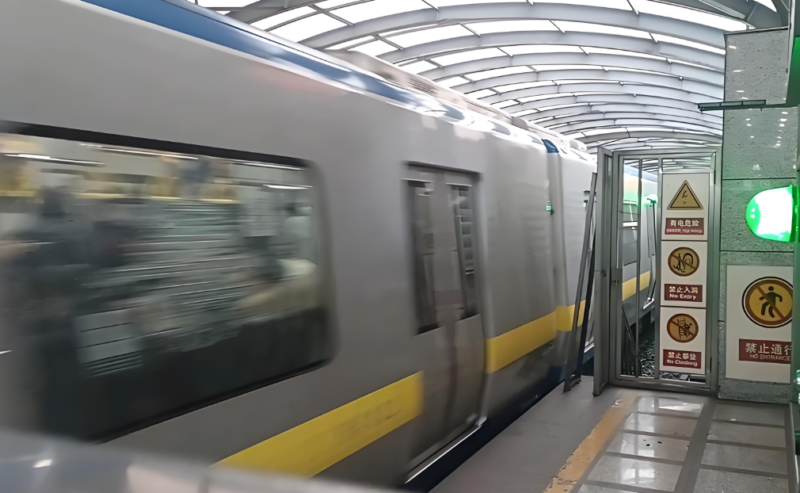





As one of the world’s longest Subway networks in operation, the Beijing Subway connects all 16 districts of the city with over 800 kilometers of lines. It is not only the main commute tool for locals, but also the best travel choice for foreign tourists exploring Beijing. Compared with taxis and online car-hailing services, the subway is not only affordable and highly punctual, but also accurately covers core scenic spots and business districts such as the Forbidden City, Tiananmen Square, and Sanlitun. Master this comprehensive subway guide, unlock the line layout, operation details and transfer skills, and you can shuttle between the ancient and modern of Beijing in the most efficient way, feeling the pulse and daily life of the city.
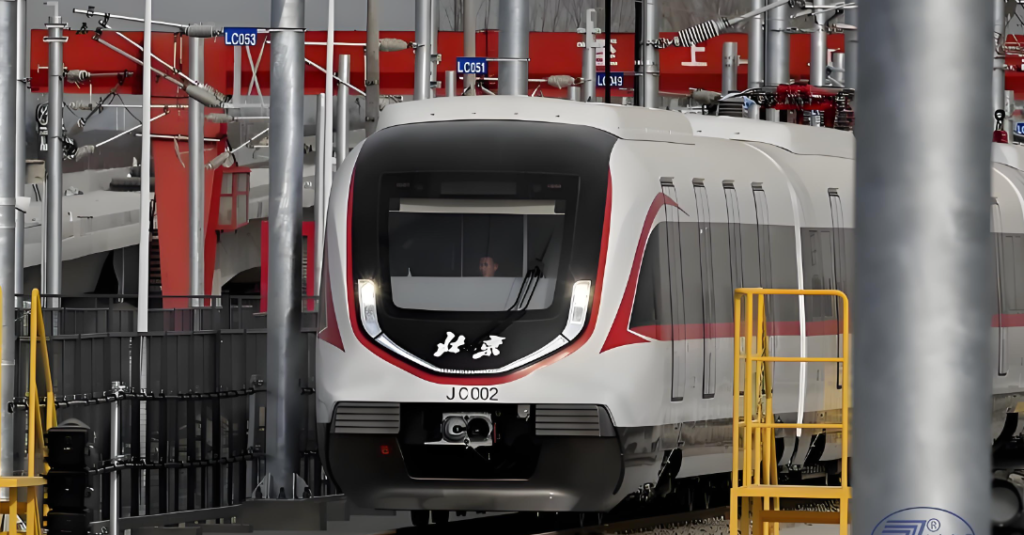
The Beijing Subway network takes “loop lines + radial lines” as its core structure, with 27 operating lines (including maglev lines and modern trams) covering every corner of the city, forming a reasonable layout of “dense core and extended periphery”. Among them, Line 2 is a loop line, connecting transportation hubs such as Beijing Railway Station and Beijing West Railway Station, as well as popular scenic spots like Yonghe Temple and Drum Tower, making it an excellent line for foreign tourists to get familiar with the core area of Beijing when they first arrive. Line 1, one of Beijing’s earliest subway lines, runs east-west, passing through key nodes such as Tiananmen East, Tiananmen West, and Wangfujing, directly reaching the Forbidden City, Tiananmen Square, and Wangfujing Business District. Most stations along the line are iconic areas of Beijing with high tourist value. The Yanfang Line mentioned in the selected content, as a representative of special lines, is a microcosm of Beijing Subway’s “technology empowering travel”.
The Yanfang Line connects Fangshan District with the central urban area, with a total length of about 20 kilometers. Its biggest highlight is the full-line driverless operation, making it Beijing’s first subway line adopting a fully automatic operation system. For foreign tourists, taking the Yanfang Line can not only experience the convenience brought by technology, but also feel the scenery change from the urban area to the suburbs. Starting from Yancun East Station, the line passes through Xingcheng, Dashihe and other stations, and you can enjoy the natural ecological scenery and suburban life style of Fangshan along the way. In terms of operation details, the fare of Yanfang Line is consistent with Beijing Subway’s unified pricing rule, charged by mileage, with a starting fare of 3 yuan and a maximum fare of 6 yuan for the whole journey. The departure interval is divided into off-peak and peak hours. During the morning rush hour on working days (7:30-9:00), the departure interval is about 4 minutes, about 6-8 minutes during off-peak hours, and slightly extended on holidays. You can check it in real time through the Beijing Subway APP. The signs in the stations are clear, with both Chinese and English and icons, and the barrier-free facilities are complete, convenient for tourists with luggage.
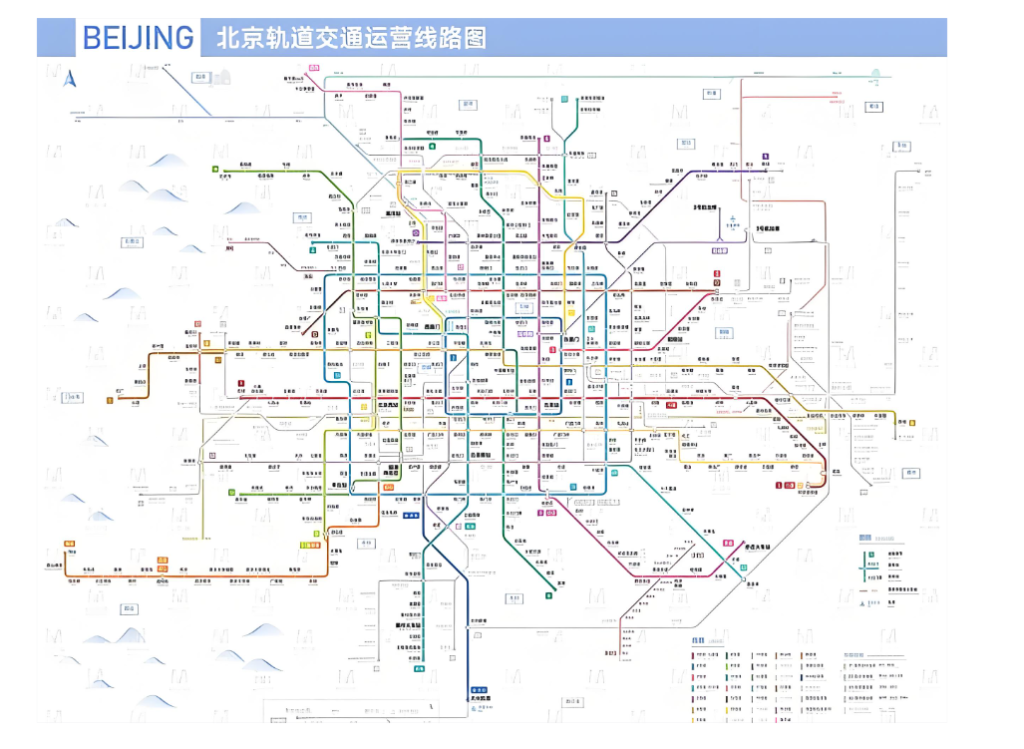
Mastering subway transfer skills can greatly improve travel efficiency, especially avoiding wasting time at complex transfer stations. Some transfer stations of Beijing Subway are large in scale, such as Xi’erqi Station, Guomao Station, Songjiazhuang Station, etc., so it is necessary to plan the transfer route in advance. It is recommended that foreign tourists query the specific transfer route through the Beijing Subway APP (supporting Chinese-English switching) in advance, mark the direction of the transfer channel and the approximate time consumption. Some stations are equipped with “express transfer channels”, such as Fuxingmen Station and Jianguomen Station between Line 1 and Line 2, where you can transfer quickly through dedicated channels without repeated security checks, saving time. In addition, you need to pay attention to the line direction when transferring. Some lines of Beijing Subway have “branches” or “reverse differences”. For example, Line 6 has two terminals: Haidian Wuluiju Station and Pingguoyuan Station. You need to confirm the train terminal sign before boarding to avoid taking the wrong direction.
Travel planning during morning and evening peak hours is crucial for foreign tourists to experience Beijing Subway. The peak hours of Beijing Subway are 7:30-9:00 and 17:30-19:00 on working days. At this time, the core lines (Line 1, Line 2, Line 4, Line 10) are extremely crowded. It is recommended that foreign tourists try to avoid traveling during peak hours. If they have to travel during peak hours, they can choose to stagger the peak by 1 hour (such as after 8:30, after 19:30) or prefer non-core lines for transfer. Tourists with large luggage can choose the first and last carriages during peak hours, which are relatively less crowded. At the same time, some stations will take crowd control measures during peak hours, and you need to follow the guidance of on-site staff and queue up to enter the station in order.
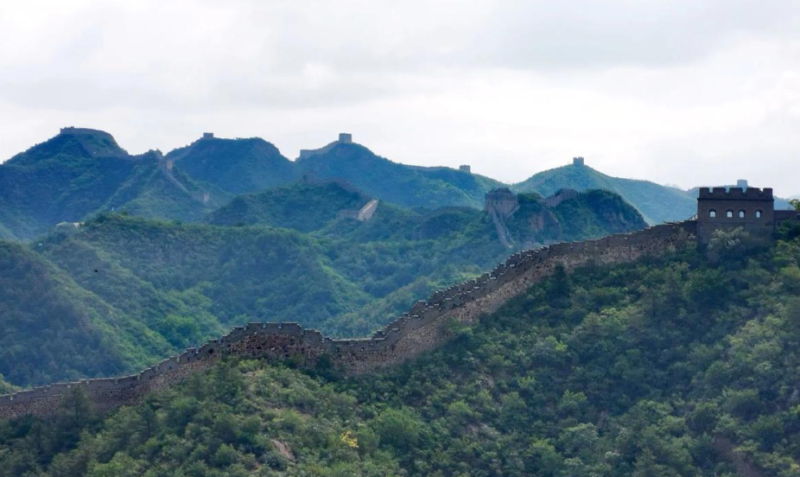
Matching the direct subway guide to popular scenic spots and business districts makes the journey more targeted. The Palace Museum can be reached by taking Line 1 to Tiananmen East Station or Tiananmen West Station, then walking about 10 minutes (tickets need to be booked in advance and security checks passed). Trendy business districts such as Sanlitun Taikoo Li and SKP-S can be reached by taking Line 10 to Tuanjiehu Station or Hujialou Station, then walking 5-8 minutes. Hutong blocks such as Nanluoguxiang and Shichahai can be reached by taking Line 6 to Nanluoguxiang Station or Line 8 to Shichahai Station. The Summer Palace can be reached by taking Line 4 to Beigongmen Station, directly arriving at the north gate of the scenic spot. To visit Badaling Great Wall, you first take Line 2 to Jishuitan Station, then transfer to Bus No. 877 to reach it directly, taking about 1.5 hours in total.
For practical tips, foreign tourists can search for “Beijing Subway Ride Code” on Alipay or WeChat, scan the code to take the subway directly after activation, no need to buy physical tickets, and foreign currency binding payment is supported. You can also buy an “Yitongxing” transportation card at the subway station service desk, which can be recharged to take the subway and bus, suitable for tourists staying for a long time. Most subway operating hours are 5:00-23:30, with slight differences between different lines. You need to check the last train time in advance to avoid missing the return trip. Each station has a customer service center providing Chinese-English consulting services, and you can ask for help at any time when encountering problems. At the same time, keep your personal belongings properly, abide by the carriage order, and jointly maintain the travel environment.


暂无评论内容