




Among the intangible cultural heritage crafts of old Beijing, Beijing Silk Flowers (also known as Jinghua) have created an artistic miracle of “being man-made yet seemingly natural” with their exquisite craftsmanship of “using silk as paper and wire as skeleton”. This ancient craft, made of silk and velvet through dozens of manual processes, has evolved from imperial accessories in the Tang Dynasty to the present, spanning a thousand years. It integrates royal luxury and civilian charm into every flower and leaf, becoming an ever-blooming symbol of Eastern aesthetics. For foreign travelers, exploring the charm of Beijing Silk Flowers means understanding the most vivid carrier of Beijing’s imperial decoration Culture and craftsmanship.
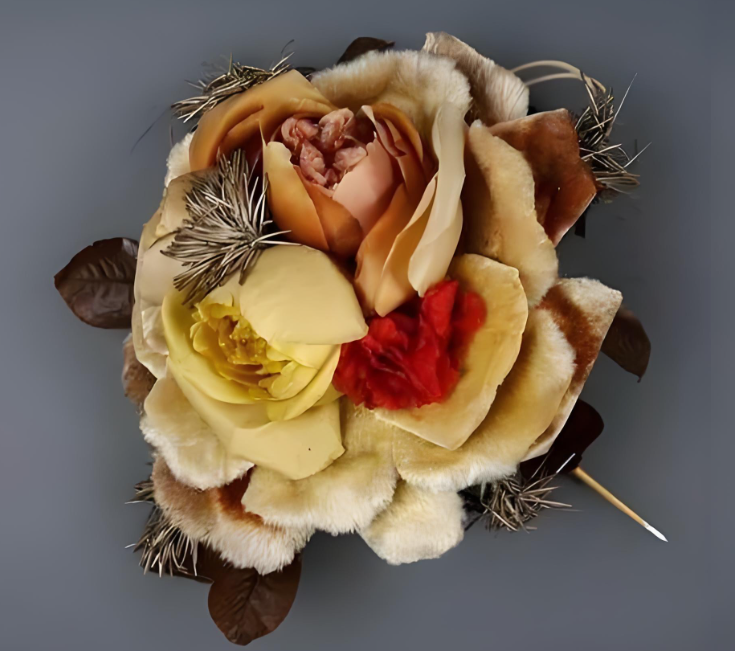
The history of Beijing Silk Flowers can be traced back to the Tang Dynasty. At that time, simulated flowers made of silk and damask were popular in the imperial court as hair accessories and decorations. The “Tang Liu Dian” (Treatise on the Six Departments of the Tang Dynasty) recorded that the court set up a “Flower Workshop” specifically responsible for making silk flowers for concubines to wear and palaces to adorn. In the Song Dynasty, silk flower craftsmanship gradually matured, with shapes evolving from simple to complex. It integrated flower arrangement art concepts and became an elegant decoration in the studies of literati and scholars. After the Yuan Dynasty established its capital in Beijing, silk flower craftsmanship was introduced to the city with craftsmen, integrating with local handcrafts to form a Beijing-style feature that combined northern and southern styles.
The Ming and Qing dynasties were the heyday of Beijing Silk Flowers. Especially in the Qing Dynasty, it became an exclusive imperial craft and was included in the “Eight Great Arts of Yanjing”. During the Yongzheng and Qianlong periods, the Imperial Workshop set up a “Flower Bureau” under it, recruiting top flower craftsmen from across the country to make silk flower accessories and festival decorations exclusively for the royal family. At that time, Beijing Silk Flowers had a wide variety, covering dozens of flowers such as peonies, magnolias, and chrysanthemums. More importantly, they paid attention to matching with clothing and scenes——velvet flowers on the empress’s phoenix coronet, table flowers at imperial banquets, and hanging flowers for festivals were all carefully made by silk flower craftsmen. The craftsmanship of Beijing Silk Flowers reached its peak during this period. Craftsmen could accurately restore the shape and charm of fresh flowers, even making dewdrops and textures on the petals, making it difficult to distinguish between real and fake. There was a reputation that “one branch of Beijing Silk Flower is worth a thousand taels of gold”.
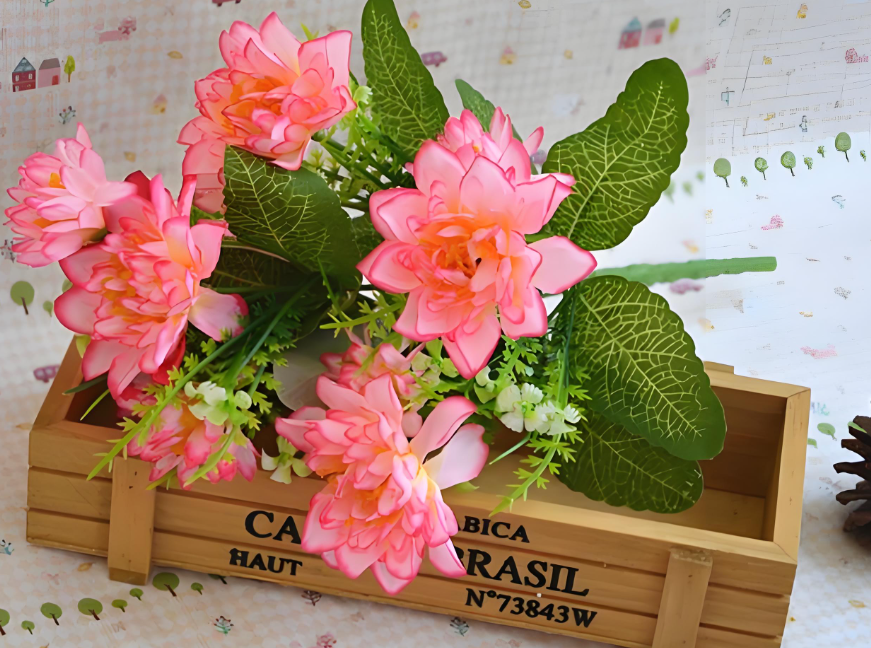
The birth of a Beijing Silk Flower work is the ultimate interpretation of “craftsmanship”, requiring five core processes: material selection, shaping, dyeing, assembly, and setting, subdivided into hundreds of manual steps, all controlled by the craftsman’s experience. Material selection is extremely exquisite. The fabric needs to be high-quality silk and velvet produced in Hangzhou and Suzhou, which are soft in texture and warm in color. Different flowers correspond to different fabrics——peonies use thick damask to highlight luxury, while jasmine uses light silk gauze to show elegance. Iron wire needs to be annealed and polished to make flower bones of different thicknesses, ensuring stable shape and flexibility.
Shaping is the core of silk flower craftsmanship. Craftsmen first outline the flower contour, then use tweezers to stretch, fold, and curl the silk and velvet according to the shape of petals and leaves. The curvature of each petal and the vein of each leaf need to accurately replicate the shape of fresh flowers. The dyeing link follows the principle of “dyeing as the soul”, using natural plant dyes for manual dyeing. It needs to be repeatedly dipped and dried to ensure uniform color and long-lasting non-fading, and even can create a gradient effect from light to dark on the petals. During assembly, craftsmen splice layer by layer from the stamen to the petals, and from the leaves to the stem, wrap the thread to fix, and finally set with hairspray and paste. A lifelike Beijing Silk Flower is then born. A complex large-scale silk flower work often takes craftsmen months to complete with extremely low error tolerance.
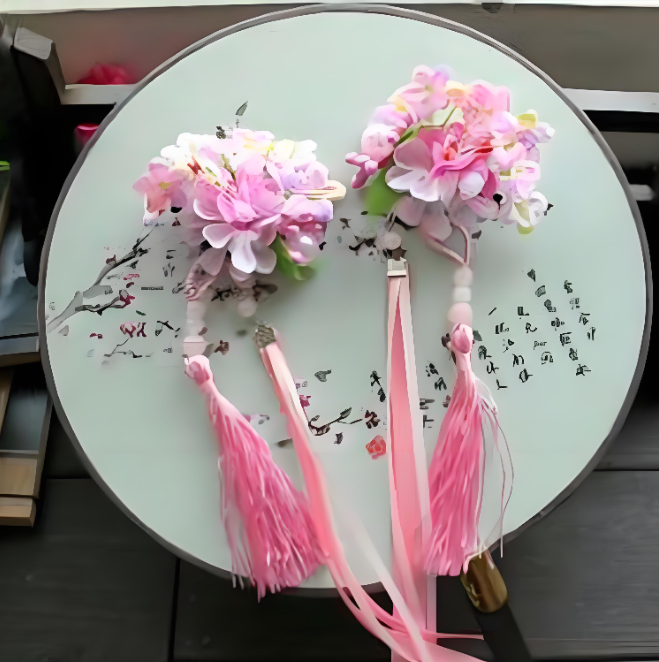
In modern times, affected by the impact of modern accessories, the craftsmanship of Beijing Silk Flowers was once on the verge of extinction. It was not until the persistence and inheritance of Wang Qiulan, a national-level intangible cultural heritage inheritor, that this ancient craft regained vitality. Wang Qiulan learned silk flower making from her father since childhood and has been deeply engaged in the craft for more than 60 years. She not only completely restored the imperial velvet flower and silk flower techniques of the Qing Dynasty but also integrated modern aesthetics, developing cultural and creative products such as silk flower bookmarks, brooches, and ornaments, allowing Beijing Silk Flowers to move from imperial accessories to daily life. She also set up an inheritance base at Beijing Silk Flower Factory, took apprentices, imparted her skills to the younger generation without reservation, and participated in intangible cultural heritage exhibitions to let more people appreciate the charm of Beijing Silk Flowers.
Today, to experience the charm of Beijing Silk Flowers immersively, you can visit several characteristic venues. The Intangible cultural heritage Exhibition Hall of Beijing Silk Flower Factory displays exquisite silk flower works from past dynasties and production tools, allowing you to intuitively understand the evolution of the craft and watch craftsmen’s on-site production performances. Folk cultural and creative stores on Qianmen Street and Nanluoguxiang sell various silk flower cultural and creative products, from traditional velvet flower hairpins to mini silk flower ornaments. If you want to experience making it yourself, you can book an experience class at Wang Qiulan’s intangible cultural heritage workshop, make a simple silk flower brooch under the guidance of craftsmen, feel the fun of creating flowers with your own hands, and take this ever-blooming Eastern elegance home.
From exclusive imperial luxury accessories to accessible intangible cultural heritage products, Beijing Silk Flowers carry not only handcraftsmanship but also the cultural memories of old Beijing and Eastern flower art aesthetics. Every silk petal hides the craftsman’s piety, and every warm color reflects a thousand years of inheritance. When you hold a branch of Beijing Silk Flower, you can understand Beijingers’ pursuit of a delicate life and feel the thousand-year-old craftsmanship and artistic shock.



暂无评论内容