




In the spring memories of old Beijing, Cao’s Swallow kites are a unique symbol carrying folk feelings and literati elegance. This traditional craft, centered on the four core skills of “frame-binding, papering, painting, and flying”, has profound connotations due to its close connection with the great litterateur Cao Xueqin. With swallows as the core shape, it integrates anthropomorphic creativity and auspicious meanings into bamboo and paper, becoming an intangible heritage treasure with both ornamental and cultural value. For foreign travelers, exploring the story of Cao’s kites means understanding the most vivid way of Beijing’s spring folk customs and traditional handicraft aesthetics.
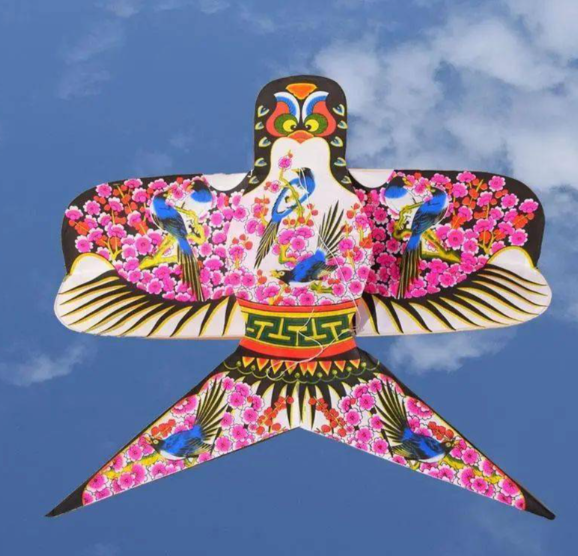
The origin of Cao’s kites hides a warm story, and its technical roots can be traced back to “Nan Yao Bei Yuan Kao Gong Zhi” (Study of Southern and Northern Kites), a part of Cao Xueqin’s “Fei Yi Zhai Ji Gao” (Collected Manuscripts of Abandoned Arts). According to legend, to help his destitute friend Yu Jinglian, Cao Xueqin made kites by hand and asked him to sell them for money to get through the Spring Festival Eve. This kindness inspired him to “help others through craftsmanship”, so he recorded the frame patterns, rhymes, and flying skills of dozens of kites in a book, specifically providing a means of livelihood for the disabled. This manuscript was once lost overseas. In 1943, Kong Xiangze, father of Kong Lingmin, accidentally saw the manuscript while assisting his Japanese teacher in writing about kites and copied more than a dozen techniques. After more than 30 years of dedicated research, he finally restored the craft and named it “Cao’s Kites” to pay tribute to Cao Xueqin’s kindness and wisdom.
In the old Beijing kite industry, there has always been a saying: “Big Swallow Kites in the South City, Black Bottom Kites in the North City”. As the most representative kite category in Beijing, Swallow Kites are the core signature of Cao’s Kites. Cao Xueqin constructed a complete “family system” for swallows with anthropomorphism: fat swallows symbolize men, thin swallows represent women, paired swallows stand for couples, semi-thin swallows denote teenagers, and small and baby swallows correspond to children. Each shape has strict proportional specifications and auspicious meanings, accompanied by exclusive rhymes to guide production, making kites transcend the nature of toys and become cultural carriers of human feelings and good wishes. In 2009, Cao’s Kite Making Technique was included in the Beijing Intangible cultural heritage List, receiving systematic protection and inheritance.
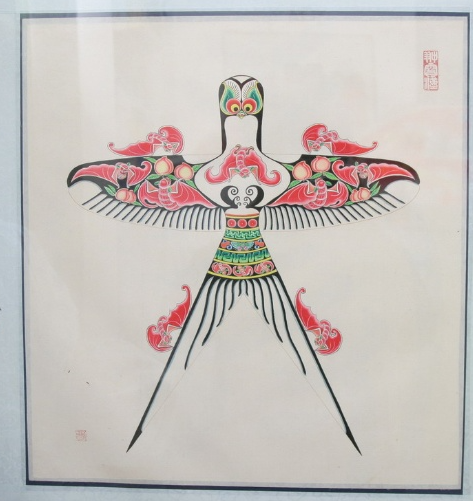
The exquisiteness of Cao’s Kites lies in the ultimate pursuit of the four skills of “frame-binding, papering, painting, and flying”. Each process embodies craftsmanship and is indispensable. “Frame-binding” is the foundation of the kite. Bamboo from the south of the Yangtze River with excellent toughness is selected, and symmetric frames are made through cutting, roasting, bending, and binding. Swallow Kites follow the proportional rhymes of “fat swallows use the four-four method, thin swallows use the three-three method”, taking the head as the basic unit to locate the size of each part, ensuring balance and stability during flying without flipping or shaking. “Papering” emphasizes flatness and adherence. Thin and tough rice paper or silk gauze is used, evenly pasted with natural paste, and the edges are pressed and trimmed to ensure air permeability and allow the kite to stretch flexibly in the wind.
“Painting” is the link that endows swallows with soul and the most culturally connotative part of Cao’s Kites. Painting follows the principles of “strong color contrast and auspicious meaning”. Fat swallows are based on blue and purple, homophonic to “man”, with broad foreheads and abundant hair painted on the head, smiling eyes and eyebrows, chests like silver vases, wings decorated with butterfly patterns and five bats surrounding longevity patterns, and claws painted into fists, homophonic to “power”, symbolizing men’s steadiness and blessings. Thin swallows take slender figures to symbolize beautiful women, with “broken heads” to release wind like green silk buns, lips like cherry mouths, eyes full of tender feelings, red bats on the chest, and red bats with green willows painted on the wings, showing delicacy and beauty. Paired swallows have double heads, following the principle of men on the left, women on the right, and cold-warm color matching, with red peonies on the chest and claws holding interlocking branches, interpreting the beautiful vision of conjugal love and unity. “Flying” requires combining wind force and skills, adjusting the spool strength according to the kite shape, making swallows stretch in the sky, realizing the dynamic beauty of “taking the sky as paper, painting and calligraphy scattered on the blue paper”.
The inheritance of Cao’s Kites is inseparable from the persistence of three generations of the Kong family. The first-generation inheritor Kong Xiangze restored the craft and laid the foundation. The second-generation inheritor Kong Lingmin took over the mantle in the 1970s, overcame the difficulties of the times, launched kites into the market, and at the same time adhered to Cao Xueqin’s original intention of “helping others through craftsmanship”, teaching skills to the disabled. Now the third-generation inheritor Kong Bingzhang, a post-80s, has voluntarily devoted himself to the craft for more than ten years. With the support of the government of Shangzhuang Town, Haidian District, he established Cao’s Kite Workshop, recruiting villagers and the disabled as apprentices, which not only solves the employment problem but also revitalizes the craft. In 2001, 16 works by Kong Lingmin were collected by the National Art Museum of China, bringing Cao’s Kites into the art palace.
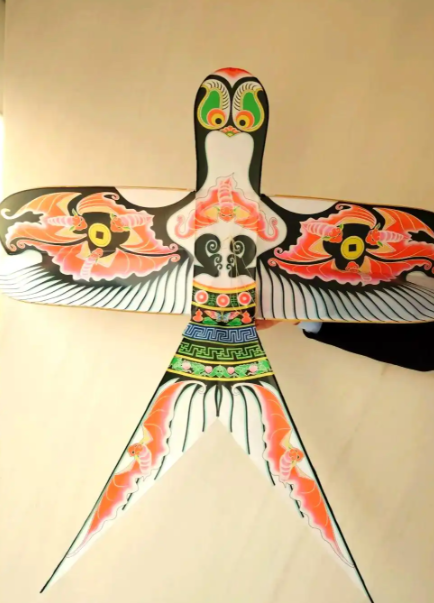
Today, to experience the charm of Cao’s Swallow Kites immersively, you can visit Cao’s Kite Workshop in Shangzhuang Town, Haidian District. Here, you can not only appreciate exquisite Swallow Kites from past dynasties but also watch craftsmen demonstrate bamboo cutting and painting on site. You can even experience pasting and painting simple swallows under guidance to make your own exclusive kite. In addition, folk shops on Liulichang Cultural Street also sell Cao’s Kite cultural and creative products, from mini swallow ornaments to exquisite kite paintings, allowing travelers to take this spring elegance home. When visiting Beijing in spring, you may wish to take a Swallow Kite, fly it in an open area, and feel the romance of kites carrying centuries-old craftsmanship soaring in the sky.
From Cao Xueqin’s kindness of helping others to the persistence and inheritance of three generations of the Kong family, Cao’s Swallow Kites carry not only a handicraft but also the folk memories of old Beijing and the wisdom of Eastern aesthetics. Every bend of the bamboo frame contains precise consideration, every stroke of color reflects auspicious expectations, and every flight in the sky continues the cultural context. When you gaze at a Swallow Kite, you can understand Beijingers’ love for spring and feel this centuries-old craftsmanship and warmth.




暂无评论内容