




Among the intangible heritage crafts of old Beijing, porcelain carving stands out as a treasure integrating painting, calligraphy and engraving, with the unique charm of “carving elegance on hard porcelain and embodying painting art with each cut”. This traditional craft, which requires “diamond tools and superb skills”, engraves patterns on smooth and tough ceramic glaze, condensing ink wash artistic conception and stone carving charm on the porcelain surface. With a history of nearly 200 years, it not only embodies the brush and ink charm of Chinese aesthetics but also reflects the craftsmen’s pursuit of extreme precision. For foreign travelers, exploring Beijing porcelain carving is an excellent way to understand the Chinese artistic philosophy of “combining hardness and softness”.
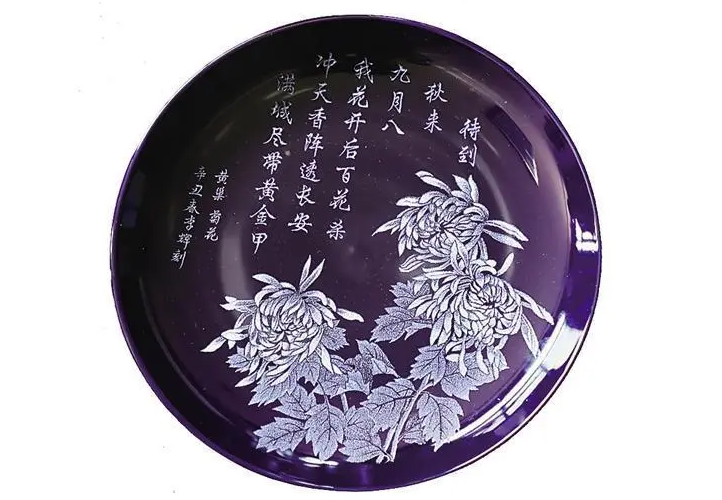
The origin of Beijing porcelain carving can be traced back to the Daoguang period of the Qing Dynasty, with the earliest existing works dating from this era. At that time, it was mostly an auxiliary craft for literati to inscribe poems and essays on porcelain, facilitating the long-term preservation of brush and ink traces, and gradually spread in Beijing and Tianjin. From the Tongzhi to Guangxu periods, porcelain carving ushered in a breakthrough development. Beijing painters and calligraphers Deng Shiru and Hua Fa pioneered the creative model of “writing, painting and carving by oneself”, integrating meticulous landscape painting and calligraphy into porcelain carving, upgrading this craft from an auxiliary means to an independent art form. Hua Fa was particularly good at porcelain carving of meticulous landscape paintings, skillfully using “a knife instead of a brush”, and passed on his skills to disciples such as Zhu Youlin and Chen Zhiguang, laying the foundation for the inheritance of Beijing porcelain carving.
In 1902 (the 28th year of Guangxu’s reign), the Imperial Ministry of AgriCulture, Industry and Commerce established a special porcelain engraving department in its technical school, incorporating porcelain carving into systematic teaching. Zhu Youlin, as a graduate of the first batch, stayed to teach, further standardizing the craft process. His surviving work “Red Poinsettia” reproduces the charm of flowers with exquisite knife work, becoming a classic of Qing Dynasty porcelain carving. After the establishment of the Beijing Arts and Crafts Research Institute in 1957, Zhu Youlin and Chen Zhiguang were hired as researchers to teach apprentices, initiating large-scale inheritance of Beijing porcelain carving. Today, this craft has been passed down to the fourth generation. Under the persistence and innovation of craftsmen, it not only retains the essence of ancient methods but also integrates contemporary aesthetics. In 2009, Beijing porcelain carving was included in the Beijing Municipal Intangible Heritage List, receiving special protection and promotion.
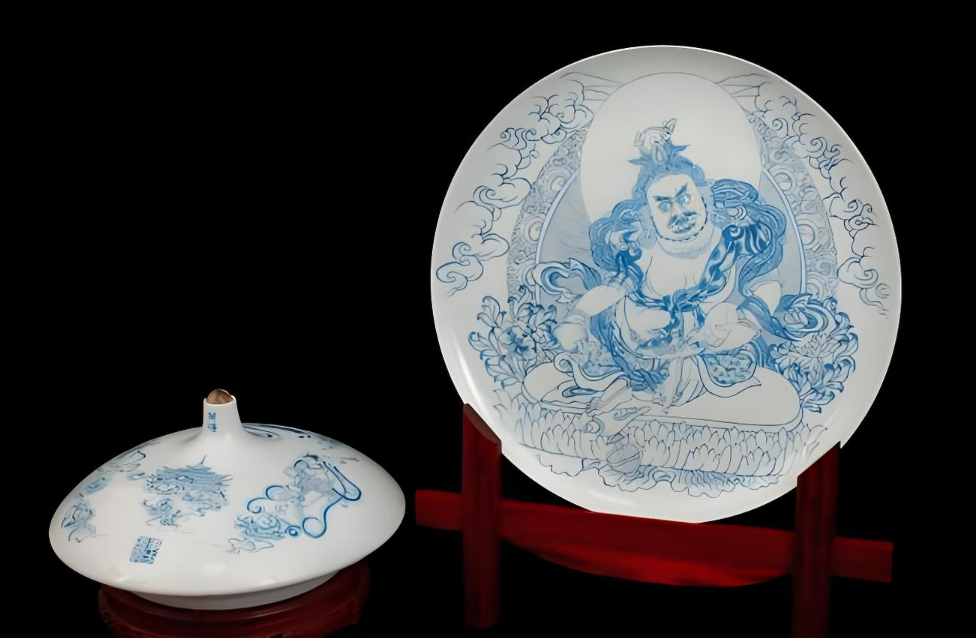
The exquisiteness of Beijing porcelain carving lies in the ultimate balance between “hardness” and “softness” — the ceramic glaze is hard and smooth, thin enough to transmit light, and will crack if handled carelessly; the carving knife is sharp, requiring precise control of strength to carve soft brush and ink sense on hard porcelain. The whole process is rigorous and complex, completed entirely by hand, consisting of three core steps: drawing, engraving and coloring, each testing the craftsman’s comprehensive skills. Raw material selection is extremely rigorous, requiring white porcelain or dark-glazed porcelain with fine texture and tight combination of glaze and body. Porcelain plates, vases and slabs can all be used as carriers, among which thin-walled porcelain vases, with a wall thickness of less than one millimeter and curvature, are the most challenging creative objects.
Engraving techniques are the soul of porcelain carving. Beijing porcelain carving has formed three core techniques: drilling knife technique, double-outline technique and scraping technique, which craftsmen flexibly use according to themes. The drilling knife technique requires holding a diamond or alloy steel chisel vertically on the porcelain surface with the left hand, and tapping evenly with a hammer in the right hand, forming patterns with dotted lines of different sizes, densities and depths, showing a strong sense of hierarchy through the interweaving of light and shadow. The double-outline technique uses a sharp diamond knife to carve double lines along the pattern outline, with neat and straight lines, accurately restoring calligraphy strokes and painting contours. The scraping technique engraves the glaze within the double-line outline to expose the white body, then fills it with ink wash pigment, making the color blend with the porcelain surface, with both brush and ink charm and stone carving texture. Beginners must first practice carving lines — too light a force leaves no trace, while too heavy a force destroys the porcelain. A qualified line often takes years of practice.
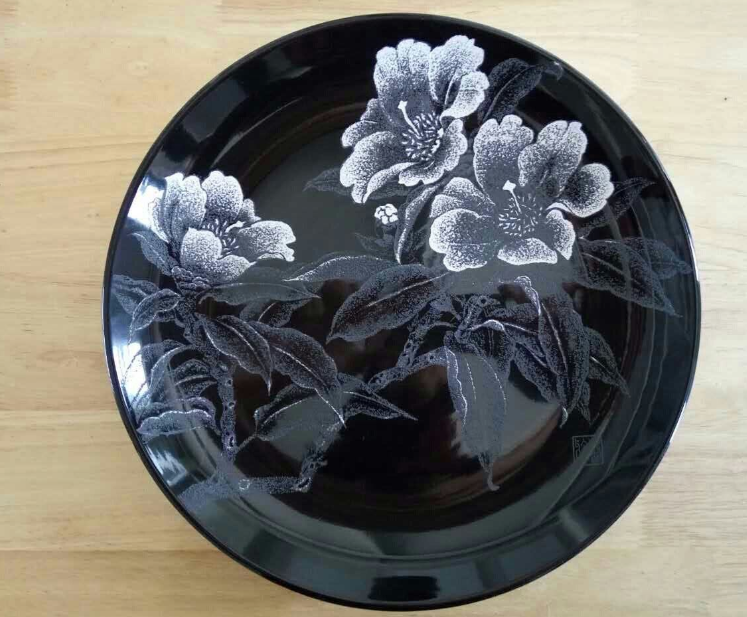
The persistence of four generations of inheritors has endowed Beijing porcelain carving with continuous vitality. Mao Zifang, the third-generation inheritor, has been deeply engaged in the craft for decades, specializing in large-scale porcelain vase carving. When creating, he needs to accurately calculate the curvature of the vase to perfectly integrate the pattern with the shape, and his works have both momentum and details. Chen Yongchang, a contemporary inheritor, created “Mighty God Map” based on traditional Chinese painting, depicting characters’ expressions with the drilling knife technique, with impeccable control of lines and light and shadow. Today, while retaining traditional themes such as ink wash and calligraphy, young inheritors innovatively use dark-glazed porcelain as the carrier, controlling the depth and density of glaze carving to let the white body naturally form patterns, which are highly artistic without coloring. Some craftsmen have also developed cultural and creative products such as porcelain carving stationery and pendants, bringing this ancient craft closer to contemporary life.
To experience the charm of Beijing porcelain carving immersively, several characteristic venues are worth visiting. Intangible heritage workshops in Liulichang have craftsmen demonstrating on site all year round, allowing you to watch the exquisite process of “porcelain carving with diamond tools” up close — watching craftsmen hold chisels and hammers, carve dot by dot on the porcelain surface, and slowly present brush and ink patterns. Some workshops offer appointments for simple line carving experiences, letting you personally feel the challenge and fun of “using a knife instead of a brush”. Folk cultural and creative stores in Qianmen Street and the Beijing Arts and Crafts Museum display rare porcelain carving works from past dynasties, from the surviving works of Zhu Youlin in the Qing Dynasty to contemporary innovative works, allowing you to systematically understand the evolution of the craft. In addition, in some intangible heritage exhibitions, you can also see the whole process of thin-walled porcelain vase carving, intuitively feeling the magic of “carving soft charm on hard porcelain”.
From literati’s pastime to intangible heritage treasure, from Qing court school to contemporary workshop, Beijing porcelain carving carries not only a handcraft but also the diversified expression of Chinese aesthetics. Every engraving hides the balance between strength and precision, every line reflects the integration of brush and ink with stone carving, and every work continues the pursuit of ultimate craftsmanship. When you gaze at the carvings on the porcelain surface, you can understand the Chinese wisdom of “overcoming hardness with softness” and feel the thousand-year-old brush and ink charm hidden between the glaze and the carving knife.





暂无评论内容