




Among the three major schools of traditional Chinese furniture craftsmanship (Beijing-style, Suzhou-style, and Guangzhou-style), Beijing-style hardwood furniture stands out as an intangible heritage treasure embodying the peak of Ming-Qing imperial aesthetics and Chinese Woodworking, with its unique charm of “mortise-tenon as the bone and hardwood as the soul”. This time-honored craft, using rare hardwoods such as red sandalwood and Huanghuali as raw materials and mortise-tenon joints as the core, has a history of hundreds of years. Evolving from an exclusive imperial craft to a cultural symbol integrating collection, practicality and artistic value, it not only embodies the majesty of imperial power but also reflects the Chinese philosophy of “harmony between man and nature” in construction. For foreign travelers, exploring the story of Beijing-style hardwood furniture is an excellent way to understand traditional Chinese woodworking wisdom and imperial aesthetics.
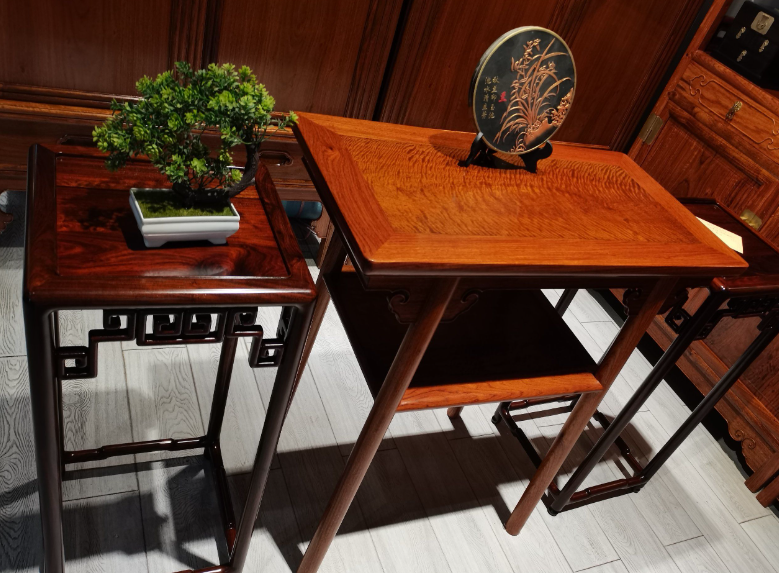
The rise and prosperity of Beijing-style hardwood furniture have always been deeply bound to the Ming-Qing imperial court Culture. During the Yongle period of the Ming Dynasty, the Imperial Workshops gathered top Woodworking craftsmen from across the country, integrating folk woodworking techniques with royal aesthetic needs to create the prototype of Beijing-style furniture. At that time, rare hardwoods such as Huanghuali and red sandalwood were mainly used to make imperial decorations, thrones, beds and other artifacts, emphasizing the regular symmetry of shapes and the auspicious implications of patterns to highlight imperial hierarchy. During the Qianlong period of the Qing Dynasty, Beijing-style craftsmanship reached its peak. The Imperial Workshops further integrated the technical advantages of Suzhou-style and Guangzhou-style, innovating shapes and patterns. It combines the delicacy of Suzhou-style and the grandeur of Guangzhou-style, forming a iconic style of “magnificent and dignified shape, moderately complex carving, and precise and firm mortise-tenon joints”. Surviving works are scattered in royal buildings such as the Forbidden City and the Summer Palace, representing the highest level of craftsmanship at that time.
The Beijing-style treasures of this period are both practical utensils and the perfect integration of craftsmanship and Culture. The red sandalwood cloud-dragon throne in the Hall of Supreme Harmony of the Forbidden City is a pinnacle work of Beijing-style craftsmanship——made with whole red sandalwood as the core material, it has a broad and heavy shape. The backrest and armrests are carved with complex cloud-dragon patterns, with layered dragon scales showing a strong sense of three-dimensionality. The entire throne is spliced with precise mortise-tenon joints without a single nail, remaining stable for hundreds of years. It not only shows imperial majesty but also highlights the magic of mortise-tenon craftsmanship. The Huanghuali round-back chair preserved in the Palace of Gathered Elegance follows the concept of “heaven is round and earth is square”, with a backrest curve fitting the human body and smooth armrests. It is outlined with simple lines without excessive complex carvings, yet exudes elegance and grandeur, balancing beauty and practicality, and becoming a model of Beijing-style furniture’s “simplicity hiding ingenuity”. Since the Republic of China, imperial craftsmen scattered among the people, and Beijing-style craftsmanship gradually stepped out of the court. After several generations of inheritance, it was included in the first batch of national intangible heritage list in 2006, continuing the essence of traditional Chinese Woodworking.
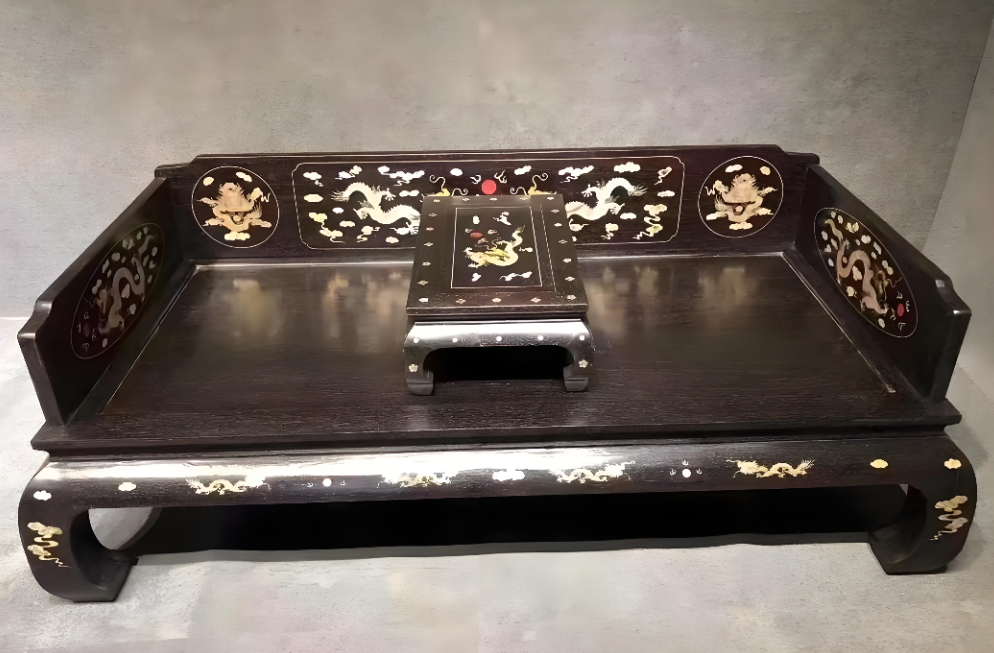
The exquisiteness of Beijing-style hardwood Furniture Making lies in the ultimate pursuit of raw materials and the perfect integration of diverse techniques. The whole process is rigorous and complex, completed entirely by hand, requiring hundreds of procedures from material selection to finished product, taking months or even years, and having high requirements for craftsmen’s skills, patience and aesthetics. Raw material selection is extremely rigorous, only selecting high-quality hardwoods with a growth cycle of hundreds of years, mainly red sandalwood, Huanghuali and rosewood. These woods have hard and dense texture, warm and smooth grain, are imperishable and brighter with polishing, making them the core soul of Beijing-style furniture. After selection, the wood needs to go through natural air drying, artificial drying and other procedures to remove moisture and impurities, ensuring it is not easy to deform or crack, laying the foundation for subsequent production.
Mortise-tenon joints are the core of Beijing-style hardwood furniture and the essential feature distinguishing it from modern furniture. Beijing-style craftsmen inherit dozens of classic mortise-tenon techniques, such as dovetail joint, batten joint, shoulder joint and corner joint, which are flexibly used according to the parts and functions of the artifacts. The parts can be closely fitted without nails, with a stable structure that can be disassembled and assembled, remaining intact for hundreds of years. In addition to mortise-tenon joints, Beijing-style craftsmanship also includes key procedures such as carving, polishing and waxing: carving techniques integrate line carving, relief and openwork carving, with patterns mainly including dragons and phoenixes, flowers and birds, mythical beasts and tangled lotus, following the principle of “complex but not miscellaneous, elegant but not vulgar”; the polishing process requires dozens of manual polishings, from coarse sand to fine sand, until the wood surface is as smooth as a mirror and feels delicate; finally, natural beeswax is used for waxing, which not only protects the wood but also highlights the natural grain and luster of the hardwood, rejecting chemical coatings and reflecting the concept of “harmony between man and nature”.
Today, this ancient craft is revitalized under the persistence and innovation of inheritors. Wang Xiulin, a national-level inheritor, has been deeply engaged in Beijing-style craftsmanship for more than 60 years. He learned ancient techniques from the descendants of imperial craftsmen since childhood, not only fully mastering core techniques such as mortise-tenon joints, carving and polishing but also devoting himself to the restoration and promotion of Beijing-style craftsmanship. He has participated in the furniture renovation projects of ancient buildings such as the Forbidden City and Prince Gong’s Mansion, accurately reproducing Ming-Qing Beijing-style treasures and reviving ancient crafts. Combining modern living needs, he also innovatively designs small Beijing-style furniture and cultural and creative products, integrating traditional mortise-tenon joints with contemporary aesthetics, bringing Beijing-style craftsmanship into ordinary families. Young inheritors, while adhering to ancient methods, popularize Beijing-style knowledge through intangible heritage exhibitions, manual experience courses and online promotion, letting more people understand the unique charm of this craft.
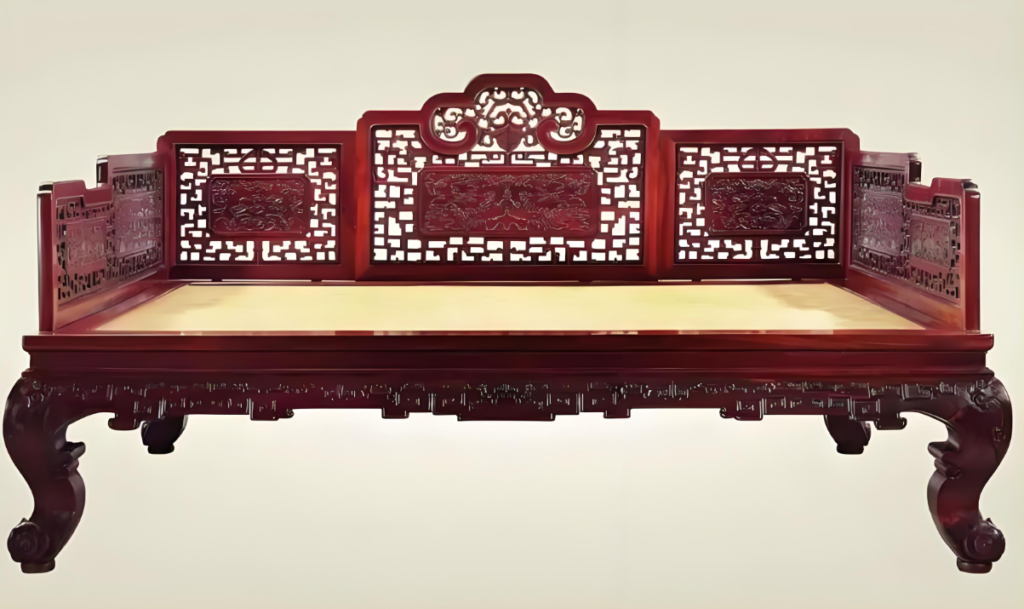
To experience the charm of Beijing-style hardwood furniture immersively, core viewing and experience venues are not to be missed. The Palace Museum is the first choice. The cloud-dragon throne in the Hall of Supreme Harmony, the red sandalwood decorations in the Palace of Heavenly Purity, and the Huanghuali furniture in the Palace of Gathered Elegance allow you to intuitively feel the peak level of Ming-Qing Beijing-style craftsmanship, clearly seeing the exquisite details of mortise-tenon joints and carving patterns. Intangible heritage workshops and high-end curio shops in Liulichang display contemporary Beijing-style works all year round. Some workshops offer appointments to experience basic procedures such as mortise-tenon splicing and simple polishing, allowing you to personally feel the mortise-tenon wisdom of “being as solid as iron without nails” under the guidance of craftsmen. In addition, the Beijing Arts and Crafts Museum displays rare Beijing-style treasures from past dynasties, from imperial thrones to folk decorations, allowing you to systematically understand the historical evolution and artistic characteristics of Beijing-style craftsmanship.
From an exclusive imperial craft in the Ming and Qing dynasties to a contemporary intangible heritage treasure, from rare hardwoods to surviving masterpieces, Beijing-style hardwood Furniture Making carries not only a handcraft but also the crystallization of traditional Chinese woodworking wisdom and imperial aesthetics. Each set of mortise-tenon joints contains precise calculation, each carving reflects the craftsman’s ingenuity, and each work continues the dignity and elegance spanning hundreds of years. When you touch the warm grain of the hardwood, you can understand the Chinese pursuit of ultimate craftsmanship and nature, and feel the Oriental heritage hidden between the wood grain and mortise-tenon joints.






暂无评论内容