




Among the treasures of traditional Chinese imperial handcrafts, Beijing Imperial carpet weaving stands out as a top imperial intangible heritage, on a par with cloisonné and jade carving, with the luxurious texture of “weaving splendor with thousands of threads, and hiding imperial spirit in every stitch”. This time-honored craft, using high-quality wool, silk and gold thread as raw materials and made entirely by hand, has a history of hundreds of years. Evolving from an exclusive imperial carpet weaving craft in the Ming and Qing dynasties to a cultural symbol integrating collection, decoration and artistic value, it not only carries the warm texture of yarn but also reflects the Chinese pursuit of “weaving all the beauty in the world”. For foreign travelers, exploring the story of imperial carpet weaving is an excellent way to understand Chinese imperial decorative Culture and traditional weaving wisdom.
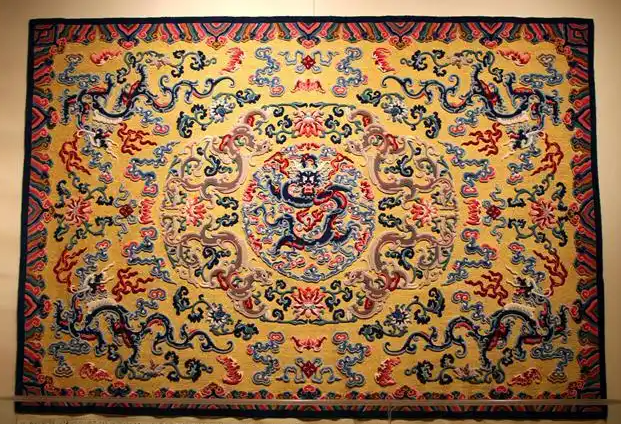
The rise and prosperity of Beijing Imperial carpet weaving are deeply bound to the etiquette needs and aesthetic orientation of the Ming-Qing imperial court. During the Yongle period of the Ming Dynasty, the Imperial Workshops set up a carpet weaving workshop, gathering top carpet weavers from the Western Regions and the Central Plains. They integrated Western Regions weaving techniques with Central Plains aesthetics, creating the prototype of imperial carpet weaving. At that time, imperial carpets were mainly used for floor paving and wall decoration in royal palaces and mansions, using high-quality wool and silk, emphasizing the auspicious implications of patterns and the regular grandeur of shapes to highlight imperial majesty. During the Qianlong period of the Qing Dynasty, imperial carpet weaving reached its peak. The Imperial Workshops further innovated techniques, integrating complex crafts such as gold thread coiling and pile weaving. The themes of patterns became more diverse, covering dragon and phoenix, tangled lotus, flowers and birds, mythical beasts, landscapes and pavilions, forming a iconic imperial style of “bright and solemn colors, exquisite and complex patterns, and thick and warm texture”. Surviving works are scattered in royal buildings such as the Forbidden City, the Summer Palace and the Mountain Resort.
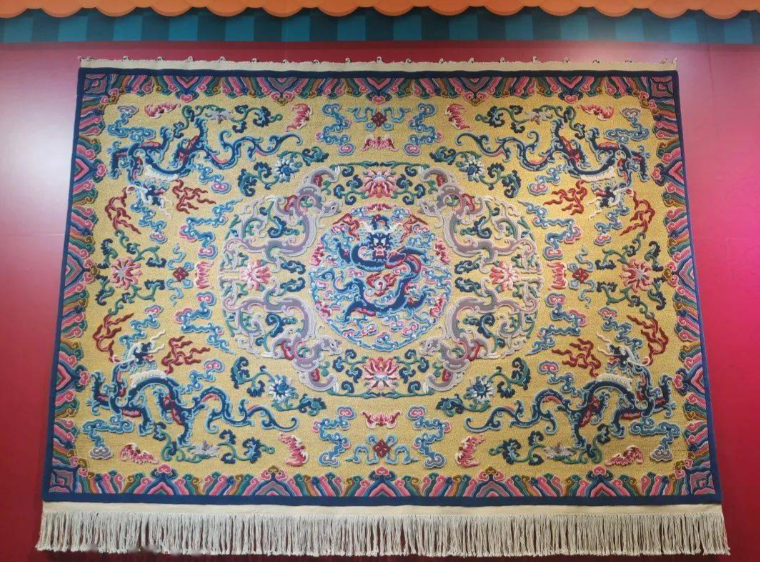
The imperial carpet treasures of this period are both practical utensils and the perfect integration of craftsmanship and Culture. The gold-thread coiled and pile-woven dragon-pattern carpet laid in the Hall of Supreme Harmony of the Forbidden City is a pinnacle work of imperial carpet weaving——made with high-quality wool as the base, it uses gold thread coiling to outline the contours of five-clawed dragons, with gold threads interweaving with colored yarns. The dragon scales are layered with a strong sense of three-dimensionality, and the carpet surface is flat, thick and warm with luster. It has maintained bright colors and a tight texture for hundreds of years, adapting to the majestic atmosphere of the hall and highlighting the exquisite craftsmanship. The flower-pattern carpet preserved in the Palace of Gathered Elegance mainly uses light-colored yarns, weaving tangled lotus and phoenix patterns with smooth and soft lines and gentle and elegant colors, fitting the aesthetic style of the imperial female residence and becoming a model of Qing Dynasty imperial soft decoration. Since the Republic of China, imperial craftsmen scattered among the people, and imperial carpet weaving gradually stepped out of the court. After several generations of inheritance, it was included in the national intangible heritage list in 2008, continuing the peak level of traditional Chinese carpet weaving.
The exquisiteness of imperial carpet weaving lies in the ultimate pursuit of raw materials and the perfect control of complex procedures. The entire craft is completed entirely by hand, requiring hundreds of procedures from material selection to finished product, taking months or even years, and having high requirements for the craftsman’s patience, eyesight and skills. Raw material selection is extremely rigorous: wool is selected from Tibetan wool with long and tough fibers, which is sorted, cleaned, combed and spun into yarn; silk is high-quality mulberry silk, used for weaving fine patterns; gold thread is made by beating pure gold into thin sheets like cicada wings, used in gold thread coiling to enhance luxury. The dyeing process uses natural plant dyes, which are dipped and dried repeatedly to ensure bright, durable and layered colors, harmless to humans and the environment, reflecting the concept of “harmony between man and nature”.
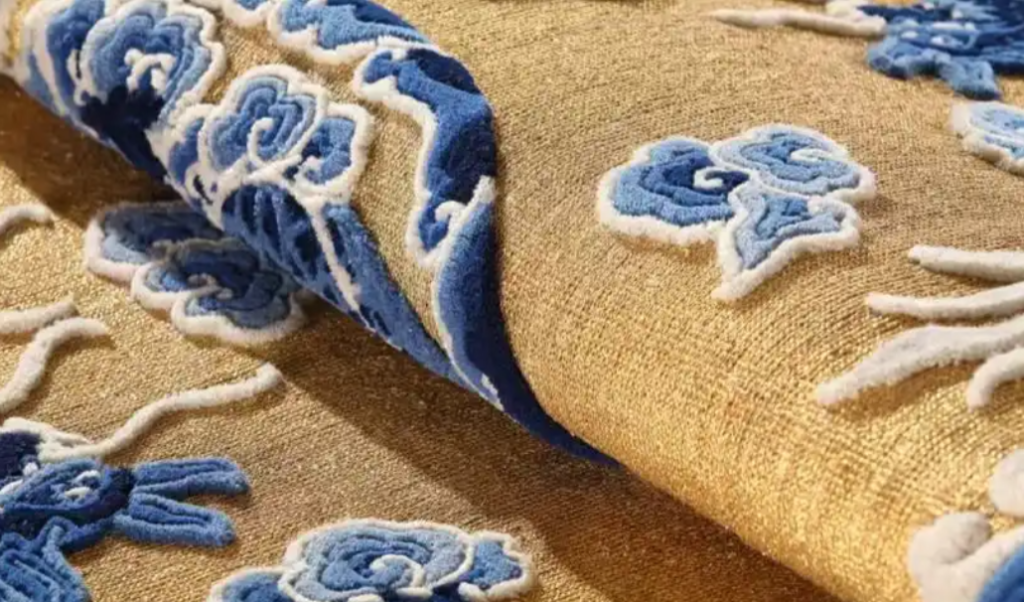
Core weaving techniques are the soul of imperial carpet weaving, mainly divided into three categories: gold thread coiling, pile weaving and plain weaving, which craftsmen flexibly use according to themes and purposes. Gold thread coiling is the most luxurious, winding gold thread around yarn and weaving along the pattern contours, making the pattern edges highly three-dimensional and bright, mostly used for core patterns such as dragon patterns and treasure flowers; pile weaving fixes yarn on the carpet base by hand knotting, with dozens to hundreds of knots per square inch. The more knots, the tighter the carpet surface and the finer the patterns, which is the core guarantee of the thick texture of imperial carpets; plain weaving is used for weaving backgrounds and auxiliary patterns, with simple and smooth lines, forming a virtual-real contrast with gold thread coiling and pile weaving patterns to enhance the overall sense of hierarchy. A complex gold-thread coiled and pile-woven imperial carpet often requires the cooperation of multiple craftsmen for months, with every stitch embodying the craftsman’s ingenuity.
Today, this ancient craft is revitalized under the persistence and innovation of inheritors. Wang Shuwen, a national-level inheritor, has been deeply engaged in imperial carpet weaving for more than 60 years. He learned ancient techniques from the descendants of imperial craftsmen since childhood, not only fully mastering core techniques such as gold thread coiling and pile weaving but also devoting himself to the restoration and promotion of imperial carpet weaving. He has participated in the carpet renovation projects of ancient buildings such as the Forbidden City and the Summer Palace, accurately reproducing Ming-Qing imperial carpet treasures and reviving ancient crafts. Combining modern aesthetic needs, he also innovatively designs small imperial carpet ornaments, wall hangings and other cultural and creative products, integrating traditional patterns with contemporary living scenarios, bringing imperial carpet weaving into ordinary families. Young inheritors, while adhering to ancient methods, popularize imperial carpet weaving knowledge through intangible heritage exhibitions, manual experience courses and online promotion, letting more people understand the unique charm of this craft.
To experience the charm of Beijing Imperial Carpet Weaving immersively, core viewing and experience venues are not to be missed. The Palace Museum is the first choice. The imperial carpets laid in the Hall of Supreme Harmony and the Palace of Heavenly Purity, as well as the imperial carpet collections displayed in the Treasure Gallery, allow you to intuitively feel the peak level of Ming-Qing imperial carpet weaving, clearly seeing the exquisite details of gold thread patterns and pile texture. Intangible heritage workshops and high-end cultural and creative stores in Liulichang display contemporary imperial carpet works all year round. Some workshops offer appointments to experience simple yarn weaving procedures, allowing you to personally feel the fun of “weaving splendor with thousands of threads” under the guidance of craftsmen. In addition, the Beijing Arts and Crafts Museum displays rare imperial carpet treasures from past dynasties, from large imperial carpets to small ornaments, allowing you to systematically understand the historical evolution and artistic characteristics of imperial carpet weaving.
From the exclusive imperial carpets of the Ming and Qing dynasties to contemporary intangible heritage treasures, from rare yarns to surviving masterpieces, Beijing Imperial Carpet Weaving carries not only a handcraft but also the crystallization of Chinese imperial aesthetics and traditional weaving wisdom. Every strand of yarn hides the gift of nature, every weaving reflects the craftsman’s ingenuity, and every work continues the luxury and warmth spanning hundreds of years. When you touch the thick texture of the carpet and gaze at the bright gold thread patterns, you can understand the Chinese pursuit of ultimate craftsmanship and beauty, and feel the Oriental heritage hidden between the yarn and the loom.


暂无评论内容