




Amidst the traditional elegance of Liulichang Cultural Street, Daiyuexuan has forged a legend among the “Four Treasures of Study” with a century of unwavering craftsmanship, blending the softness of Huzhou writing brushes with the firmness of northern-style brush making. Founded in 1916, this intangible heritage craft uses carefully selected animal hair and hundreds of manual processes to create each writing brush, embodying the “four virtues” of a perfect brush: sharp, neat, round, and resilient. It has not only been a cherished tool for literati and calligraphers but also a witness to the inheritance and glory of Chinese calligraphic Culture. For foreign travelers, exploring Daiyuexuan writing brushes is an excellent way to understand traditional Chinese Calligraphy and the spirit of craftsmanship.
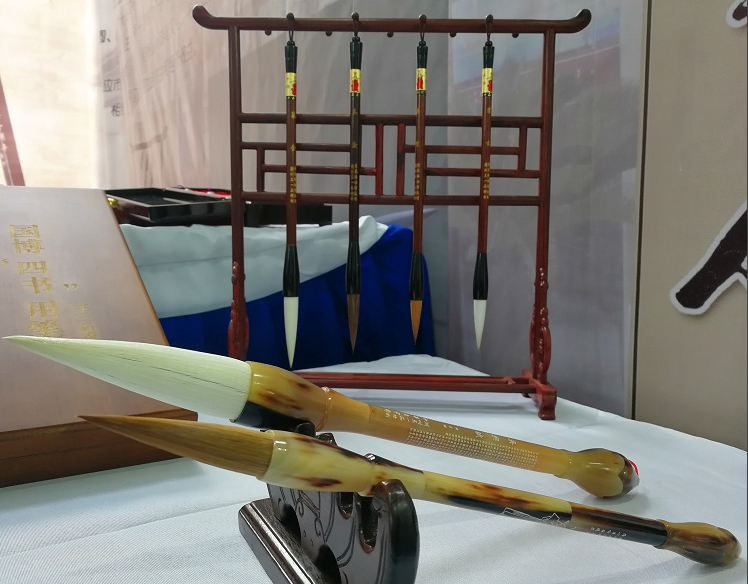
The century-old context of Daiyuexuan writing brushes is deeply marked by Culture and history. In 1916, founder Dai Bin (courtesy name Yuexuan) opened a brush shop in Liulichang, adhering to the “front shop, back workshop” model of self-production and self-sale. He selected high-quality raw materials from Shanlian Town, Huzhou, Zhejiang, integrating the delicacy of southern Huzhou brushes with the firmness of northern wolf-hair brushes, creating a unique Daiyuexuan style. In the early years, Daiyuexuan’s goat-hair brushes exclusively used mountain goat hair from Jiaxing, while wolf-hair brushes were made from winter weasel tail hair. After careful selection and ancient processing, the brushes were favored for their “ability to hold shape when lifted and remain flexible when pressed”. Cultural celebrities such as Qi Baishi and Zhang Boju were regular customers, and senior leaders like Mao Zedong and Zhou Enlai also used Daiyuexuan brushes for a long time, making it a cultural symbol bearing historical memories. In 1951, Daiyuexuan specially made commemorative brushes for the signing ceremony of the “Seventeen-Point Agreement” on the peaceful liberation of Tibet, linking the craft closely with national events and writing an enduring story.
The value of Daiyuexuan writing brushes lies not only in celebrity recognition but also in the ultimate commitment to quality. Each brush adheres to the core standard of the “four virtues”: sharp refers to a sharp and neat tip for precise writing; neat means the brush hair is evenly trimmed at the top when spread, ensuring uniform ink absorption; round denotes a full and smooth brush body for flexible movement; resilient refers to the brush tip’s elasticity for controlled strokes. To achieve this standard, Daiyuexuan has always insisted on strict raw material selection. The four major types of brushes—goat-hair, wolf-hair, purple-hair, and mixed-hair—are all sourced directly from their origins. Goat hair is chosen for its balance of softness and toughness, while wolf hair is taken exclusively from the tip of winter weasel tails, with each hair selected from thousands. This pursuit of raw materials lays a solid foundation for the brushes’ excellent quality.
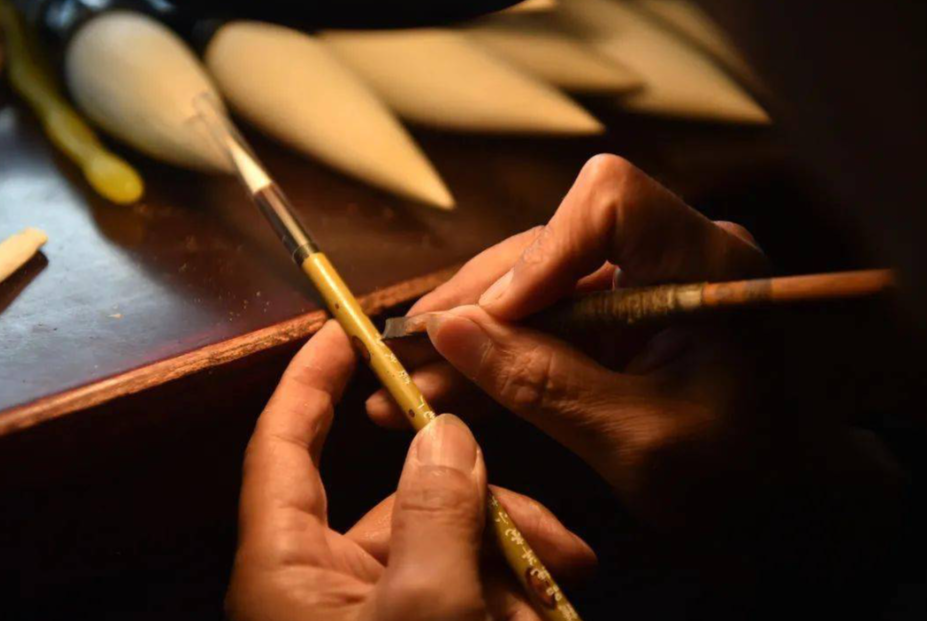
The exquisiteness of Daiyuexuan writing brushes lies in the layers of refinement through hundreds of ancient processes. The entire craft is completed by hand, involving dozens of core procedures such as hair selection, water sorting, knotting, assembling, and trimming, taking days or even weeks. It places extremely high demands on the craftsman’s patience, eyesight, and touch. The first step, hair selection, is extremely rigorous—craftsmen screen high-quality, uniform hair from hundreds of strands, with no fewer than 10,000 hairs selected per brush. Any flaw results in rejection, a process that often discourages beginners. The “water sorting” step tests the craftsman’s control of moisture: hair is combed, classified, and blended in clean water, with softness and hardness adjusted according to the brush type to ensure a balanced tip. Subsequent processes, from knotting to trimming, require meticulous craftsmanship. Especially in trimming, craftsmen use tweezers to arrange the brush tip one hair at a time until it meets the “four virtues” standard.
The unique integration of craftsmanship is the soul of Daiyuexuan writing brushes. It inherits the traditional southern “tip matching” technique for goat-hair brushes, enhancing layering and expressiveness, while incorporating northern wolf-hair making techniques to strengthen the tip’s firmness, forming a distinctive “southern softness and northern firmness” character. According to usage and shape, Daiyuexuan brushes are divided into various types such as large calligraphy brushes, medium calligraphy brushes, and small calligraphy brushes, with elegant names like “Green Mountains Draped in Snow” and “Books Exchanged for White Geese”, reflecting both brush characteristics and literati sentiment. Each finished brush undergoes repeated adjustments by craftsmen to ensure smooth writing and even ink application, embodying the artistic pursuit of Chinese Calligraphy—”strength penetrating the paper, vivid charm”.
Today, this century-old craft is revitalized under the persistence and innovation of inheritors. Chen Peixin, the fourth-generation inheritor, has been deeply engaged in the craft for more than 30 years. Leading the team to uphold traditions while innovating, he established an inheritor management system, cultivating multiple municipal and district-level intangible heritage inheritors and revitalizing the time-honored brand. Post-70s inheritor Wang Houxian has persisted in his Liulichang workshop for 22 years, with a several-centimeter-deep mark worn into the concrete floor under his workbench, interpreting craftsmanship through daily persistence. To address the talent shortage, Daiyuexuan attracts enthusiasts through school programs, community lectures, and craft exhibitions, nurturing new blood through the “mentorship” model. Meanwhile, it launches cultural and creative gift boxes and customized brushes, combining century-old craftsmanship with modern aesthetics, bringing writing brushes from literati desks into daily life.
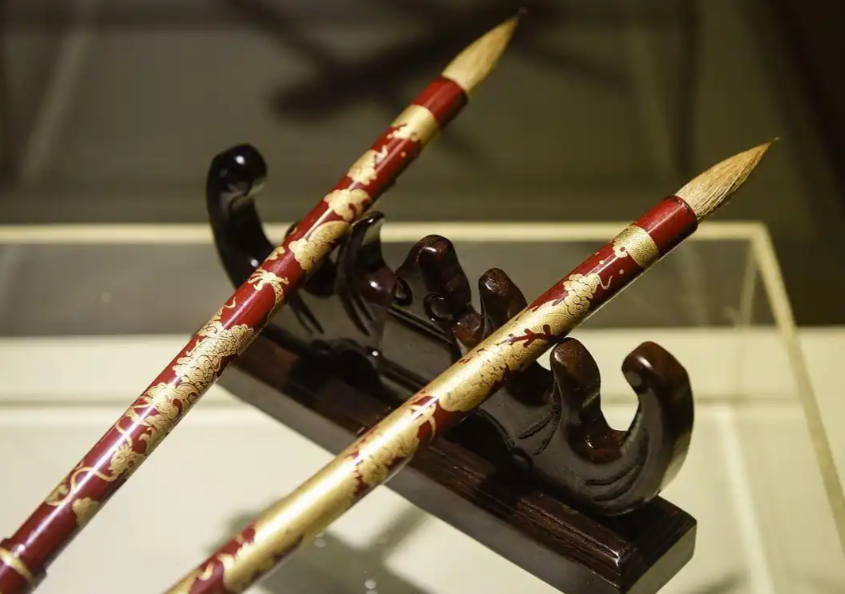
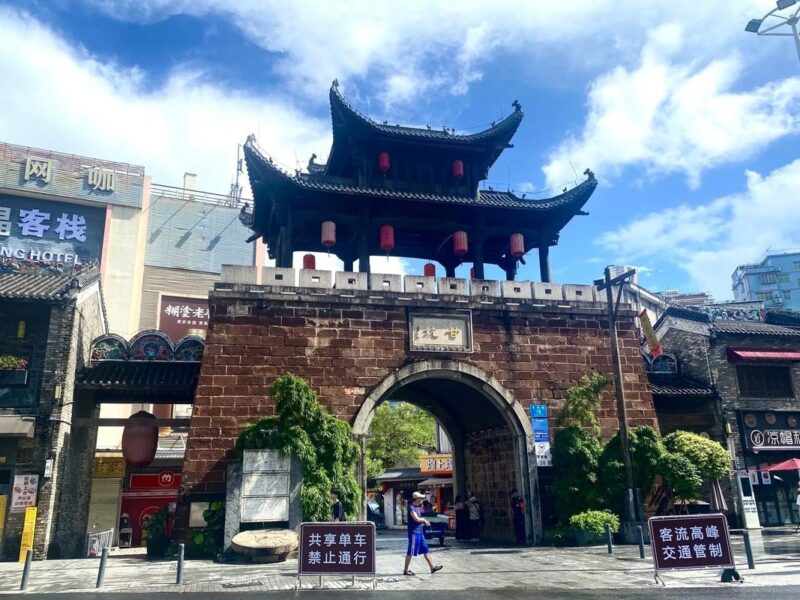
To experience the charm of Daiyuexuan writing brushes immersively, core venues are concentrated in Liulichang Cultural Street. Daiyuexuan’s Liulichang store (No. 73 East Street) retains the traditional “front shop, back workshop” model. Visitors can watch craftsmen demonstrate hair selection and trimming on site, witnessing the transformation of animal hair into writing brushes. Some experience programs allow visitors to try combing hair by hand, feeling the sophistication of ancient techniques. In addition, the Beijing Arts and Crafts Museum displays rare Daiyuexuan brushes from past dynasties, from celebrity-customized pieces to traditional classics, enabling a systematic understanding of the craft’s historical evolution and artistic characteristics. Wandering in Liulichang, surrounded by the fragrance of ink and books, you can almost touch the warmth of Chinese calligraphic Culture.
From a small brush shop in 1916 to a national time-honored brand, from a literati’s desk tool to a cultural symbol bearing historical memories, Daiyuexuan writing brush making carries not only a craft but also the crystallization of Chinese calligraphic culture and craftsmanship. Each hair hides the gift of nature, each process reflects the craftsman’s persistence, and each brush condenses a century of cultural inheritance. When you hold a Daiyuexuan writing brush, you can feel the Oriental charm in the ink and brush, understanding the Chinese pursuit of ultimate craftsmanship and cultural heritage.





暂无评论内容