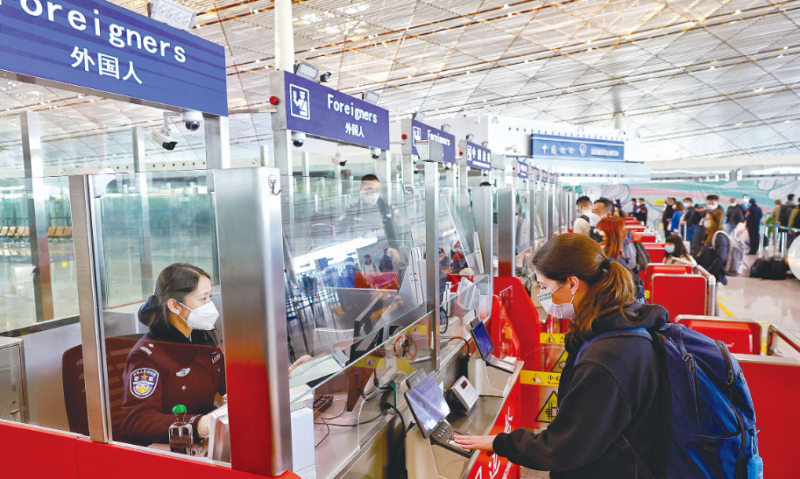





With the continuous implementation of China’s unilateral visa-free policy, more and more foreign travelers are choosing to explore this land with profound history and modern vitality. To facilitate your smooth customs clearance and peaceful trip, this article integrates the latest 2026 entry policies, breaking down key points from document preparation, border inspection, customs clearance to practical post-entry guidelines, ensuring your journey in China starts without a hitch.
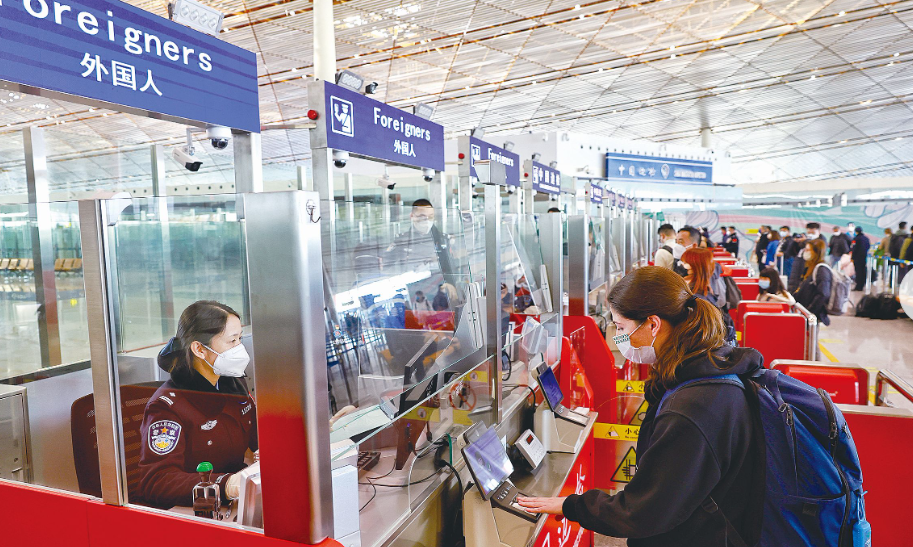
Document preparation is the foundation of entry. Currently, China implements a unilateral visa-free policy for 65 countries, covering 40 in Europe, 6 in the Americas, 7 in Asia, and 2 in Oceania, including major source countries such as the United States, Canada, Japan, South Korea, France, and Germany . Eligible travelers must hold a valid ordinary passport meeting travel needs and a connecting ticket with confirmed date and seat (if in transit). They can enter through 65 open ports in 24 provinces and stay for a maximum of 30 consecutive natural days, calculated from the day after entry . It should be noted that the visa-free policy for Russian citizens is valid until September 14, 2026, for the other 46 countries until December 31, 2026, and for Bruneian citizens with no time limit . Minors are subject to the same visa-free conditions as adults, no additional procedures are required, but it is recommended that accompanying guardians carry proof of kinship for backup.
If you plan to stay in China for more than 30 days, or engage in work, study, news interviews, etc., you are not eligible for visa-free entry and must apply for the corresponding type of visa at a Chinese embassy or consulate abroad in advance . For example, a Z-visa is required for work, with supporting documents issued by human resources and social security departments or the State Administration of Foreign Experts Affairs; a J2-visa is required for short-term interviews, with a visa notification letter from the Information Department of the Ministry of Foreign Affairs and an official letter from the media . After the visa is approved, information such as the number of entries and duration of stay cannot be changed; a new application is required if the itinerary is adjusted .
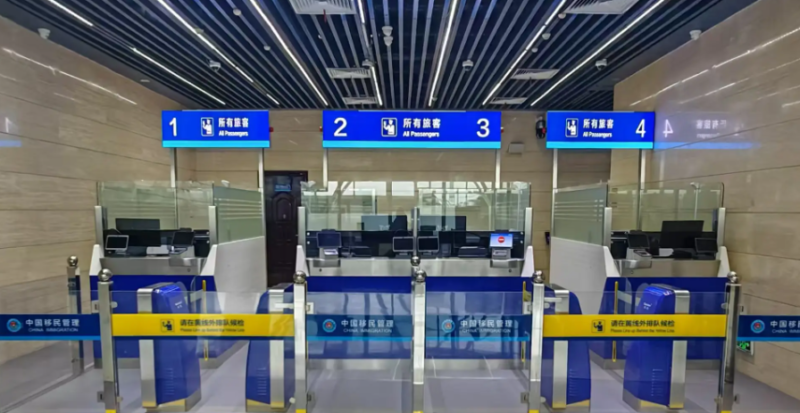
During border inspection, you need to cooperate with identity verification and fingerprint collection. Upon entry, in addition to presenting your passport and visa (for non-visa-free travelers), you must fill out a Foreigner Entry Card, specifying the address or hotel name in China in detail. It is advisable to prepare supporting documents such as flight and hotel reservations consistent with the purpose of entry for border inspection verification . Foreign travelers aged 14 to 70 must provide fingerprints, with exemptions for those holding diplomatic passports and those covered by bilateral fingerprint-free agreements . If your passport is lost or damaged after entry, promptly apply for an emergency travel document from your country’s embassy or consulate in China, and carry a loss report and other materials. After verification by border authorities with no illegal stay, you can depart normally .
Customs clearance requires strict compliance with item carrying regulations to avoid violations. For tobacco and alcohol, travelers from non-Hong Kong and Macao regions can carry duty-free 400 cigarettes, 100 cigars, or 500 grams of tobacco, and 2 bottles of alcohol (alcohol content ≥12°, total volume ≤1500ml). Travelers on the Xiamen-Jinmen and Quanzhou-Jinmen routes can additionally carry 6 bottles of Taiwan Kaoliang wine duty-free (total volume ≤4500ml) . For currency, the limit for RMB is 20,000 yuan, and foreign cash exceeding the equivalent of 5,000 US dollars must be declared in writing (excluding same-day multiple travelers) .
Strict controls are imposed on animals, plants and their products. Fresh fruits, vegetables, raw meat, bird’s nest (except canned), animal-derived milk and dairy products are prohibited. Each person is allowed to carry only one dog or cat, with an official quarantine certificate and vaccination certificate from the country of origin . Medicines must be for personal and reasonable use, with prescription drugs generally not exceeding a 7-day supply. Special drugs such as narcotic drugs require a doctor’s prescription; quantities exceeding the limit must go through customs declaration through cargo channels . In addition, imitation weapons are prohibited from entry and exit; undeclared items will be confiscated, and criminal liability will be pursued for serious cases .
Health declaration is a mandatory entry procedure, with triple screening (“temperature detection + health declaration + travel history verification”) implemented at all national ports . Travelers must truthfully fill out an electronic or paper Health Declaration Card for Entry/Exit, indicating exposure history to infectious diseases such as Nipah virus. Those with a temperature ≥37.3℃ will undergo re-testing, and travelers with a 14-day travel history to endemic areas must cooperate with further verification . After entry, adhere to a 21-day self-health monitoring requirement and seek Medical attention and report immediately if unwell.
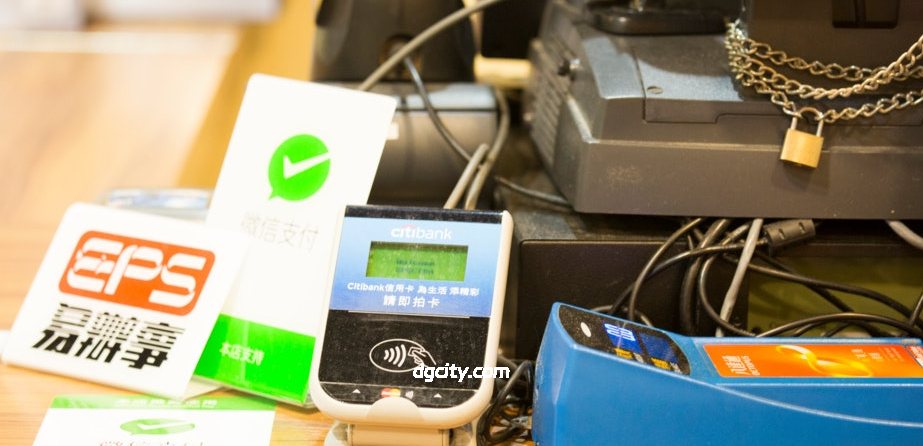
Flexible payment and communication options are available after entry. For payments, Alipay and WeChat Pay can be linked to international bank cards such as Visa and Mastercard, with no handling fee for single transactions ≤200 RMB and a 3% fee for amounts exceeding that, with an annual consumption limit of 50,000 US dollars . You can also withdraw RMB cash from ATMs or exchange foreign currency at authorized institutions . For communication, carry your passport to apply for a SIM card at China Telecom, China Mobile and other business halls to activate mobile communication services .
Finally, visa-free travelers can enter multiple times, with no current restrictions on the number of entries or total stay days, but must not engage in activities inconsistent with the purpose of entry . If you need to extend your stay after entry, apply for a stay permit from the public security organ’s exit-entry administration . Before traveling, it is recommended to check the website of China’s National Immigration Administration to confirm any dynamic policy adjustments. Wish you a pleasant trip in China.








暂无评论内容