




As a major global aviation hub, multiple airports in China accommodate a high volume of international transit and layover services. To help foreign travelers complete the transit process efficiently and smoothly, this guide integrates the latest 2026 policies, focusing on three core aspects: transit visa-free policies, airport layover processes, and baggage transfer rules. It breaks down practical tips and precautions for different scenarios to ensure a hassle-free transit journey.
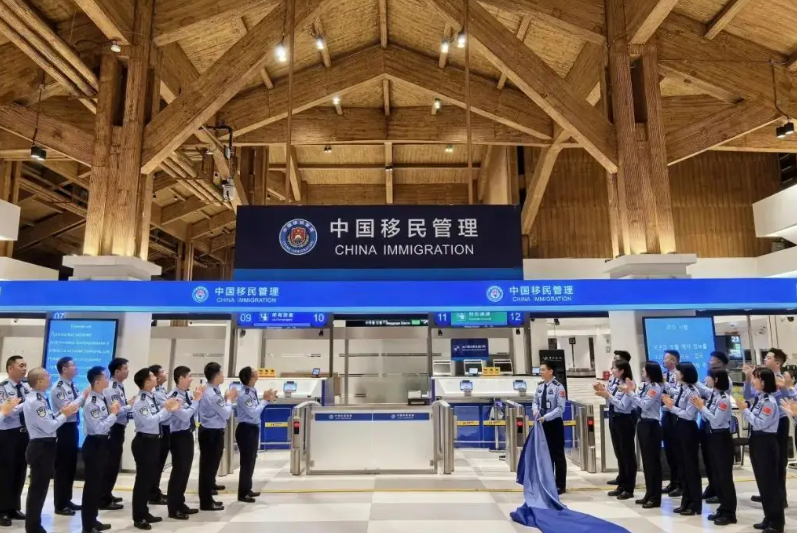
I. China Transit Visa-Free Policies and Scope of Application
China offers multi-level transit visa-free policies for international travelers, including 24-hour direct transit visa-free, 72-hour/144-hour regional transit visa-free, and cruise group transit visa-free. There are significant differences in eligibility criteria, stay scope and validity period among these policies, so travelers should choose the one that best fits their itinerary.
The 24-hour direct transit visa-free applies to travelers from all countries with no prior application required. You can transit without a visa as long as you hold a connecting ticket, transit through any open port in mainland China, stay for no more than 24 hours, and do not leave the port-restricted area. Notably, travelers under this policy are not allowed to leave the airport transfer area, and the stay time is calculated by calendar days. Even if you arrive on the same day and depart the next, you must comply with other visa-free policies if the total duration exceeds 24 hours.
The 72-hour/144-hour regional transit visa-free is the most popular option, available to travelers from 45 countries (including EU member states, the USA, Japan, South Korea, etc.). The 144-hour visa-free covers most hub cities and surrounding areas nationwide, extending the stay scope to the province (autonomous region, municipality directly under the Central Government) where the entry port is located, while the 72-hour visa-free is only applicable to specific airports and designated areas. Both require a valid passport and connecting ticket. After entry, you can stay within the restricted area without an additional visa, and the stay duration starts from the day after entry.
Important Note: Transit visa-free is only for short-term purposes such as tourism and business. Work, study, residence and other activities are strictly prohibited. Additionally, confirm in advance whether the entry port offers the corresponding visa-free policy—some regional airports only support 24-hour direct transit, not the 72-hour/144-hour regional visa-free.
II. Airport Layover Process and Port Precautions
International layovers are divided into two scenarios: “international to international” and “international to domestic”, with distinct processes. Travelers should pay close attention to port-restricted areas, transfer channels and identity verification requirements, and make preparations in advance.
The “international to international” layover process is relatively straightforward. Upon arrival, you don’t need to complete entry procedures—just follow the “International Transfer” signs to the transfer area, then verify your boarding pass and go through security for the connecting flight. Most hub airports have exclusive international transfer channels for connecting flights across different airlines, and some offer transfer lounges and temporary baggage storage. The three core airports provide additional exclusive amenities: Beijing Capital International Airport launched the “Via Capital, Connect the World” transfer service, with dedicated guides in yellow uniforms, airside inter-terminal shuttle buses every 15 minutes (10-minute ride to the target terminal), and a VIP baggage service with dedicated staff and vehicles, achieving 100% baggage tracking and aiming to complete inter-terminal transfers within 100 minutes. Its transfer counters are located opposite Gate 11 on the arrival 3rd floor of Terminal 3, and between Gates 11-12 on the arrival 3rd floor of Terminal 2. Shanghai Pudong International Airport optimized processes for Terminals T1, T2 and Satellite Hall S1 (the main transfer hub for China Eastern Airlines flights). S1 is equipped with 24-hour self-service kiosks for direct transit without border inspection, enabling fast clearance. Guangzhou Baiyun International Airport has multilingual transfer service counters, offering free baggage storage, transfer lounges and fast security check channels to boost transfer efficiency. If your transfer requires changing terminals, confirm shuttle bus information in advance. Some airports require simple identity verification for inter-terminal transfers, so keep your passport, connecting ticket and other documents handy.
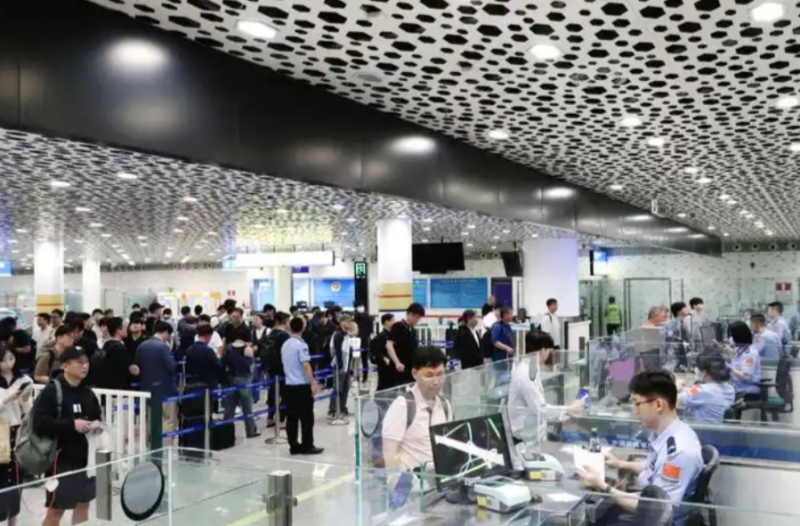
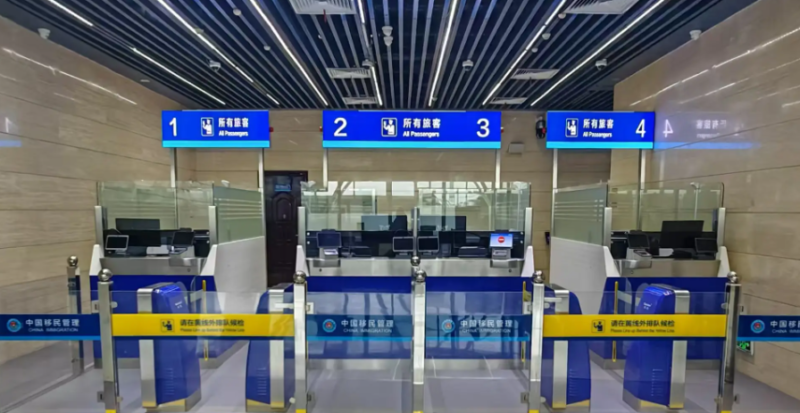
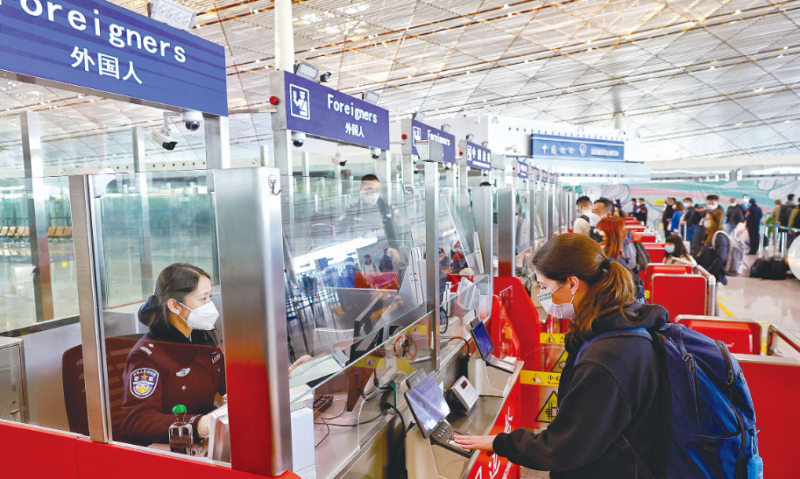
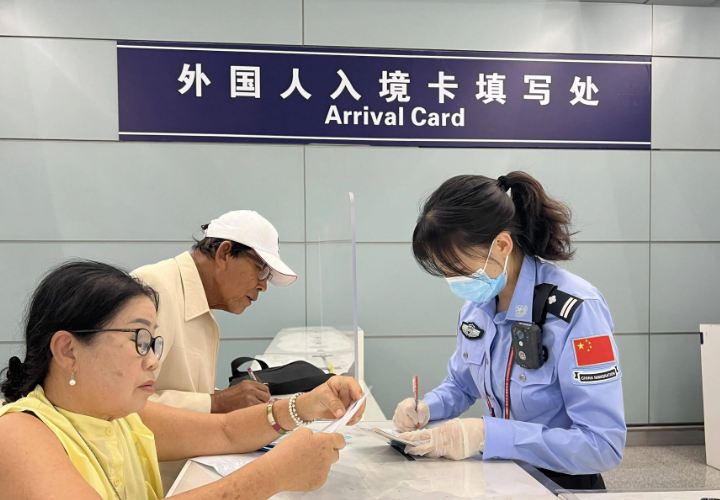
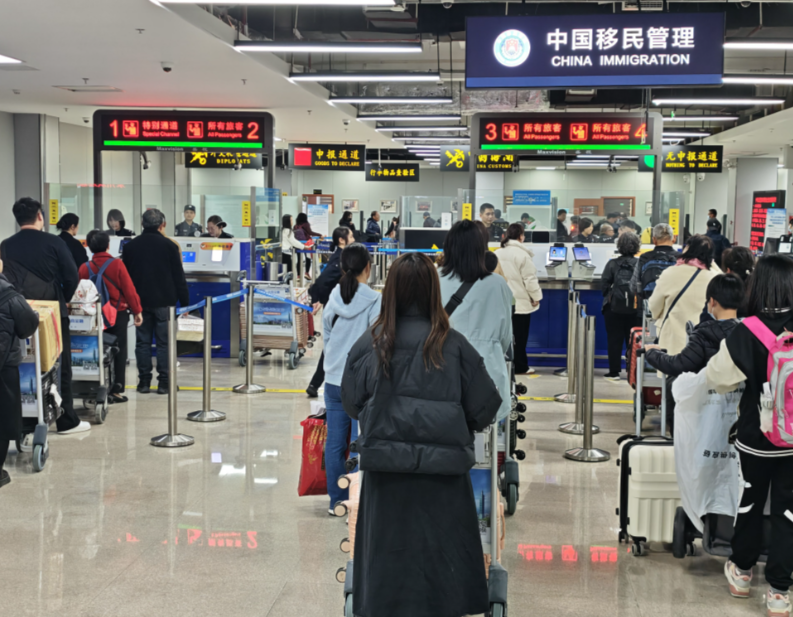
For “international to domestic” layovers, you must complete entry procedures first, then proceed to the domestic departure floor for boarding. The specific process is as follows: After arrival, follow the signs to the entry inspection area, submit your passport and connecting ticket for border check verification. After entry, pick up your baggage, go through domestic departure security, and finally proceed to the corresponding boarding gate. This process involves multiple steps, especially visa verification and baggage claim. It is recommended to reserve at least 3 hours for transfer to avoid missing the connecting flight due to long processing time.
During your stay at the port, strictly abide by the regulations of restricted areas. Transit visa-free travelers must not exceed the specified stay scope. If you plan to leave the airport to visit surrounding cities, ensure your itinerary meets the requirements of the 144-hour/72-hour visa-free area. Meanwhile, keep your passport, ticket and other documents safe throughout the transfer—some airport transfer areas require multiple identity verifications to avoid itinerary disruptions due to lost documents.
III. Baggage Transfer Rules and Special Case Handling
Baggage transfer is a key part of the layover process. Travelers should understand the differences in transfer rules between connecting flights and non-connecting flights, as this directly affects transfer efficiency.
Baggage for connecting flights is usually transferred by the airline throughout the journey. You don’t need to pick it up midway—just verify your boarding pass at the transfer airport. Confirm in advance whether the two flights are operated by the same airline or code-sharing partners. For different airlines, check if baggage interline service is available when booking, as some airlines may charge an additional fee. If your baggage does not arrive simultaneously during the transfer, contact the airline’s baggage service counter immediately with your baggage check-in voucher and contact information. The airline will handle subsequent baggage transfer and notify you upon delivery.
For non-connecting flights (transfers across airlines or split-ticket bookings), you need to pick up your baggage and recheck it. In this case, complete entry procedures first, then pick up your baggage and proceed to the domestic departure floor for secondary check-in and security. Ensure your baggage meets the weight and size requirements of the connecting flight to avoid extra fees for excess baggage. If using the transit visa-free policy, finish the transfer within the specified stay duration after picking up your baggage and do not exceed the visa-free period.
In case of damaged or lost baggage, contact the airline at the baggage claim area immediately, submit the baggage damage certificate and check-in voucher to negotiate compensation. If baggage cannot be transferred due to flight delay, keep the flight delay certificate and the airline will arrange subsequent transfer. Additionally, travelers with valuables or fragile items are advised to carry them on board to reduce the risk of damage or loss during check-in.
Before your transit, confirm flight interline status, baggage transfer rules and transit visa-free policy eligibility in advance. Reserve sufficient transfer time—add 30-60 minutes for inter-terminal or satellite hall transfers. Besides, airlines like Air China provide free transit accommodation for eligible connecting passengers, covering airports such as Beijing Capital and Shanghai Pudong, which can be booked via the airline’s official website or APP. Transfer services at China’s hub airports are increasingly refined; proper advance planning ensures a smooth transit experience.







暂无评论内容