




On Renshou Road, Tianqiao Street, Xicheng District, Beijing, there hides a architectural treasure carrying a century of urban memories——Tailianli Beijing. Different from the imperial grandeur of the Forbidden City and the elegant landscape of the Summer Palace, Tailianli has become a vivid witness to Beijing’s urban innovation in the early Republic of China with its unique style imitating Shanghai’s lane houses. It is also an excellent window for foreign travelers to understand the diverse architectural Culture of old Beijing and feel the humanistic heritage of the integration of Chinese and Western Cultures. Built in the early years of the Republic of China, this architectural complex has been well-preserved after a century of trials and tribulations. It not only has the gentle texture of Eastern dwellings, but also integrates the simple style of Western architecture. Wandering here, you seem to travel through time, encounter the market warmth and era elegance of Beijing in the Republic of China, allowing every foreign traveler to understand the unknown architectural aesthetics and historical stories of old Beijing among the blue bricks and gray tiles.
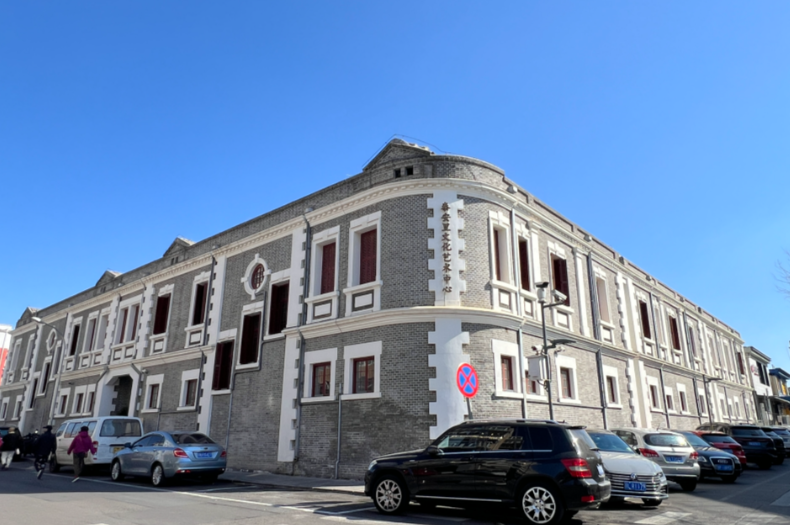
The birth of Tailianli is closely linked to Beijing’s urban innovation in the early Republic of China. In June 1914, the Beiyang government established the “Jingdu Municipal Office” in Beijing, announcing the opening of the Xiangchang New Urban Area. It was reconstructed in accordance with the urban planning and municipal infrastructure standards of Western countries, aiming to build a new urban area with both modern atmosphere and international style. Tailianli is one of the representative buildings built during this period, constructed between 1915 and 1918, with a history of more than a century. As the core residential building in the Xiangchang New Urban Area at that time, Tailianli was not a single building, but a group of six two-story buildings with basically the same plane layout and facade shape. The overall layout imitated Shanghai’s lane houses, which not only adapted to Beijing’s climate and living habits, but also drew on the compactness and practicality of southern lane buildings. It became a model of the integration of northern and southern architectural Cultures, and also witnessed the open and inclusive urban temperament of Beijing in the Republic of China.
For foreign travelers, the core charm of Tailianli lies first in its unique architectural aesthetics and spatial layout. The six buildings are divided into two rows by a narrow alley, with the alley entrance facing Renshou Road, and the gate of each building facing the inside of the alley, forming a unique pattern of “buildings in the alley and alleys around the buildings”, which is both private and full of market atmosphere. The upper part of the west entrance of the alley is overhead to form the second floor, and the east end is completely sealed. This design is not only convenient for management, but also can effectively block wind and sand, reflecting the ingenuity and pragmatism of the architects at that time. Each building is of brick-wood structure, two stories high, with an independent inner patio. The top of the patio is equipped with a canopy, which can not only let in light and ventilation, but also shelter from rain and snow, embodying the wisdom of typical Eastern dwellings; while the veranda protruding from the second floor forms a corridor on the first floor, with a staircase leading to the second floor on the side of the patio. The lines of the veranda columns are simple and smooth, and there are hidden decorative details of Western architecture, where the integrated Chinese and Western design style is fully reflected.
Wandering in the alley of Tailianli, every detail hides the traces of a century of time. The blue brick road has been smoothed and warmed by the years, the gray walls and tiles on both sides are scattered in an orderly manner, and the green plant vines occasionally protruding from the walls add a touch of vitality and poetry to this century-old architectural complex. The doors and windows of each building retain their original appearance from the Republic of China, with clear wood textures and simple and elegant carvings. There are no excessive complicated decorations, but they show a low-key and restrained style. The sun shines into the alley through the patio, and the light and shadow flow on the walls and the ground, outlining the lines of the buildings more softly. You can take photos with both retro atmosphere and humanistic feeling at will, becoming the preferred place for foreign travelers to take photos and record the architectural beauty of old Beijing. In addition, the buildings of Tailianli also focus on the combination of practicality and comfort. Each household has an independent courtyard and living room, with a reasonable layout and good ventilation and lighting. Even today, a hundred years later, people can still feel the advanced concept of residential design at that time.
Tailianli is not just a display of historical buildings, but also an immersive space integrating historical display, cultural experience and market life, allowing foreign travelers to not only appreciate the beauty of architecture, but also deeply feel the humanistic atmosphere of old Beijing. Today, after protective renovation, Tailianli has not only retained the original style of the century-old buildings, but also introduced modern elements such as characteristic cultural and creative products, niche bookstores, and Republic of China themed exhibitions, realizing the perfect integration of history and modernity. The venue holds themed exhibitions such as the Republic of China Architectural Culture Exhibition and the Old Beijing Market Life Exhibition all year round. Through various forms such as old photos, old objects, and scene restoration, it details the historical evolution of Tailianli, its architectural characteristics, and the innovation process of the Xiangchang New Urban Area. There are also professional staff providing explanation services, and some areas support English explanations, allowing foreign travelers to clearly understand the stories behind each building and each exhibit, and deeply feel the social style and humanistic feelings of Beijing in the Republic of China.
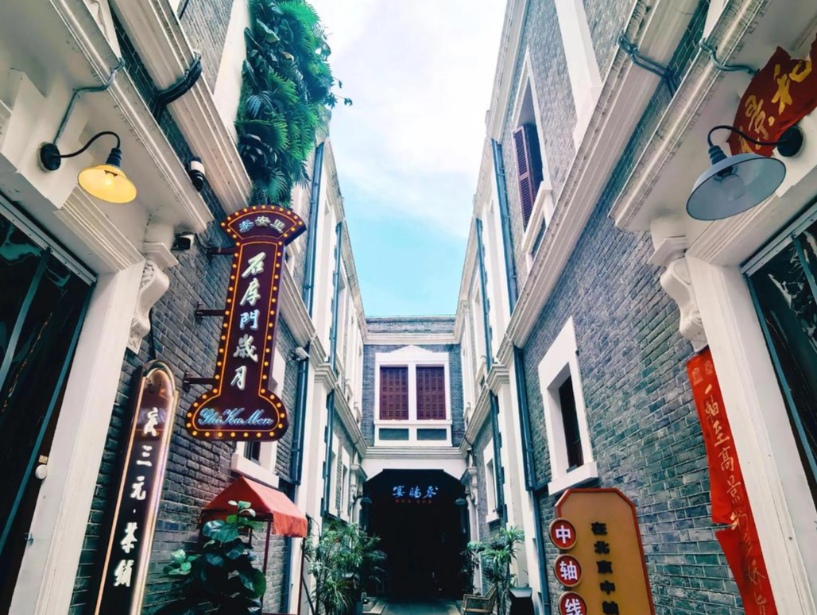
For foreign travelers who love culture and design, the cultural and creative experience area of Tailianli is absolutely not to be missed. Here, there are many cultural and creative products inspired by the Republic of China culture and old Beijing architecture. From postcards and notebooks printed with the architectural patterns of Tailianli to accessories and ornaments recreated in the style of the Republic of China, each product has both design sense and commemorative significance. It can be taken away as a travel souvenir or used as a carrier to understand old Beijing culture. In addition, the cultural and creative area also has manual experience projects. Foreign travelers can personally make simple handcrafts in the style of the Republic of China, and in the process of making, further feel the charm of Eastern handicrafts and the heritage of the Republic of China culture, leaving a unique travel memory.
The niche bookstore in the venue is also a major highlight of Tailianli. Located in an old building deep in the alley, the bookstore’s decoration style is highly consistent with the overall style of Tailianli. The retro wooden bookshelves, soft lighting and simple furnishings create a quiet and comfortable reading atmosphere. The bookstore has a rich collection of books, covering many fields such as the history of the Republic of China, old Beijing culture, and architectural design. There are both Chinese books and a large number of original English books to meet the reading needs of foreign travelers. Foreign travelers can choose a favorite book here, find a seat by the window, and enjoy a slow-paced reading time with the blue bricks and gray tiles outside the window and the soft light and shadow, feeling the humanistic warmth and historical depth of old Beijing in the fragrance of books.
In addition to visiting, the supporting facilities around Tailianli can also bring convenient and comfortable experiences to foreign travelers. The area around the venue gathers many restaurants and cafes with distinctive old Beijing characteristics, including restaurants focusing on traditional Beijing snacks and niche cafes integrating modern aesthetics. In traditional restaurants, foreign travelers can taste old Beijing characteristic snacks such as soybean milk, fried dough rings, and braised pork offal, feeling the market atmosphere of old Beijing; in niche cafes, they can not only taste authentic coffee and desserts, but also appreciate the decoration and furnishings in the style of the Republic of China, and enjoy a pleasant leisure time in the collision of modernity and retro.
For foreign travelers, it is very convenient to go to Tailianli. Tailianli is located at No. 6-16 Renshou Road, Tianqiao Street, Xicheng District, in the core urban area of old Beijing. The surrounding transportation network is improved, and it can be directly reached by public transport or self-driving. Foreign travelers can take Metro Line 7 to “Zhushikou Station”, get off at Exit D, and walk about 10 minutes to reach it; they can also take many bus lines such as No. 20, No. 48, No. 62 to “Tianqiao Intersection East Station”, and walk 5 minutes to arrive. For travelers driving by themselves, there are public Parking lots around, with convenient parking. You can directly navigate to “Tailianli Beijing” to arrive. It should be noted that Tailianli is located in the old urban area, and the surrounding roads are relatively narrow. It is recommended to choose public transport as much as possible, which can not only avoid traffic jams, but also better feel the street style of old Beijing.
Regarding opening hours and tickets, Tailianli is open for free all year round (except for special holidays), no advance reservation is required. Foreign travelers only need to show their passports and other valid documents, cooperate with the staff to complete a simple entry inspection, and then enter the venue for free. The opening hours of the venue are 9:00-17:00 every day, closed every Monday (except for legal holidays); the opening hours may be adjusted on special holidays such as New Year’s Eve and the first day of the Lunar New Year. It is recommended that foreign travelers check the official information in advance to avoid delaying their itinerary. It should be noted that as a century-old historical building, some areas of Tailianli are protected areas. Touching the building walls, doors, windows and other cultural relics is prohibited, and taking photos with flash and tripods is prohibited to avoid damage to the building; in addition, loud noise and chasing are prohibited in the venue. It is recommended that foreign travelers keep quiet and jointly maintain a good visiting atmosphere.
When visiting Tailianli, there are some practical tips for foreign travelers: first, it is recommended to wear comfortable shoes. The alleys of Tailianli are mostly paved with blue bricks, and there are many areas that need to be visited on foot. Comfortable shoes can make the visit more relaxed; second, it is recommended to wear simple and retro-style clothes, which match the blue bricks, gray tiles and Republic of China buildings of Tailianli, making photos more outstanding; third, Beijing has distinct four seasons. Spring and autumn have comfortable weather and soft light and shadow, which are the best seasons to visit Tailianli. In summer, it is recommended to avoid the high temperature period at noon. In winter, you need to prepare warm clothes. At the same time, there is no central heating in the venue, and you can add or remove clothes at any time; fourth, if you want to deeply understand the history and architectural characteristics of Tailianli, you can consult the staff on site and rent an English audio guide to further feel the charm of this century-old architectural complex; fifth, the old Beijing streets around Tailianli are very distinctive. After the visit, you can wander around to feel the market style and street culture of old Beijing.
There are many characteristic scenic spots and delicacies around Tailianli, which are very suitable for foreign travelers to visit in combination to create a fulfilling old Beijing humanistic trip. About 15 minutes’ walk from Tailianli is the Beijing Tianqiao Performing Arts Center, one of the important cultural landmarks in Beijing. It holds various cultural and artistic performances such as opera, drama and concerts all year round. Foreign travelers can enjoy traditional Chinese opera and modern art performances here, feeling the diverse charm of Chinese culture; about 10 minutes by taxi from Tailianli, you can reach Dashilan Commercial Street, one of the most representative commercial blocks in old Beijing. It gathers many century-old brands, characteristic shops and traditional snacks. Foreign travelers can go shopping and taste delicious food here, feeling the commercial vitality and market warmth of old Beijing.
In terms of food, the surrounding area of Tailianli gathers various characteristic restaurants, meeting the taste needs of different foreign travelers. In addition to old Beijing characteristic snack bars, there are also many fusion restaurants and foreign restaurants around, including creative dishes combining old Beijing flavors with international tastes, as well as authentic Western food, Japanese food, Korean food, etc., meeting the hometown taste needs of foreign travelers. In addition, there are many old Beijing characteristic teahouses around, where foreign travelers can taste Chinese tea, feel Chinese tea culture, and further feel the humanistic heritage and life warmth of old Beijing in a slow-paced time.
Tailianli Beijing, a century-old architectural treasure hidden in the streets of old Beijing, a humanistic space carrying the memories of the Republic of China and integrating Chinese and Western cultures. It has no noisy crowds or commercial impetuosity, only the quiet and profound of century-old buildings, the warm and long humanistic atmosphere, and the market warmth of daily life. Here, foreign travelers can not only appreciate the unique buildings imitating Shanghai’s lane houses, feel the integrated Chinese and Western architectural aesthetics; but also understand the urban innovation and social style of Beijing in the Republic of China through exhibitions and experiences; they can also feel the market fireworks and humanistic warmth of old Beijing in the surrounding streets and restaurants. For foreign travelers who love history, like architecture and are eager to deeply understand old Beijing culture, this place is not only a check-in spot, but also a dialogue across time, an unforgettable humanistic journey. Wandering in the blue brick alley of Tailianli, every brick and tile tells a century-old story, and every ray of light and shadow shows the charm of old Beijing, allowing every foreign traveler to find their own historical resonance here and leave an unforgettable Beijing travel memory full of retro feeling and market atmosphere.




暂无评论内容