




In Beijing, a city that blends thousands of years of ancient capital heritage with modern urban vitality, the bustling crowds of Qianmen Street have long become a classic memory in the hearts of tourists. However, few people know that behind this prosperity, there is a hidden treasure – Beijing Sanlihe Park. Unlike the grandeur of the Forbidden City or the magnificence of The Great Wall, it integrates the folk customs of old Beijing with the elegance of Jiangnan water towns through its unique scenery of “rivers running through streets and blue bricks with gray tiles”. It has become an excellent window for foreign tourists to understand the diverse customs of Beijing and the best choice to escape the hustle and bustle and enjoy a slow life.
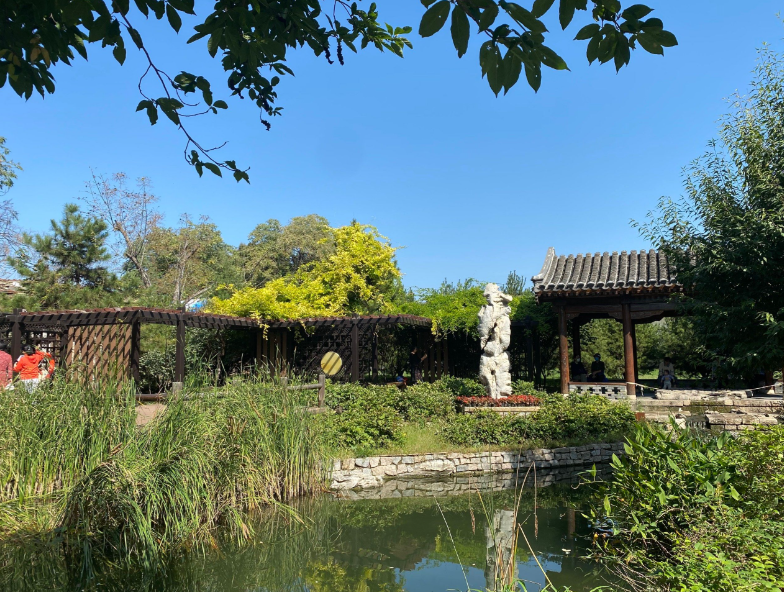
Located on the east side of Qianmen in Dongcheng District, Beijing, Sanlihe Park gets its name from being three li away from Zhengyang Gate. Its history dates back to the Zhengtong period of the Ming Dynasty, when it was an important drainage channel in old Beijing, carrying hundreds of years of Beijing’s memories and serving as the core carrier of “Zhengyangguan Water”, one of the new sixteen scenic spots in Beijing. In the late Qing Dynasty, this river course gradually disappeared in the tide of urban development. It was not until the reconstruction project started in 2016 that after careful renovation, the ancient charm of the Ming and Qing Dynasties of “Sanli water lane surrounding Qianmen” was restored, allowing this long-sleeping ancient river course to regain its vitality. Today’s Sanlihe Park is not very large in area, but “small in size but complete in facilities”. A winding river course of about 800 meters runs through the whole park, becoming the soul of the park and connecting ancient houses, stone bridges, willows and reeds into a flowing ink painting.
Walking into Sanlihe Park, the first thing that catches your eye is the clear river course. The river water remains clean all year round, with willows hanging down by the bank, their branches gently brushing the water surface, creating layers of ripples. In the water, groups of koi carp, leisurely mallards and elegant black swans swim freely. They are not afraid of tourists, sometimes chasing and playing, sometimes lying quietly on the water surface, forming a warm picture of harmony between man and nature with the scenery on the bank. On both sides of the river course, courtyard houses with blue bricks and gray tiles are scattered in an orderly manner, retaining the original flavor of old Beijing hutongs. The mottled courtyard walls, old gate towers and flowers and plants growing arbitrarily in the corners all tell the precipitation of time in this city. Occasionally, you can see tourists wearing Hanfu walking around, their clothes fluttering, integrating with the ancient-style buildings and small bridges over flowing water, making people feel as if they have traveled back to the streets of the capital during the Ming and Qing Dynasties.
The scenery in the park is well-arranged, with different surprises around every corner. Walking slowly along the bluestone roads or wooden plank roads beside the river course, you will pass through several exquisite stone bridges. Some are simple and primitive, some are exquisitely carved, and each stone bridge has its own charm. Standing on the bridge and looking into the distance, you can see the whole park – willows, ancient houses, flowing water and green plants are intertwined, with both the elegance of Jiangnan water towns and the profoundness of old Beijing. Among them, the white stone bridge on the west side of the park is a classic check-in spot. Every spring, large peach trees on both sides of the bridge are in full bloom, and the flowers are reflected in the water. Taking a random photo is a spring blockbuster full of atmosphere, which is a must-visit location for photographers. In addition to the stone bridges, the Reed Garden in the park is also quite distinctive. Large areas of reeds sway in the wind, making a rustling sound when the wind blows. Being in it, you feel as if you have walked into a reed marsh in Jiangnan, quiet and comfortable.
For foreign tourists, Sanlihe Park is not only a scenic spot for viewing, but also an excellent place to experience the collision between old Beijing folk Culture and modern literary atmosphere. There are several characteristic shops hidden in the park, the most famous of which is the “Chunfeng Xixi” Magazine Library. The Japanese-style building contrasts with the water scenery and green plants outside the window, and the log-colored decoration has a literary atmosphere of its own. Here, you can order a cup of coffee, hold a book, and enjoy a slow time with the gurgling water, feeling the literary and gentle side of Beijing. In addition, there are several characteristic cafes and cultural and creative stores in the park, selling cultural and creative products with old Beijing elements. You can not only rest and replenish energy, but also choose your favorite souvenirs to take home the beautiful memories of Sanlihe. On the first weekend of each month, there will also be an intangible cultural heritage market in the park, where traditional old Beijing crafts such as dough figurines and rabbit gods are displayed on site, allowing you to experience the charm of Chinese intangible cultural heritage up close.
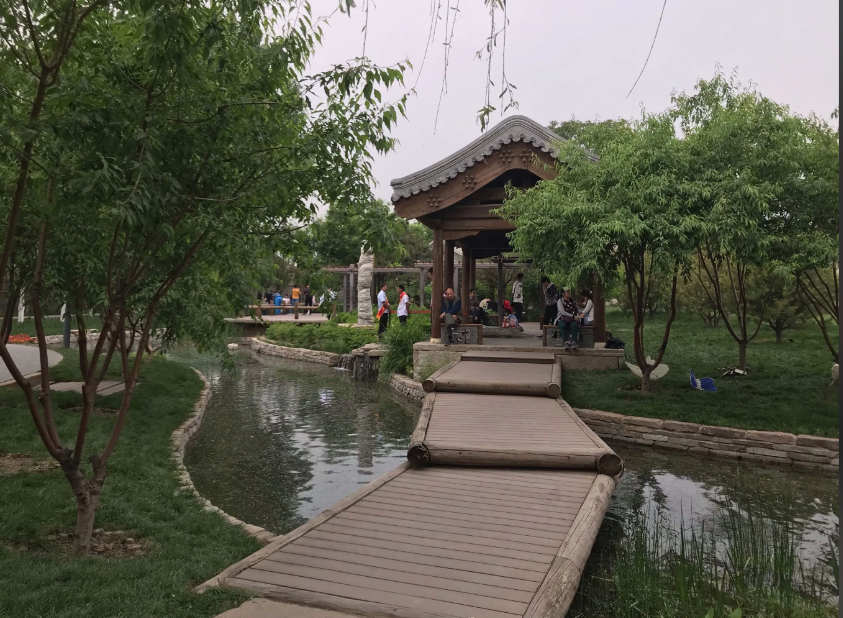
Visiting Sanlihe Park, there is no need to rush. The most comfortable way is to slow down and immerse yourself in the slow life here. The park is most quiet in the early morning, with mist lingering over the river course. The elderly on the bank practice tai chi and carry birdcages, showing the full folk customs of old Beijing. Coming here at this time, you can not only capture the beautiful scenery of small bridges and flowing water in the mist, but also feel the most real life of Beijing citizens. In the evening, the sun sets, and the golden afterglow sprinkles on the water surface, sparkling. The lights on the bank are lit up one after another, reflecting the afterglow of the setting sun, making the scenery more charming. On Friday and Saturday evenings, the river course will also be lit up with intangible cultural heritage fish lanterns, and the lights are reflected in the water, like a dream, which is the best time to visit the park at night. In spring, peach blossoms and magnolias bloom one after another, filling the park with spring; in summer, lotus flowers and water lilies stand gracefully, with green trees providing shade, cool and comfortable; in autumn, ginkgo leaves cover the paths, golden all over; in winter, white snow covers the stone bridges and ancient houses, just like an ink painting. The scenery in the four seasons has its own charm, and you can gain different beauties whenever you come.
As a free and no-appointment hidden attraction, Sanlihe Park is very convenient for foreign tourists to visit. You can take Metro Line 7 to Qiaowan Station, get off at Exit D or Northwest Exit, and walk 300-450 meters to reach it; you can also take buses such as No. 23 and No. 57 to Dongcheng Sanlihe Station, and walk there after getting off. The park is open all day, and it is recommended to spend 2-3 hours visiting. If you want to connect the surrounding attractions, you can start from the west gate of the park and walk 5-10 minutes to reach Qianmen Street, Dashilan and Xianyukou food Street. There, you can taste authentic Beijing delicacies such as Bianyifang Roast Duck, old Beijing Zhajiang Noodles and Chaogan (fried liver), feel the prosperous commercial atmosphere of Qianmen Street, and easily arrange a whole day of slow-paced travel.
Travel Tips: There are more tourists on weekends and holidays. If you want to visit quietly and take photos easily, it is recommended to go on working days; when taking photos, it is recommended to wear light-colored clothes, which match the scenery in the park better, and wearing Hanfu will have a better effect; the consumption in the cafes in the park is relatively high, so you can bring your own drinking water and snacks; the best time to take photos is in the early morning or evening, when the light is soft and you can take more atmospheric photos.
Here, there is no hustle and bustle of traffic, no crowding of people, only gurgling water, willows, ancient houses, stone bridges and a faint smell of fireworks. Sanlihe Park is like a pearl hidden in the depth of Qianmen, with the historical heritage of old Beijing, the elegance of Jiangnan water towns and the literary atmosphere of modern cities. For foreign tourists coming to Beijing, here you can not only appreciate the unique Chinese-style scenery, but also calm down and immerse yourself in the diverse charm of Beijing, understand the tenderness and profoundness of this thousand-year-old ancient capital, and leave an unforgettable memory of your trip to Beijing.




暂无评论内容