




In Shanghai, a city that combines modern prosperity with profound historical heritage, most people are familiar with the Western-style buildings on the Bund and the Jiangnan charm of Yu Garden. However, few know that there is a unique inland island Park hidden in the Huangpu River — Fuxing Island Park. Away from the bustling crowds, it integrates the vicissitudes of a hundred years of history, the elegance of a Japanese-style garden and the lushness of Jiangnan greenery, becoming an excellent window for foreign tourists to understand the “other side” of Shanghai. No need to rush or crowd, just slow down and immerse yourself in the tranquility and tenderness of this city.
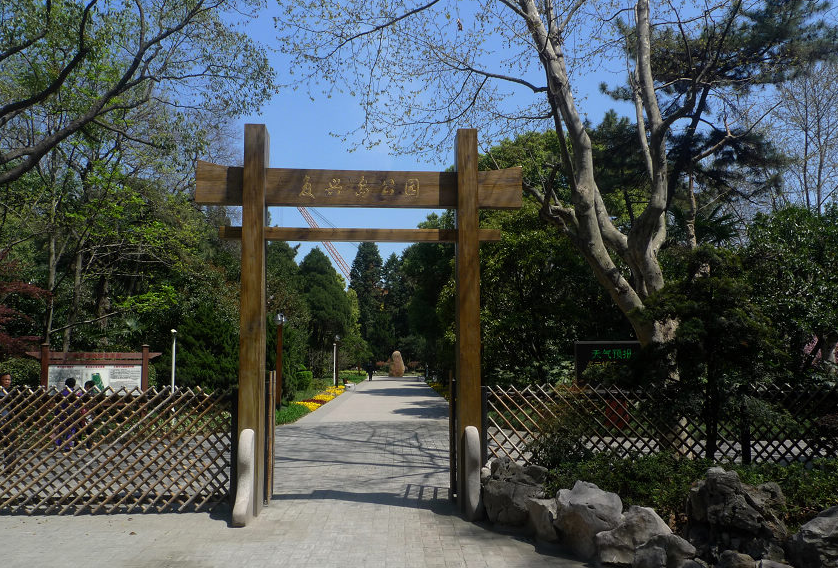
Located at No. 386 Gongqing Road, Yangpu District, Fuxing Island Park is surrounded by the Huangpu River on three sides (east, south and north) and adjacent to the Fuxing Island Canal in the west. With a total area of 41,900 square meters, it is a comprehensive park focusing on plant landscaping and rich in historical memories. It is open to the public free of charge, no appointment is required, and you can start a healing journey at any time. The birth of this park is closely linked to the formation of Fuxing Island. Looking back at history, Fuxing Island was originally a shoal in the Huangpu River. After the establishment of the Shanghai Dredging Bureau in 1905, it took years of dike construction and land reclamation to take shape around 1934. It was originally named Zhoujiazui Island. During the War of Resistance against Japanese Aggression, it was occupied by the Japanese army and renamed Dinghai Island. After the victory of the War of Resistance against Japanese Aggression, it was officially named Fuxing Island to commemorate the hope of national rejuvenation. The embryonic form of the Park was the club garden for the staff of the Dredging Bureau at that time — the Dredging Bureau Sports Club. After renovation in 1951, it was officially opened to the public and still retains many historical relics.
Walking into Fuxing Island Park, the first thing you feel is the ubiquitous greenery and tranquility. There are 71 species and 3,359 arbor and shrub plants in the park. The surrounding area is surrounded by a natural hedge composed of palm trees, dawn redwoods and coral trees, completely isolating the park from the noise outside. Strolling on the stone paths in the park, you have flat roads under your feet, tall camphor trees, straight dawn redwoods and blooming flowers beside you. In spring, cherry blossoms cover the branches, and when the breeze blows, the petals fall with the wind, like a pink fairyland; in summer, there are thick shades to block the sun, cicadas sing, and the river breeze blows, dispelling all the heat; in autumn, sweet-scented osmanthus fragrances fill the air, golden fallen leaves cover the paths, and the atmosphere is full; in winter, although the plants are withered, there are dead branches reflecting the waves of the Huangpu River, which has a unique bleak beauty. Among them, the camphor lawn in the north of the park is the most prominent, covering an area of nearly 10,000 square meters. There are more than 30 camphor trees planted in the center, one of which is an ancient tree over 100 years old, with luxuriant branches and leaves, covering the lawn like a dome. Sitting on the lawn, you can not only blow the evening breeze of the Huangpu River, listen to the sound of the river hitting the bank, but also bask in the sun and daze, enjoying a moment of peace. If you bring light meals, you can also have a simple picnic here (tents and open flames are prohibited), and immerse yourself in the beauty of nature.
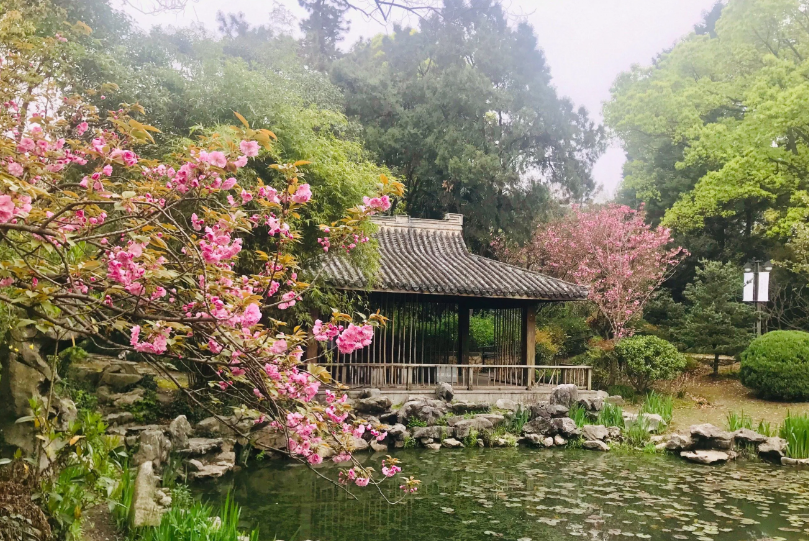
In addition to the charming Natural Scenery, the most distinctive feature of Fuxing Island Park is the buildings and relics carrying a hundred years of history in the park, the most famous of which is “Bai Lu” (White Villa). This Japanese-style building, built in 1934, was originally a club for foreign crew members of the Dredging Bureau. During the War of Resistance against Japanese Aggression, it was occupied by the Japanese army. After the victory of the War of Resistance, it was returned to the Dredging Bureau. What’s more worth mentioning is that this place was the last residence of Chiang Kai-shek in Shanghai before he left the mainland in 1949, witnessing an important historical moment. Today, after renovation, Bai Lu has been converted into the Party and Mass Service Station of Fuxing Island Park, retaining its original Japanese-style architectural style. The white walls and red tiles, the octagonal pavilion-style lattice windows, combined with the surrounding green plants and paths, are full of a sense of age and exotic customs, making it an excellent spot for taking photos. At the same time, there are historical exhibitions in the park, briefly introducing the past of Fuxing Island and Bai Lu, which is convenient for foreign tourists to understand this little-known history of Shanghai.
There are many other scenic spots worth stopping in the park. The Fuxing Stone at the entrance has an inscription recording the history of Fuxing Island on the back, clearly recording the changes of the island and the origin of its name, which is the first stop to understand the history of the park; the garden area in the center of the park retains the style of a Japanese-style garden, with a heart-shaped small pool and a flat bridge across the pool, matched with the surrounding spherical shrubs and pine and cypress trees, elegant and quiet, as if you are in a small niche garden in Kyoto. Taking photos in light-colored clothes has a 100% success rate; in addition, the wisteria corridor and moss wetland in the park are also quite distinctive. In spring, wisteria flowers hang down, forming a purple flower corridor. The moss wetland is surrounded by bamboo fences, a green stretch, like a wonderland. Walking on the stone paths and listening to the rustling of leaves is extremely healing.
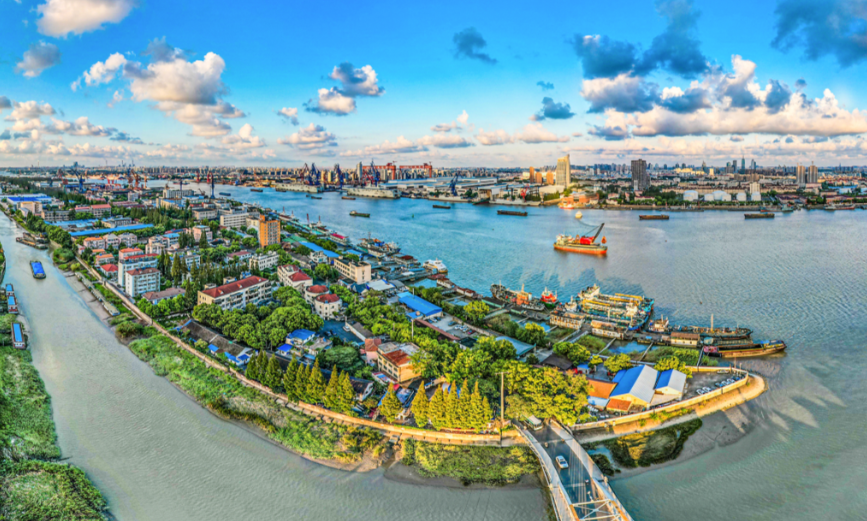
For foreign tourists, it is very convenient to get to Fuxing Island Park. You can take Metro Line 12 to Fuxing Island Station, exit from Exit 2, and walk for 10 minutes to reach it. Along the way, you can also enjoy the riverside scenery of the Huangpu River; you can also take Bus No. 577 to Dinghaiqiao Station and walk for 5 minutes to reach it directly; if you choose to drive by car, there is a parking lot at the west gate, 10 yuan per time, and there are also free parking spaces opposite to chance upon. The opening hours of the park will be adjusted according to the season: 5:00-18:00 from April to June and October, 5:00-19:00 from July to September, and 6:00-18:00 from November to March of the next year. It is recommended to go in the early morning or evening. At this time, the light is soft and there are the fewest people. You can not only avoid the heat in the afternoon, but also enjoy the beautiful scenery of the Huangpu River and the park blending at sunrise or sunset.
It should be noted that there is no canteen in the park, so it is recommended that foreign tourists bring their own drinking water and snacks in advance; riding bicycles, setting up tents and using open flames are prohibited, so avoid carrying relevant items; the outside of the east wall of the park is a military control area, and taking photos is strictly prohibited, so do not take photos in violation of regulations. In addition, there are many niche check-in spots around the park. After visiting the park, you can walk along Gongqing Road, enjoy the industrial-style wharf of the Huangpu River, take atmospheric photos, or go to the nearby riverside trail, blow the river breeze, and feel the riverside style of Shanghai.
Fuxing Island Park has no crowds of Internet-famous scenic spots and no excessive commercial packaging, only natural greenery, historical precipitation and quiet time. For foreign tourists who want to escape the crowds and feel the local charm of Shanghai, this is undoubtedly an excellent choice. Here, you can stroll in the forest and listen to the echoes of history; you can sit quietly by the river and feel the tenderness of the river breeze; you can check in the retro buildings and record exclusive memories. A short trip to the park can not only heal the fatigue of the journey, but also let you understand the unknown tenderness and heritage of Shanghai, leaving an unforgettable memory of Shanghai.




暂无评论内容